Suitable diet for diabetic dogs: veterinary advice

Christelle de Produits-Veto
Pharmacy technician ·

Diabetic dog food: veterinary advice for stabilising blood glucose
Understanding diabetic dog food from diagnosis onwards
Diabetic dog food is a controlled diet designed to limit fluctuations in blood glucose. It is characterised by regular meals, a suitable fibre content, quality protein and carefully chosen carbohydrates. Are you wondering whether switching kibble is enough? In reality, the food helps a great deal, but it has to work alongside the veterinary treatment, the dog's weight and its meal times.
Canine diabetes mellitus occurs when the body makes poor use of insulin or does not produce enough of it. Glucose then remains too high in the blood. This situation tires the animal out and can lead to intense thirst, frequent urination, weight loss, infections or cataracts. As a result, blood glucose management becomes a daily priority.
A good dietary strategy does not replace insulin if it has been prescribed. However, it often makes diabetes more stable. It also reduces post-meal spikes. Lastly, it helps the dog maintain proper muscle mass, especially as it grows older.
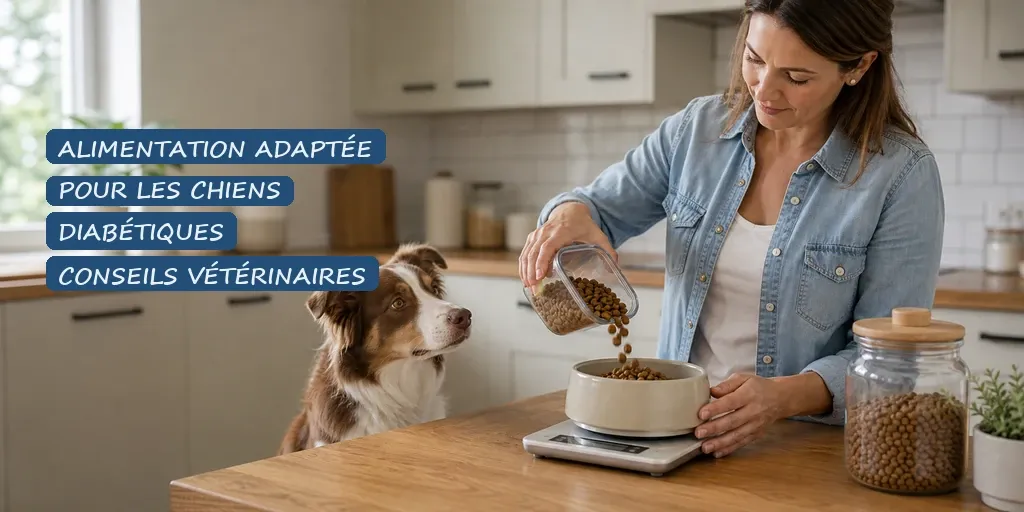
Why is diabetic dog food essential for dogs?
Diabetic dog food matters because every meal directly affects blood glucose. In a diabetic dog, the body responds less well to fast-acting sugars. It also copes poorly with sudden changes in quantity or timing.
Here is why nutrition plays a central role:
- It slows glucose absorption thanks to fibre.
- It limits blood glucose spikes after meals.
- It helps control weight, a key factor in diabetes.
- It improves consistency between diet and insulin.
- It reduces variations caused by table scraps.
Good news: a diabetic dog can maintain a good quality of life. To achieve this, it mainly needs consistency. The same food, at the same dose, at the same times, often gives better results than a perfect diet that is impossible to follow.
Key nutritional goals to remember
A suitable diet must pursue four goals. First, it must avoid fast-acting sugars. Next, it must provide digestible protein. Then, it must support satiety. Lastly, it must allow the vet to adjust treatment on a stable basis.
Diabetic dog kibble and medicalised veterinary foods are formulated for this purpose. They often contain more fibre and a better-controlled carbohydrate profile. However, they remain veterinary foods. Their choice therefore depends on body condition, age, associated illnesses and treatment.
Causes, symptoms and challenges of blood glucose management
Blood glucose management relies on the balance between diet, insulin, weight and activity. If one of these elements changes abruptly, the dog may develop hyperglycaemia or, more rarely, hypoglycaemia.
Common causes of diabetes in dogs
Canine diabetes mainly affects adult and senior dogs. Some females, particularly those not spayed, seem more at risk. Being overweight, hormonal disorders and certain pancreatic diseases can also encourage the imbalance. However, a lean dog can also become diabetic.
Predisposed breeds vary depending on the studies. The Poodle, Schnauzer, Dachshund, Beagle and Cairn Terrier are often mentioned. However, no breed is completely protected.
Symptoms that should raise the alarm
A diabetic dog often shows progressive signs. The most common are:
- increased thirst;
- more frequent urination;
- unusual hunger;
- weight loss despite appetite;
- fatigue or reduced activity;
- repeated urinary or skin infections;
- a whitish film over the eyes, suggesting a cataract.
These signs call for a veterinary diagnosis. A blood and urine test can confirm diabetes and assess possible complications.
Why dietary lapses are risky
A single lapse does not always cause an emergency. However, repeated lapses make monitoring much harder. Sugary treats, table scraps, bread, biscuits and changes of kibble distort the blood glucose response. As a result, the vet may struggle to adjust the insulin.
Here is why consistency matters more than variety. A diabetic dog needs a predictable daily routine. Its body responds better when energy intake changes little.
Recommended veterinary solutions for diabetic dog food
Recommended veterinary solutions combine a suitable food, fixed mealtimes, weight monitoring and veterinary medical follow-up. According to guidelines for managing diabetes in dogs, diet must be coordinated with insulin therapy when it has been prescribed.
If in doubt, consult your vet before starting any treatment.
Choosing diabetic dog kibble or a wet food
Kibble for diabetic dogs is often suitable for diabetic dogs because it makes dosing easier. It provides a consistent ration every day. It also keeps well and allows precise tracking of quantities.
Wet food can also be useful. It contains more water. It sometimes promotes satiety. It suits dogs that do not eat their kibble well. However, the exact ration should be checked with the vet, as energy density differs.
| Food option | Advantages | Points to watch |
|---|---|---|
| Veterinary kibble | Easy dosing, consistent composition, good stability | Needs water available, gradual transition |
| Veterinary wet food | Palatability, hydration, satiety | Cost, storage, calorie dosing |
| Veterinary home-cooked ration | Customisation possible | Formulation essential from a professional |
Following a gradual dietary transition
A transition that is too fast can cause diarrhoea, food refusal or vomiting. Yet in a diabetic dog, an uneaten meal can disrupt treatment. The food should therefore be changed over 7 to 14 days, unless otherwise instructed.
A simple transition can follow this pace:
- days 1 to 3: 75% old food and 25% new food;
- days 4 to 6: half old food and half new food;
- days 7 to 9: 25% old food and 75% new food;
- day 10 onwards: 100% new food if all goes well.
Monitor stools, appetite, thirst and energy levels. If the dog refuses its meal, contact your clinic. Never change the insulin dose on your own.
Timing meals with treatment
Most diabetic dogs are fed twice a day. These meals are often scheduled around insulin injections, according to the prescription. However, protocols vary. Some dogs need precise adjustments.
Wondering how to manage this day to day? Serve the meal at a fixed time, check that the dog eats, then follow the vet's instructions for the injection. If your dog does not eat, seek advice quickly. This situation can change the risk of hypoglycaemia.
Managing treats without unbalancing the diabetes
Treats should not become a hidden third ration. They should stay occasional, low in sugar and included within the daily ration. Avoid sugary biscuits, leftovers, fatty cheese and pieces of bread.
Choose compatible rewards, approved by your vet. You can also use a few pieces of kibble from the ration as a reward. This way, you keep the same nutritional composition.
The original tip: the 3-2-1 rule for diabetic dogs
The 3-2-1 rule helps owners make managing diabetes simpler. It does not replace veterinary medical follow-up. However, it provides concrete, regular benchmarks.
- 3 fixed time markers: morning meal, evening meal and main walk at stable times.
- 2 weekly checks: weight and waist measurement, recorded on the same day each week.
- 1 treat rule: no treats outside the ration, unless approved by the vet.
This method limits invisible variations. It also helps the vet understand why blood glucose changes. For example, a weight gain of 300 grams in a small dog can already change its needs. Similarly, an unusually long walk can affect blood glucose.
Here is why this approach is useful: it turns a complex disease into a manageable routine. The owner records little data, but records the right data.
Benefits of veterinary products associated with blood glucose management
Veterinary products intended for blood glucose management support the nutritional care of diabetic dogs when used on the vet's recommendation. They are formulated to help regulate glucose intake while meeting the specific needs of the dogs concerned.
Advance Veterinary Diets Diabetes for Dogs
Advance Veterinary Diets Diabetes is a complete dietetic food formulated for dogs with diabetes mellitus.
- Helps regulate glucose intake.
- Fibre-rich formula to promote more stable blood glucose.
- Helps maintain a suitable body condition.
- Suitable for dogs requiring a specific veterinary diet.
Kibble for diabetic dogs – HPM W2 Weight Loss & Diabetes
Virbac Veterinary HPM W2 Weight Loss & Diabetes is intended for dogs with diabetes associated with excess weight.
- High protein content to preserve muscle mass.
- Low starch content to limit blood glucose fluctuations.
- Supports weight control while supporting nutritional management of diabetes.
- Dietetic food formulated for veterinary use.
Kibble for diabetic dogs – HPM W1 Weight Loss & Diabetes
Virbac Veterinary HPM W1 Weight Loss & Diabetes is recommended for dogs requiring more significant weight loss as part of nutritional management of diabetes.
- Formula rich in protein and low in assimilable carbohydrates.
- Helps regulate glucose intake.
- Helps achieve an optimal weight while maintaining lean mass.
- Fits into a nutritional programme established with the vet.
These dietetic foods must be used under veterinary supervision. They are a complement to the overall management of diabetes, combining a suitable diet, regular physical activity, clinical follow-up and, when necessary, insulin therapy.
Common mistakes to avoid with a diabetic dog
The most common dietary mistakes often come from good intentions. Yet they can unbalance the diabetes.
- Changing kibble without a transition.
- Adding rice or pasta without calculating the ration.
- Giving sugary treats after the injection.
- Leaving the bowl available all day (free feeding).
- Sharply reducing the ration without veterinary advice.
- Changing the insulin after a single unusual meal.
Free feeding makes monitoring particularly difficult. It makes it impossible to measure what the dog actually eats. It can therefore mask food refusal or a drop in appetite.
Conclusion: succeeding with diabetic dog food every day
Diabetic dog food relies on consistency, choosing a suitable food and veterinary follow-up. Fibre, quality protein and complex carbohydrates help limit spikes. However, timing and quantities matter as much as composition.
To succeed, keep a simple routine. Weigh the meals. Avoid leftovers. Record changes in weight, appetite and thirst. Lastly, choose diabetic dog kibble or a veterinary wet food with your practitioner's help. This approach promotes better blood glucose management and a more comfortable life for your companion.
Frequently asked questions & FAQ about a suitable diet for diabetic dogs
What is the best food for a diabetic dog?
The best food for a diabetic dog is a stable veterinary food, rich in suitable fibre, with quality protein and controlled carbohydrates. It must also match the dog's weight, age and treatment. The final choice is made with your vet, as two diabetic dogs can have very different needs.
What dog food is good for diabetes mellitus?
A food that is good for canine diabetes mellitus is generally a dietetic diet formulated to help regulate glucose. Diabetic dog kibble, certain medicalised wet foods or a home-cooked ration calculated by a vet can be suitable. The most important thing remains consistency in quantities and timing.
How do you feed a diabetic dog?
To feed a diabetic dog, give measured meals at fixed times, often twice a day depending on the protocol. Always use the same food, avoid leftovers and monitor appetite. If your dog does not eat, contact your vet before changing the treatment or the ration.
Is rice good for a diabetic dog?
Rice is not necessarily forbidden, but it provides starch and can raise blood glucose depending on the quantity and how it is cooked. In a diabetic dog, it should not be added freely to the bowl. If it is part of a home-cooked ration, it must be calculated by a veterinary nutritionist.
To find out more about diabetic dogs
- To support your dog, see the category veterinary dog food on Produits-Veto.com.
- Blog article to be planned for internal linking: Diabetes in dogs: symptoms, treatment and monitoring at home.
- AAHA Diabetes Management Guidelines for Dogs and Cats
- Merck Veterinary Manual, Diabetes Mellitus in Dogs and Cats
- WSAVA Global Nutrition Guidelines


