How to optimise wound healing in dogs and cats?

Christelle de Produits-Veto
Pharmacy technician ·

Understanding the mechanisms of healing in animals
Healing: an essential natural process
Healing is a complex biological mechanism that allows the body to repair damaged tissue after an injury, surgery, or skin irritation.
In both dogs and cats, this process generally takes place in several stages:
- The inflammatory phase
- The debridement phase
- The tissue repair phase
- The skin remodelling phase
When these stages proceed correctly, the wound gradually closes and regains its protective function.
However, certain factors can slow down or compromise this healing.
What signs show that a wound is healing properly?
A wound that is healing well generally shows:
- A gradual decrease in redness
- A reduction in inflammation
- An absence of abnormal discharge
- A progressive closing of the tissue
- A decrease in pain
Conversely, certain signs should prompt you to consult a veterinarian quickly:
- Presence of pus
- Bad smell
- Significant swelling
- Persistent pain
- Repeated bleeding
- Reopening of the wound
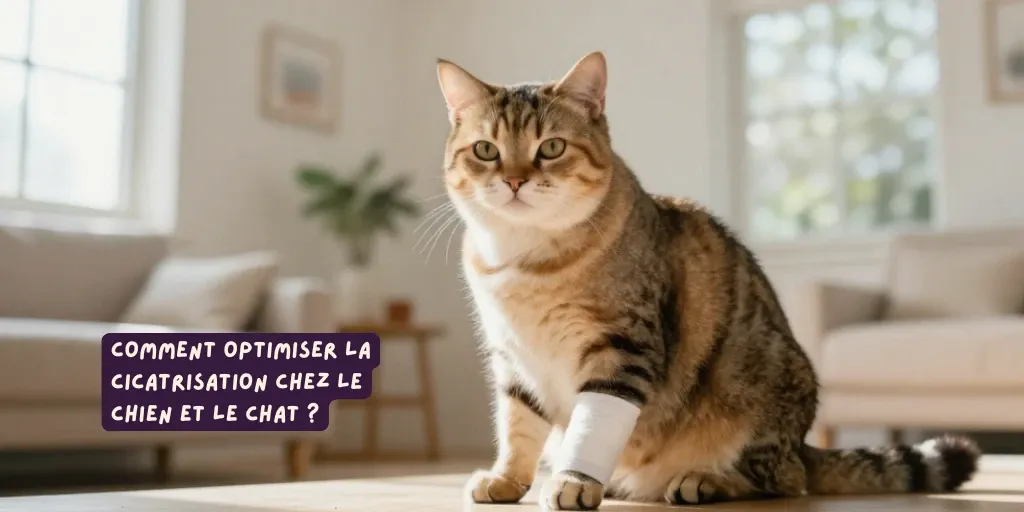
The factors that influence healing in dogs and cats
Why is good healing important?
Fast healing limits the risk of complications.
It notably allows:
- Reducing the risk of infection
- Improving the animal’s comfort
- Limiting pain
- Promoting harmonious skin regrowth
- Reducing cosmetic after-effects
The earlier the care is provided, the better the chances of achieving a fast recovery.
The causes of poor healing
Several factors can slow down tissue repair.
Excessive licking
Dogs and cats naturally tend to lick their wounds.
However, this behaviour can:
- Delay the closing of the wound
- Introduce bacteria
- Weaken tissue during repair
Wearing a collar or a protective garment may then be recommended.
A local infection
Infections are one of the main causes of delayed healing.
Bacteria prevent tissue from regenerating properly and promote inflammation.
Poor wound hygiene
Insufficient or unsuitable disinfection can compromise healing.
It is therefore essential to follow the vet's recommendations regarding the cleaning of the affected area.
Certain diseases
Conditions such as:
- Diabetes
- Hormonal diseases
- Immune disorders
- Nutritional deficiencies
can slow down healing.
Best practices to promote healing
To optimise healing:
- Regularly clean the wound according to veterinary recommendations.
- Prevent licking.
- Keep the area clean and dry.
- Follow the prescribed treatments.
- Monitor the wound's progress daily.
- Provide a balanced diet rich in essential nutrients.
Recommended veterinary solutions to support healing
Cicavet: promoting skin repair
Cicavet is specially formulated to support the healing of small wounds, grazes and skin irritations in dogs and cats.
Main benefits:
Promotes skin regeneration
Helps maintain healthy skin
Helps protect the weakened area
Suitable for dogs and cats
Easy to apply locally
Aluspray: protecting the wound during healing
Aluspray forms a protective film that isolates the wound from external aggressions.
Its advantages:
Effectively protects the injured area
Limits external contamination
Promotes an environment conducive to healing
Widely used after a procedure or a superficial injury
Simple application in spray form
- Keriox: supporting the repair of skin tissue
Keriox is particularly suitable for weakened skin that needs support during the repair phase.
Main benefits:
Supports skin reconstruction
Promotes the animal's comfort
Hydrates and protects sensitised skin
Suitable for dogs and cats
The importance of cleaning before healing
Before applying a healing treatment, it is essential to properly clean the wound.
Antiseptic solutions such as Vétédine Solution or Povidum Solution help sanitise the affected area and reduce the risk of infection.
A clean wound generally heals faster and under better conditions.
Frequently asked questions about healing
How can I speed up the healing of my cat's wounds?
The best approach is to keep the wound clean, prevent licking and use the treatments recommended by your veterinarian. A balanced diet and a calm environment also contribute to better healing.
How can I promote healing in dogs?
To promote healing in dogs, it is important to properly clean the wound, limit local trauma and use suitable products. Daily monitoring also helps to quickly detect any potential complications.
What is the best natural healing product for a cat?
Several veterinary products based on plant extracts can support skin repair. The choice depends on the type of wound, its location and how it progresses. Veterinary advice is still recommended before any use.
How long does it take for a wound to heal in a dog or a cat?
The time varies depending on the size and depth of the wound. A small superficial wound can heal in a few days, whereas a more significant wound may take several weeks. The absence of infection remains a determining factor in the speed of healing.
To learn more about healing
Also discover:
- Our product category soins des plaies et cicatrisation du chat
- Our selection of désinfectants vétérinaires pour chien
- Our article: Bien choisir un spray antiseptique et cicatrisant pour animaux
Healing in dogs and cats depends on many factors. Prompt care, good local hygiene and the use of suitable products generally lead to optimal recovery. By carefully monitoring the wound's progress and avoiding common mistakes such as excessive licking, you maximise the chances of fast and lasting tissue repair.


