Coprophagy in dogs and cats: understanding this behaviour to better treat it

Christelle de Produits-Veto
Pharmacy technician ·

Why does coprophagia occur in dogs and cats?
Coprophagia: a common but often misunderstood behaviour
Coprophagia refers to the voluntary ingestion of faeces. This behaviour mainly affects dogs, but it can also be observed in some cats.
For owners, this habit is often a source of concern. However, in some cases it can be transient or linked to a natural behaviour. That said, when coprophagia becomes repetitive, it is important to identify its cause in order to put an appropriate solution in place.
In both dogs and cats, several factors can explain this behaviour. An overall assessment of the animal therefore remains essential.
What are the signs associated with coprophagia?
Coprophagia is generally easy to identify.
The most common signs are:
- Eating its own faeces
- Ingesting other animals' faeces
- Systematically searching for droppings during walks
- Persistent bad breath
- Occasional digestive upset
- Soiling around the mouth
This behaviour can appear at any age. It is nevertheless more common in puppies and young dogs.
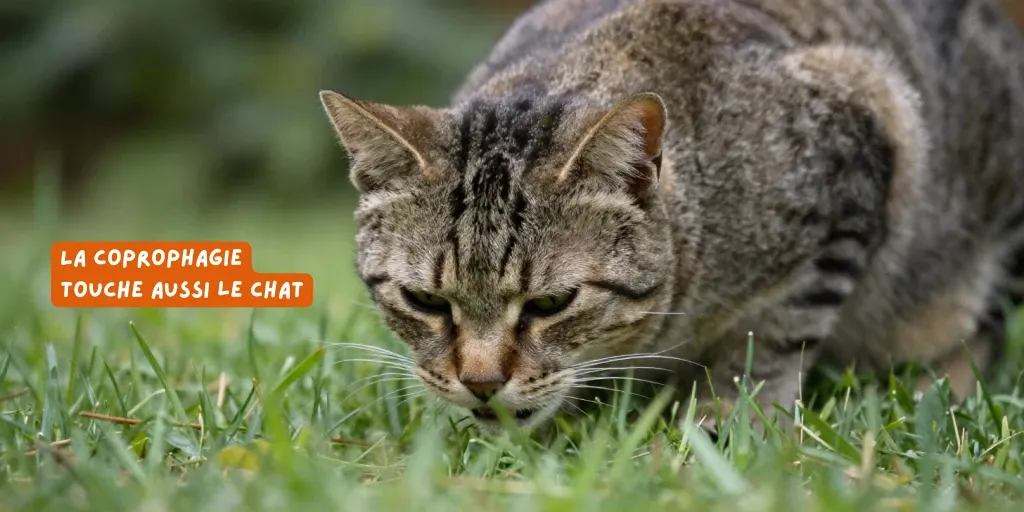
Understanding the causes of coprophagia in animals
Why is coprophagia a problem?
Even though coprophagia does not systematically lead to serious consequences, it can expose the animal to various risks.
Faeces may contain:
- Digestive parasites
- Pathogenic bacteria
- Viruses
- Drug residues
- Environmental toxins
Furthermore, this behaviour may reveal an underlying problem requiring veterinary care.
The causes of coprophagia in dogs and cats
Several factors can explain coprophagia.
Behavioural causes
Behavioural disorders are among the most common causes:
- Boredom
- Lack of mental stimulation
- Anxiety
- Stress
- Attention-seeking
- Unintentional learning
In some puppies, exploring their environment naturally involves the mouth. This behaviour often disappears with age.
Nutritional causes
An unsuitable diet can also encourage coprophagia.
Possible causes include:
- Nutritional imbalances
- Insufficient rations
- Poor digestibility of food
- Intestinal absorption disorders
- Deficiencies in certain nutrients
When food is poorly digested, the faeces can retain a smell or palatability that some animals find appealing.
Medical causes
Certain conditions should be investigated:
- Exocrine pancreatic insufficiency
- Digestive parasitism
- Chronic intestinal diseases
- Diabetes
- Hyperthyroidism
- Malabsorption syndrome
In older dogs, impaired cognitive function may also explain the sudden onset of this behaviour.
Recommended veterinary solutions
First and foremost, a veterinary check-up can rule out a medical cause.
Several measures can then be put in place:
- Picking up faeces quickly
- Reinforcing positive training
- Increasing physical activity
- Enriching the environment
- Adapting the diet
- Using specific dietary supplements
Early intervention generally improves results.
The benefits of dietary supplements against coprophagia
Ascopet 200 g
Ascopet is a natural dietary supplement based on seaweed, traditionally used to support the nutritional balance of dogs and cats.
For coprophagia, it is often used to help change the palatability of faeces and support the training measures put in place.
Main benefits:
Helps reduce coprophagia behaviour
Supports nutritional balance
Natural source of minerals and trace elements
Suitable for dogs and cats
Easy to administer in the daily ration
> Product link: Ascopet 200 g – Biové
Ascopet 500 g
The 500 g size is particularly suited to animals receiving supplementation over an extended period, or to households with several animals.
Main benefits:
Economical size
Long-term use
Daily nutritional support
Can support an overall approach to coprophagia
Suitable for dogs and cats of all sizes
Product link: Ascopet 500 g – Biové
An overall approach to limiting coprophagia
Using a dietary supplement such as Ascopet should be combined with good practices:
- Prompt removal of faeces
- Regular physical activity
- Environmental enrichment
- Quality food suited to the animal's age and lifestyle
- Veterinary consultation if the behaviour persists
This overall approach generally provides the best results in the long term.
Frequently asked questions about coprophagia in dogs and cats
Which dietary supplement is effective against coprophagia in dogs and cats?
Supplements formulated specifically against coprophagia, such as Copronat, can help reduce this behaviour. They generally work by improving digestion and changing the palatability of faeces. They are most effective when combined with appropriate behavioural management.
How can I stop my dog's coprophagia?
It is recommended to first identify the cause of the behaviour. A veterinary examination can rule out a medical cause. Improving the diet, increasing daily activities, promptly picking up faeces and possibly using dietary supplements can then help reduce coprophagia in the long term.
Is it serious if my dog eats cat faeces?
Cat faeces may contain parasites or bacteria that could affect a dog's health. Occasional ingestion does not systematically cause a problem, but this behaviour should not be encouraged. Appropriate prevention remains preferable in order to limit health risks.
What causes coprophagia in old dogs?
In senior dogs, coprophagia may be linked to digestive disorders, certain metabolic diseases, or cognitive dysfunction syndrome. A veterinary consultation is recommended when an older dog suddenly starts eating faeces.
To find out more about coprophagia
Also discover:
- Our digestive supplements for dogs category and digestive supplements for cats
- Our selection of dewormers for dogs
- Our range of dewormers for cats
- Our article: What are the signs of poor digestion in a dog?
Coprophagia in dogs and cats can have multiple causes. This behaviour should never be ignored when it becomes frequent or sudden. A veterinary assessment, combined with a suitable diet, an enriched environment and targeted supplements, generally provides good results. The earlier it is addressed, the easier it is to reduce coprophagia in the long term.


