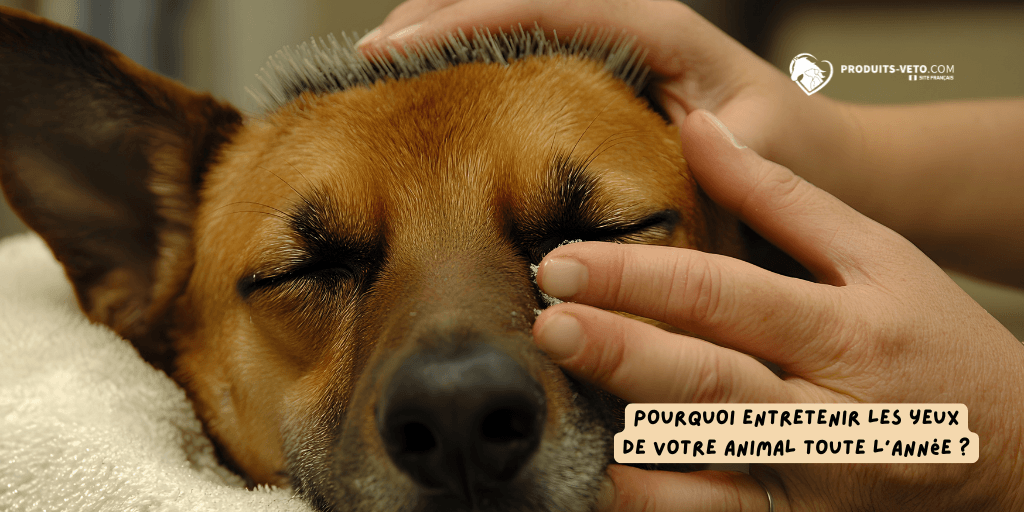
Why care for your pet's eyes all year round?

Cécile de Produits-Veto
Pharmacy technician ·

Our companions’ eyes remain fragile and very sensitive to external aggressions. Dust, allergies, infections or simple secretions can affect their comfort and harm their vision. To preserve their well-being, care for their eyes all year round, not only when discomfort appears. This article explains why this care matters, which signs to watch for and which solutions to use.
Why clean your pet’s eyes regularly?
An essential preventive care
Dogs, cats and horses naturally produce eye secretions. If you don’t clean them, they build up and irritate the surface of the eye. Certain breeds, such as bulldogs or Persian cats, tear more and require special attention. By regularly cleaning your pet’s eyes, you:
- reduce the risk of inflammation;
- improve its visual comfort;
- prevent eye diseases;
- protect the cornea against external aggressions.
Causes and symptoms of eye conditions in animals
Pets’ eyes are particularly vulnerable because they are constantly exposed to air, dust and irritants. Regular care limits the risks, but certain causes of eye conditions remain common:
- Dust and pollen: during outdoor walks, microscopic particles build up in the eyes and cause itching, tearing and discomfort. Allergic animals often show increased sensitivity.
- Bacterial or viral infections: conjunctivitis, keratitis or other eye conditions can spread quickly from one animal to another. They generally cause purulent discharge, redness and sometimes fever.
- Trauma: rough play, a scratch or the presence of a foreign body (grass awn, metal dust, sand) can damage the cornea and cause intense pain.
- Congenital or hereditary abnormalities: certain breeds have malformed eyelids (entropion, ectropion) or eyelashes oriented towards the cornea, which promotes rubbing and chronic irritation.
- Age-related conditions: with ageing, some animals develop dry eye or progressive clouding of the lens (cataract).
Symptoms must be identified quickly by the owner:
- persistent clear or purulent discharge,
- redness or itchy eye,
- repeated blinking and sensitivity to light,
- swollen or stuck eyelids,
- cloudy or opaque appearance of the eye.
Ignoring these signs can worsen the situation and lead to partial or even total loss of vision. A veterinary check-up is therefore essential as soon as any abnormality appears, even a mild one. Early diagnosis and appropriate treatment ensure the animal’s visual comfort and overall health.
Recommended veterinary solutions
To care for your pet’s eyes, there are specific, safe and suitable products:
- Veterinary saline solutions: for gentle daily cleaning.
- Eye wipes: practical for removing dirt and secretions.
- Artificial tears: useful for animals suffering from dry eye.
- Soothing lotions: to calm temporary irritation.
Using tap water or products intended for humans is not recommended. Only veterinary care ensures safety and effectiveness.
FAQ – Frequently asked questions
How can I safely clean my pet’s eyes?
Cleaning should always be done gently. Use a clean compress soaked in a suitable veterinary solution (saline solution, eye lotion). Absolutely avoid cotton wool, which leaves irritating fibres. The movement should go from the inner corner of the eye (nose side) outward, so as not to bring impurities back inside. For animals with very sensitive eyes, it is advisable to use products specifically formulated for dogs, cats or horses. If in doubt, ask your veterinarian for advice.
How often should an animal’s eyes be cared for?
The frequency depends on the animal’s breed, age and lifestyle. For a dog or cat with no particular problem, weekly cleaning is enough. However, certain brachycephalic breeds (bulldogs, pugs, Persian cats) need daily care because their eyes are more exposed to secretions. Horses may need more frequent cleaning during periods of dust or pollen. Regularly observing your pet’s eyes helps you adapt the frequency of care.
When should you consult a veterinarian for an eye problem?
It is essential to consult quickly as soon as symptoms persist for more than two or three days, worsen, or are accompanied by other signs such as fever, loss of appetite or reduced vitality. Purulent discharge, intense redness, obvious pain (repeated rubbing, whimpering) or a suddenly cloudy eye should raise concern. A veterinarian can carry out a full examination and prescribe suitable treatment (antibiotic eye drops, anti-inflammatory, surgery if necessary). Acting early prevents serious, sometimes irreversible, complications.
Key takeaways
Clean your pet’s eyes regularly to prevent irritation and infection. Watch for the first signs of abnormality and consult a veterinarian quickly if the condition does not improve. With suitable veterinary products and consistent care, you protect your companion’s vision and comfort in the long term.
To find out more:
- The MP LABO laboratory offers you an article on the eyes of your animals and their care.
- Find all our cat eye products in the eyes and ears category.
- Find all our dog eye products in the eyes and ears category.
- Find our horse eye products in the eyes and ears category.


