Lysine in cats: benefits, food sources, deficiency and feline herpes

Christelle de Produits-Veto
Pharmacy technician ·

Lysine: why does this amino acid interest cat owners so much?
Understanding the role of lysine in the cat's body
Lysine is an essential amino acid. This means the cat cannot produce it on its own. It must therefore find it in its daily diet.
It takes part in several important functions. In particular, it contributes to maintaining muscle mass, tissue renewal and proper immune function. It also plays a role in the cat's overall nutritional balance.
In cats, lysine also generates a lot of interest in cases of feline herpes. This virus, called FHV-1, can cause respiratory and eye signs. It is one of the agents involved in cat flu.
However, it is important to remain precise. Lysine never replaces a veterinary diagnosis. Nor does it replace a prescribed treatment. On the other hand, certain dietary supplements based on L-lysine can support sensitive periods, according to the vet's recommendations.
Lysine and feline herpes: what you really need to know
Feline herpesvirus mainly affects the upper respiratory tract and the eyes. The cat may show sneezing, nasal discharge, watery eyes or conjunctivitis.
After an initial infection, the virus can remain latent. It can then reactivate during stress, illness, a change of environment or a drop in natural defences.
For a long time, lysine has been used to support cats carrying feline herpes. The aim was to limit the virus's activity by acting on the balance with arginine. Nevertheless, scientific opinions remain divided. Some older data suggest a benefit. Other, more recent studies call its systematic effectiveness into question.
This is why lysine should be presented as nutritional support. It can be part of an overall care approach. But it must not be presented as a miracle solution against feline herpes.
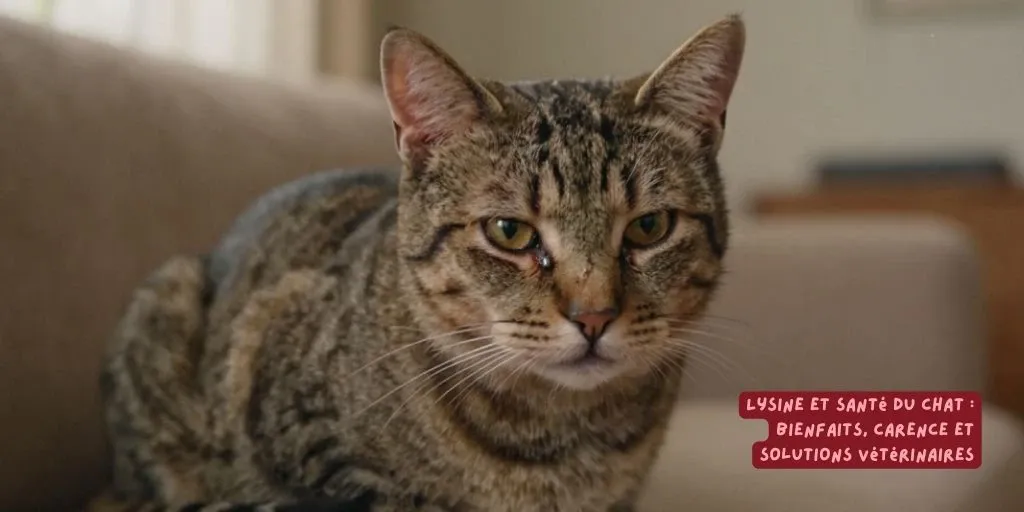
Lysine and cat health: benefits, deficiency and veterinary solutions
Why is lysine important for cats?
Lysine helps the cat's body maintain several vital functions. It takes part in protein metabolism. It also supports tissues, muscles and certain defence mechanisms.
In an adult cat, a complete diet normally covers requirements. Quality kibble and wet food already contain animal proteins. These proteins naturally provide lysine.
In kittens, lysine also remains important. It supports growth and muscular development. Consequently, a diet suited to the kitten's age becomes essential.
In cats that are frail, convalescent or exposed to stress, the vet may recommend a supplement. This applies in particular to certain cats prone to recurrent respiratory episodes.
Causes, symptoms and issues associated with a lack of lysine
A genuine lysine deficiency remains rare in a cat fed a complete diet. However, it can appear if the diet is unbalanced. This mainly concerns poorly formulated homemade rations, unsuitable diets or insufficient protein intake.
The possible signs remain non-specific. Muscle wasting, unusual fatigue, a dull coat or slower recovery may be observed. In kittens, a nutritional deficiency can also disrupt growth.
However, these signs can have many causes. A chronic illness, pain, an infection or a digestive disorder can cause similar symptoms. Self-diagnosis should therefore be avoided.
In the event of eye discharge, persistent sneezing or a drop in appetite, a veterinary consultation remains necessary. The cat may be suffering from cat flu, feline herpes, calicivirosis or a bacterial superinfection.
Recommended veterinary solutions
The first step is to offer a complete and balanced diet. This naturally provides the essential amino acids, including lysine, needed for the cat's body to function properly.
When the vet considers it relevant, a specific dietary supplement can also be used to support the cat during sensitive periods, particularly during recurrent episodes linked to feline herpesvirus (FHV-1) or cat flu.
On Produits-veto.com, several solutions are available:
- Lysine – L-lysine – MP LABO
- Lysine Plus – DOMES PHARMA
- Enisyl-F – VETOQUINOL
These products provide L-lysine in different forms to make administration easier according to the cat's preferences and the owner's habits.
However, supplementation should always be part of an overall care approach including veterinary follow-up, a suitable diet and good stress management, a known factor in the reactivation of feline herpesvirus.
The benefits of veterinary products associated with lysine
Lysine – L-lysine – Herpesvirose félin – 100 gélules – Chat – MP LABO
This dietary supplement provides L-lysine in the form of capsules that are easy to administer.
Its main benefits:
- Targeted intake of L-lysine.
- Nutritional support for the cat during sensitive periods.
- Convenient format for regular use.
- Suited to cats being monitored for feline herpesvirosis.
Lysine Plus – Soutien pendant les périodes critiques du chat et du chaton – 30 comprimés – TVM
Lysine Plus TVM has been formulated to support cats and kittens during periods when their balance may be weakened.
Its main benefits:
- Tablets that are easy to give.
- Suitable for adult cats as well as kittens.
- Nutritional support during critical periods.
- Suitable for use in cats exposed to stress or respiratory relapses.
Enisyl-F – Herpes virus félin – Coryza du Chat – 100 ml – VETOQUINOL
Enisyl-F is an oral solution specifically developed for cats affected by feline herpesvirus.
Its main benefits:
- Liquid form that is easy to administer.
- Nutritional support during episodes linked to FHV-1.
- Suitable for cats with recurrent respiratory or eye signs.
- Convenient administration thanks to its suitable packaging.
Which foods are rich in lysine for cats?
Lysine is found mainly in animal proteins. In cats, the most relevant sources remain meat, fish, eggs and certain offal.
Foods rich in lysine include:
- Chicken.
- Turkey.
- Beef.
- Fish.
- Egg.
- Liver, in recommended quantities.
- Complete foods rich in animal proteins.
However, a ration should not be put together at random. Cats have very specific needs. A poorly balanced homemade ration can cause deficiencies or excesses.
As a result, a complete industrial diet often remains the safest solution. It provides lysine, but also taurine, minerals, vitamins and essential fatty acids.
How to give lysine to a cat?
Lysine can be given in several ways. It all depends on the product chosen and the cat's sensitivity.
You can give it:
- Directly in the mouth, if the cat accepts it.
- Mixed with a small amount of wet food.
- Hidden in a suitable treat.
- In the form of a palatable chew.
- In the form of an oral paste.
The dose indicated on the product must always be respected. It is also best to ask the vet for advice if the cat is already receiving treatment.
If your cat refuses the supplement, do not force it abruptly. Stress can worsen certain respiratory disorders. In that case, change the form or ask for an alternative.
Frequently asked questions about lysine
Which dietary supplements are good for cats with herpes?
Supplements based on L-lysine can support certain cats affected by feline herpes. However, their effectiveness remains debated depending on the studies. The vet may also recommend eye care, immune support, a suitable diet and, in some cases, a specific treatment. A complete care approach should therefore be built, especially in the case of frequent relapses.
What is the food richest in lysine?
The foods richest in lysine are often sources of animal protein. Chicken, turkey, beef, fish and eggs naturally contain it. In cats, the aim is not to give a single rich food. Above all, a complete, balanced diet suited to the cat's age, weight and state of health should be offered.
What are the symptoms of a lysine deficiency?
A lysine deficiency can lead to fatigue, muscle loss, a dull coat or slower recovery. In kittens, it can also disrupt growth. However, these signs remain general. They can come from a digestive, infectious, hormonal or kidney problem. A veterinary consultation therefore remains necessary in case of doubt.
How to give lysine to a cat?
Lysine can be given in capsules, chews or oral paste. You can mix it with a small amount of wet food to make it easier to take. The manufacturer's instructions and the vet's advice should be followed. If the cat refuses, choose a more palatable form rather than creating a stressful situation.
To find out more about lysine
- To support a cat prone to respiratory problems, see the category Breathing and allergies in cats.
- You can also see all cat health products.
- Our article: Relieving a cat with cat flu: effective solutions


