Preventing disease in exotic birds: the right steps to take

Christelle de Produits-Veto
Pharmacy technician ·

Exotic bird diseases: the right habits to help prevent them
Exotic bird diseases: understanding prevention from the start
Prevention of exotic bird diseases is the set of habits that reduce exposure to viruses, bacteria, parasites, deficiencies and stress factors. It relies on regular hygiene, a serious quarantine, a suitable diet, a well-designed aviary and daily observation. Are you wondering whether simple cleaning is enough? The answer is no. In exotic birds, signs of illness often remain subtle until an advanced stage.
Budgerigars, parrots, canaries, zebra finches, lovebirds, cockatiels and parrotlets have a fast metabolism. As a result, a drop in appetite, noisy breathing or abnormal droppings can progress quickly. Preventing exotic bird diseases therefore helps protect their health, as well as that of the other birds in the household.
In this article, you will discover the essential habits for strengthening exotic bird health. We will also look at how to organise avian hygiene, choose the right bird care and use support products with caution.
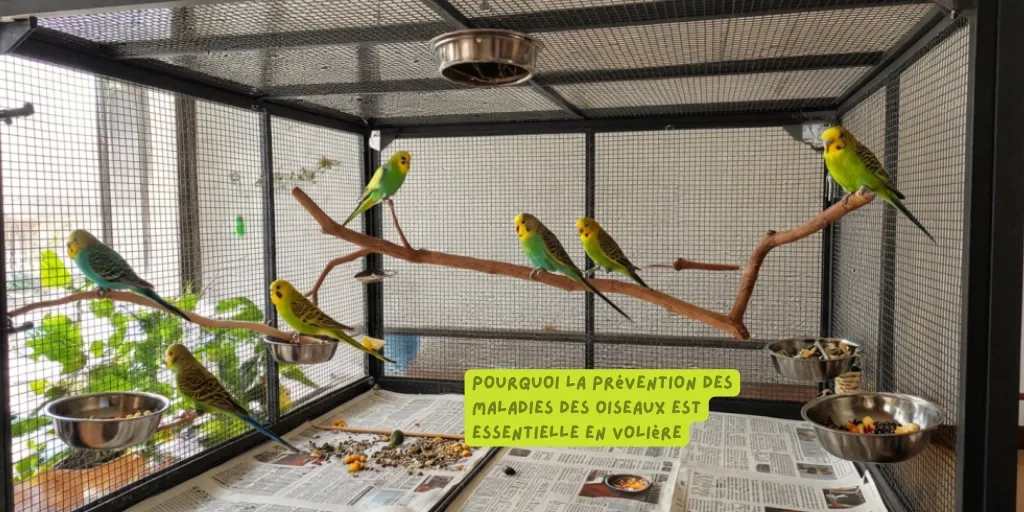
Why disease prevention in birds is essential in an aviary
Preventing bird diseases matters because a sick bird can quickly contaminate its companions through droppings, respiratory secretions, water, feeders or accessories.
Why do exotic birds often hide their symptoms?
A bird is prey in the wild. By instinct, it hides its weakness so as not to attract predators. This behaviour still exists in companion birds. As a result, an owner may believe everything is fine while the animal is already compensating for an infection, a deficiency or pain.
Good news: a simple observation routine helps spot subtle changes. Every day, look at posture, plumage, appetite, breathing, activity level and the appearance of the droppings. A healthy bird stays alert, preens, interacts, eats regularly and sleeps on one leg without apparent difficulty.
What are the main health risks in an aviary?
A poorly maintained aviary encourages contamination. Humidity, leftover food, accumulated droppings and soiled drinkers create favourable conditions for germs.
The most common risks concern:
- Respiratory infections, worsened by draughts, dust or aerosols.
- Digestive disorders, encouraged by dirty water or an unbalanced diet.
- External parasites, such as mites, especially in cracks and nests.
- Nutritional deficiencies, common with a diet made up of seeds alone.
- Contagious diseases introduced by a new bird without quarantine.
- Chronic stress, linked to noise, overcrowding or a lack of enrichment.
This is why prevention must combine hygiene, nutrition, contact control and veterinary follow-up. No product can make up for a dirty aviary or an unsuitable diet.
Causes, symptoms and stakes of exotic bird diseases
Exotic bird diseases most often appear when an infectious agent meets a weakened organism or an insufficiently controlled environment.
Common causes to watch for
The main causes of disorders in exotic birds are numerous. First, introducing a new bird is a critical moment. Even an animal that appears healthy can carry germs. Then, contaminated feeders and drinkers easily transmit digestive agents. Finally, poorly ventilated rooms expose birds to dust, spores and irritants.
Birds are also very sensitive to household toxins. Avoid cooking fumes, scented sprays, candles, insecticides, diffused essential oils and fumes from overheated non-stick coatings. These substances can cause severe respiratory distress.
Symptoms that should raise concern
A sick bird sometimes shows very few signs. However, certain changes warrant a quick response.
- Persistently fluffed-up plumage.
- Drowsiness or isolation.
- Decreased appetite or water intake.
- Weight loss or a more prominent keel bone.
- Liquid, coloured, scarce or very abundant droppings.
- Open-beak breathing, wheezing, sneezing or nasal discharge.
- Tail bobbing strongly with each breath.
- Lameness, falling from the perch or difficulty flying.
- Feather picking, excessive scratching or bald patches.
Emergency veterinary care is recommended if the bird stays at the bottom of the cage, breathes with difficulty, stops eating or shows neurological signs. In a small bird, general condition can deteriorate within a few hours.
The role of quarantine
Quarantine is a biosecurity measure that consists of isolating a new bird before any contact with the group. The Canadian Food Inspection Agency recommends keeping new birds, or those returning from a gathering, separate for two to four weeks. For pet exotic birds, a 30-day period is often a sensible baseline, to be adjusted with your veterinarian.
During this period, place the bird in a separate room if possible. Use dedicated accessories. Wash your hands between each handling. Clean the birds already present first, then the bird in quarantine. This organisation limits the transfer of germs.
Avian hygiene: concrete habits to limit exotic bird diseases
Avian hygiene is the first barrier against exotic bird diseases, as it reduces the microbial load in the environment.
The recommended cleaning routine
A good routine must be simple, regular and realistic. If it is too demanding, it will not last over time. Clean drinkers every day, as water becomes contaminated quickly. Also remove uneaten fresh food after a few hours.
For a domestic aviary, you can apply this frequency:
| Item | Recommended frequency | Goal |
|---|---|---|
| Drinkers | Every day | Limit bacteria and residue |
| Feeders | Every day or every other day | Avoid droppings and damp seeds |
| Cage floor | Two to seven times a week depending on density | Reduce humidity and odours |
| Perches | Once a week | Remove droppings and residue |
| Toys and accessories | Once a week, on rotation | Limit biofilm and soiling |
| Full disinfection | As needed and on veterinary advice | Control an infectious risk |
Clean before disinfecting. Indeed, organic matter often blocks the action of the disinfectant. Rinse surfaces in contact with the bird thoroughly. Then let them dry before putting the animal back in its environment.
Aviary, air and density: three often underestimated levers
A healthy aviary gives enough space to fly, perch, eat and withdraw. Overcrowding increases stress, conflicts and contact with droppings. It therefore encourages infections.
Air quality matters too. Ventilate the room without a direct draught. Avoid excessive humidity, dust and smoke. Place the cage away from the kitchen, household products and very noisy areas. A stressed bird sleeps less well, eats less well and is less resistant to infectious agents.
Diet and immunity
A balanced diet supports natural defences. A diet made up of seeds alone can lack vitamins, minerals or amino acids. Depending on the species, the veterinarian may recommend suitable extruded feed, permitted vegetables, fruit in limited amounts, sources of calcium or targeted supplements.
However, be careful: not all exotic birds have the same needs. A grey parrot, a canary and a zebra finch are not fed in the same way. In addition, some foods are toxic, such as avocado, alcohol, chocolate, caffeine and very salty foods.
Recommended veterinary solutions to support exotic bird health
Recommended veterinary solutions combine environmental prevention, prompt consultation in case of symptoms, and support products chosen according to the species.
When to consult an avian veterinarian?
Consult as soon as a sign persists, worsens or affects breathing. A veterinarian can weigh the bird, examine the keel bone, observe the droppings and suggest tests if needed. They can also check the diet, aviary conditions and parasitic risk.
If in doubt, consult your veterinarian before any treatment.
Never give an antibiotic, antiparasitic or human medication without a prescription. Doses vary enormously depending on weight and species. A mistake can be toxic.
Support products available on Produits-Veto.com
Certain products can support bird care on a daily basis. They do not replace a consultation and do not treat an undiagnosed infectious disease. However, they can support nutritional balance, digestion or recovery, depending on the need.


Before buying, always check the species concerned, the dosage, the length of use and the contraindications. If your bird is already listless, losing weight or breathing poorly, the priority remains a veterinary examination.
Veterinary sources and biosecurity
Official bodies emphasise three areas: limiting risky contact, isolating new birds and regularly cleaning surfaces. Wild birds, visitors, shoes, clothing and equipment can carry pathogens. For its part, the LPO (the French League for the Protection of Birds) advises cleaning feeders to prevent contamination linked to droppings and food leftovers.
These rules also apply at home. Even with just a few exotic birds, biosecurity remains useful. It protects the aviary, but also the other birds in the neighbourhood.
An original method: the 3-2-1 routine against exotic bird diseases
The 3-2-1 routine is a preventive monitoring method that helps detect a health problem early in exotic birds.
3 areas to check
First, check three areas every day. First area: the drinker and the feeder. Check the water level, cleanliness and the amount actually consumed. Second area: the cage floor. Observe the droppings, their colour, texture and frequency. Third area: the perches. See whether the bird is perching normally, sleeping too much or avoiding a particular support.
2 minutes of calm observation
Take two minutes from a distance, without handling the bird. Watch its breathing, its movements, its interest in its surroundings and its interactions. This stress-free observation often gives more information than immediate handling.
1 numerical alert threshold
Weigh your bird regularly with an accurate scale, ideally always at the same time. A loss of about 5% of body weight, especially if accompanied by a change in behaviour, should prompt a quick veterinary opinion. In a 40 g bird, this represents only 2 g. Yet this small difference can already matter.
This method does not diagnose a disease. However, it gives you a concrete reference point. It also makes it easier to talk with the veterinarian, as you bring dated, useful information.
Benefits of veterinary products associated with prevention
Veterinary products associated with prevention help support the body when used alongside suitable hygiene and professional advice.
Océvit by Virbac
Océvit is a vitamin supplement intended for birds. It can support certain periods when needs increase. For example, moulting, breeding or convalescence may require specific support.
- Helps cover certain vitamin needs.
- Supports vitality during sensitive periods.
- Fits into a broader nutritional strategy.
Océproven by Virbac
Océproven aims to support birds' digestive balance. A stable microbiota contributes to digestive comfort and better use of the diet. Ask for advice if the bird has diarrhoea, as an infectious or parasitic cause must be ruled out.
- Supports the balance of the digestive flora.
- Can support a dietary transition.
- May help after an episode of stress, on veterinary advice.
Océcholine by Virbac
Océcholine is a supplement used for nutritional support, particularly around liver metabolism. Its relevance depends on the species, the diet and the bird's general condition.
- Supports certain demanding nutritional periods.
- Can supplement a corrected diet.
- Must be used in accordance with the dosage.
Key points for limiting exotic bird diseases
Limiting exotic bird diseases requires a regular approach rather than an isolated action. Remember five priorities: quarantine for new birds, clean water, frequent cleaning, a suitable diet and daily observation. Then, add support products only when they meet a real need. This approach protects the aviary better and improves the well-being of each bird.
Frequently asked questions about exotic bird diseases
What diseases can birds get?
Birds can suffer from respiratory, digestive, parasitic, nutritional, viral or bacterial diseases. In exotic birds, disorders linked to stress, deficiencies, feather picking or an unsuitable environment are also observed. If your bird changes behaviour, eats less or breathes poorly, do not delay in seeking advice.
What are the 10 diseases?
There is no single list valid for all species. However, ten commonly cited problems are avian influenza, Newcastle disease, psittacosis, candidiasis, coccidiosis, mites, respiratory infections, liver disorders, vitamin deficiencies and digestive disorders. Diagnosis must always be made by a veterinarian.
How can birds be protected in the wild?
To protect birds in the wild, avoid handling them, keep cats away, clean feeders regularly and do not feed during unsuitable periods if this creates risky gatherings. If you find a sick or dead bird, contact a competent local organisation and wash your hands after any indirect contact.
Does bird flu kill birds?
Yes, certain forms of bird flu can kill birds, especially highly pathogenic forms. Signs vary depending on the species and strains. They can include listlessness, respiratory problems, sudden mortality or a drop in egg-laying in the birds affected. In case of suspicion, avoid all contact and follow official health guidelines.
To find out more about exotic bird diseases
- To complete your prevention, explore the bird products available on Produits-Veto.com.
- Discover our article: Deworming your bird: an essential step for its health


