How to help Médor slim down, not float around!

Christelle de Produits-Veto
Pharmacy technician ·

Animal obesity, the blockbuster of the bowls!
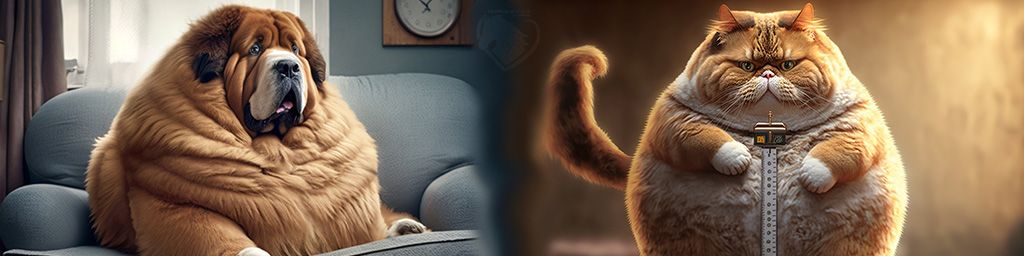
Do you have a four-legged companion who seems to take the motto ‘Carpe Diem’ a little too seriously? Don’t worry, he’s not seeking a career as a sumo wrestler or trying to become Garfield’s stunt double! We’re talking about obesity, of course.
Today, we’re going to demystify animal obesity and give you the keys to keeping your pet fit, without cancelling his subscription to the joy of living. Hold on tight, here we go for an adventure full of kibble and capers!
Let’s start by looking at the obesity of our beloved Medors…
How do you know if a dog is obese?
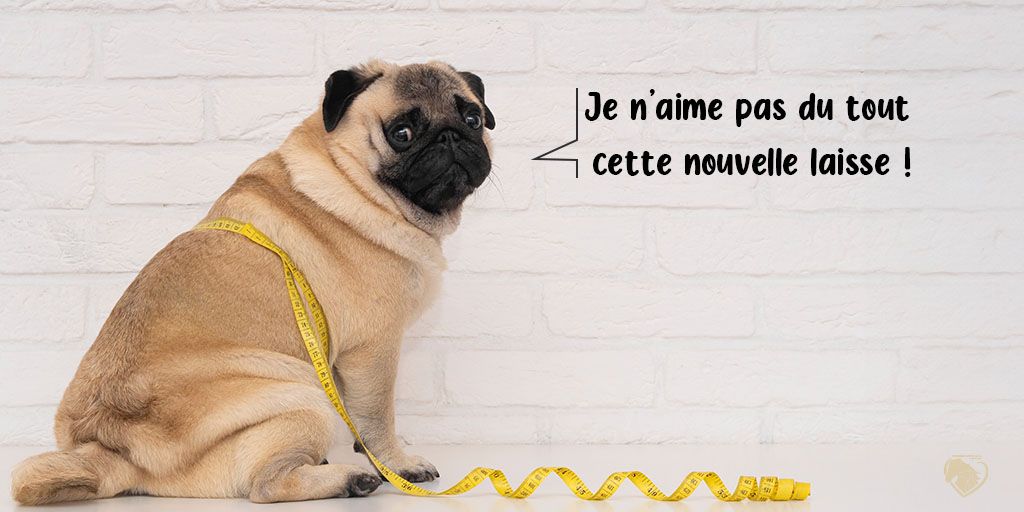
Imagine yourself as a Jedi master, but instead of feeling the Force, you’re feeling your dog’s ribs. No need to press as if you were trying to open a stubborn jar of pickles. If you can feel them naturally, congratulations, you have a dog in “beach body” mode, free of obesity!
What weight for an obese dog?
If your dog looks more like a “fluffball” than a dog, it’s time to set up a feeding plan worthy of a superhero diet. No superpowers needed, just a few grams a day depending on weight. But remember, quality before quantity, and divide it all into nice meals to avoid excess.
Pssssst… good to know:
- Weight from 1 to 5 kg: About 40 to 140 grams per day
- Weight from 5 to 10 kg: About 90 to 190 grams per day
- Weight from 10 to 20 kg: About 150 to 300 grams per day
- Weight from 20 to 30 kg: About 250 to 410 grams per day*
- Weight from 30 to 40 kg: About 350 to 520 grams per day
- Weight from 40 to 50 kg: About 450 to 620 grams per day
- Weight from 50 to 60 kg: About 550 to 720 grams per day
- Weight from 60 to 70 kg: About 640 to 820 grams per day
What causes obesity in dogs?
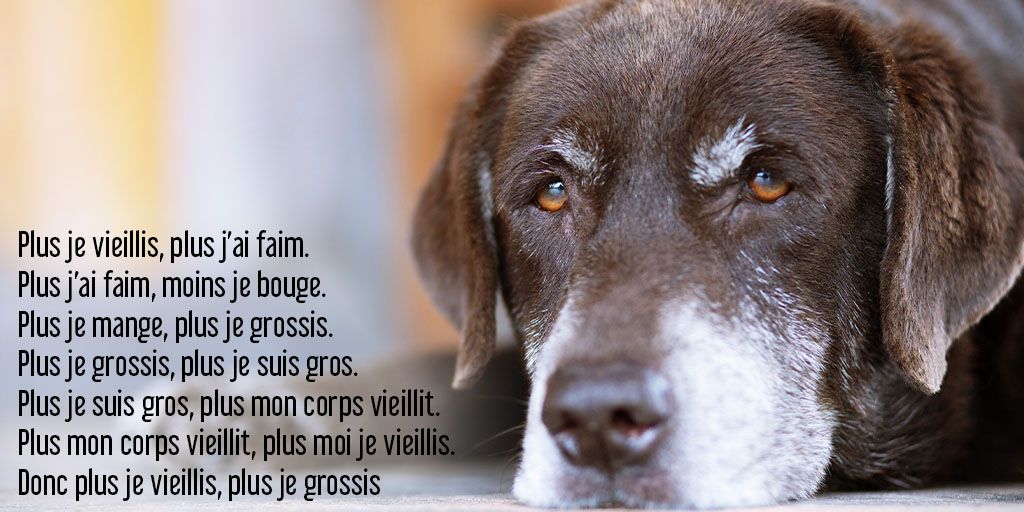
By playing the role of Rocky Balboa-style fatherly coaches, we forget that our four-legged friends age too. They become less “rock’n’roll” and more “chill / relaxed”. Result: less activity, fewer calories needed.
Why won’t a dog lose weight?
If your dog stubbornly refuses to lose his roundness, it might be because he’s discovered your hidden stash of biscuits in the cupboard. Diet is important, but moving his rear end matters just as much. Get ready to become the best friend of the postman, the park, and the tennis ball!
How to make an overweight dog lose weight?
A good diet is like a good joke: it always comes with a punchline. Walks, runs, canicross… give your dog the fitness program he deserves and he’ll thank you with extra cuddles!
What are the best kibbles for an overweight dog?
If your dog had a preference, he would choose quality light kibble. It’s lower in fat, rich in protein and fibre. In short, the perfect menu to stay in shape!
By the way, feel free to discover our various ranges of kibble specially designed for overweight dogs:
✅ Pro Plan – All size – Adult – Light/Sterilised – Chien – 3 kg – PURINA – Kibble for neutered and/or overweight dogs
> To discover the full range of our dog food, click here: Croquettes chien
How much kibble per day for a dog?
The kibble diet is like a cake recipe: you have to follow the instructions to the letter. 15 grams per kilo of the dog’s weight.
What diseases can cause your dog to gain weight?

Ah, Cushing’s disease, it’s a bit like the adrenal glands throwing a cortisol party and the dogs are the guests of honour!
So, here are the stars of this party:
- Pituitary Adenoma: This is a type of non-cancerous tumour that acts like a DJ in the dog’s brain. It pumps out ACTH, a hormone that gets the adrenal glands dancing to the frantic rhythm of cortisol.
- Adrenal Adenoma: This tumour, meanwhile, is the star of the adrenal glands itself. No need for a middleman, it sends cortisol straight into overdose!
- Prolonged Corticosteroid Therapy: It’s as if the dog had grabbed the mic (i.e. corticosteroids) too often, and it ended up disrupting the cortisol playlist.
The symptoms?
- Polydipsia and Polyuria: The dog drinks as if it were in the middle of a desert and pees as if in a contest!
- Polyphagia: He has an ogre’s appetite, the buffet is open 24/7!
- Balloon-Mode Abdomen: His belly is like a balloon that won’t deflate!
- Hairy Fashion Show: He’s losing his fur, as if he’d signed up for a shearing competition!
- Muscle Weakness: His muscles are a bit like cooked noodles, not very firm!
- Parade of Tumours and Resistant Wounds: Not exactly glamorous guests, but they crash the party anyway!
- Porcelain Bones: His bones are fragile like porcelain, better avoid sudden movements!
In short, it’s a real hormonal rave party!
To diagnose all this, blood tests are done to measure cortisol and ACTH levels. And sophisticated equipment like ultrasound or CT scans is used to find the source of this avalanche of cortisol.
To restore order to all this chaos, there are a few options: medication to silence the cortisol music, surgery to remove the unwanted DJs (the tumours), or a cocktail of both! However, to avoid getting to that point, it’s good to work on your furry friend’s fitness and fight against obesity.
Now it’s Félix’s turn to be examined under the microscope…
What about the cat, that expert in strategic naps? It’s time for the VIP consultation slot!
What weight for an obese cat?
If your cat has gone from “soft coat” status to “bouncing ball of fur”, it’s time to act! Precise quantities depending on weight, but don’t forget, the goal is quality and zen digestion.
Pssssst… good to know:
- Weight from 2 to 4 kg: About 30 to 50 grams per day
- Weight from 4 to 6 kg: About 50 to 70 grams per day
- Weight from 6 to 8 kg: About 65 to 85 grams per day
- Weight from 8 to 10 kg: About 80 to 100 grams per day
Is it serious if my cat is fat?
An obese cat is like a comedian without an audience: it falls flat. The risks are there, from difficulty jumping to serious health problems. For sure, your cat would rather be an agile feline than the star of the pâté festival.
How to help an obese cat lose weight?

No drastic diet worthy of a feline bodybuilding contest. Light kibble and a gradual reduction in portion size, that’s the secret. Keep the atmosphere zen and protest meows at bay!
How to feed an overweight cat?
Stop treats and milk for a while! No exceptions, even if your blackmailing cat tries the “sad look” tactic. If you have a tribe of cats, make sure there’s no secret snacking going on backstage.
Discover our various selections of kibble specially designed for overweight cats:

> To discover the full range of our cat food, it's this way: Croquettes chat
There you go, you're now armed to fight against your pets' extra pounds! Remember, a dog or cat in great shape is like a successful stand-up show: it makes you laugh and it lasts a long time! Time to get to work and fight obesity in your best friends.
What's more, regular check-ups at the vet's are like having your own security guard at the door of the party, to make sure everything goes smoothly.
So, on your marks, get set, slim down!


