Why you shouldn't kill hornets

Cécile de Produits-Veto
Pharmacy technician ·

Hornets, often feared for their size and painful sting, are nevertheless insects essential to the balance of our ecosystem. While their presence can be worrying, killing them systematically is an ecological mistake with lasting consequences.
In this article, discover why it is important to preserve hornets, what the differences are between the species, and how to coexist with them safely.
Hornets: who are they really?
The hornet is an insect of the Vespidae family, just like wasps. In France, two species are mainly distinguished:
- The European hornet (Vespa crabro)
- The Asian hornet (Vespa velutina), an invasive species
These insects live in colonies organised around a queen. Although they can sting to defend themselves, hornets are generally less aggressive than wasps, as long as no one approaches their nest.
The ecological role of hornets
Hornets are natural regulators of insects. They feed mainly on:
- Flies
- Mosquitoes
- Caterpillars
- Wasps
Their presence therefore helps limit the proliferation of harmful insects, including those that affect our pets or beehives, apart from the specific case of the Asian hornet.
They also contribute to pollination, although to a lesser extent than bees or bumblebees.
Why should hornets not be killed?
Killing hornets, particularly the European hornet, has several harmful effects:
Ecological imbalance
By removing a natural predator, the multiplication of unwanted insects in our gardens and habitats is encouraged.
Increased risk of stings
Hornets, when they feel threatened (for example when their nest is destroyed), can attack in groups.
Threat to biodiversity
Untargeted extermination campaigns often affect other beneficial species, such as bees or bumblebees.
Conflict with regulations
In certain regions, the unauthorised destruction of hornet nests is prohibited, particularly in protected areas or those classified as Natura 2000.

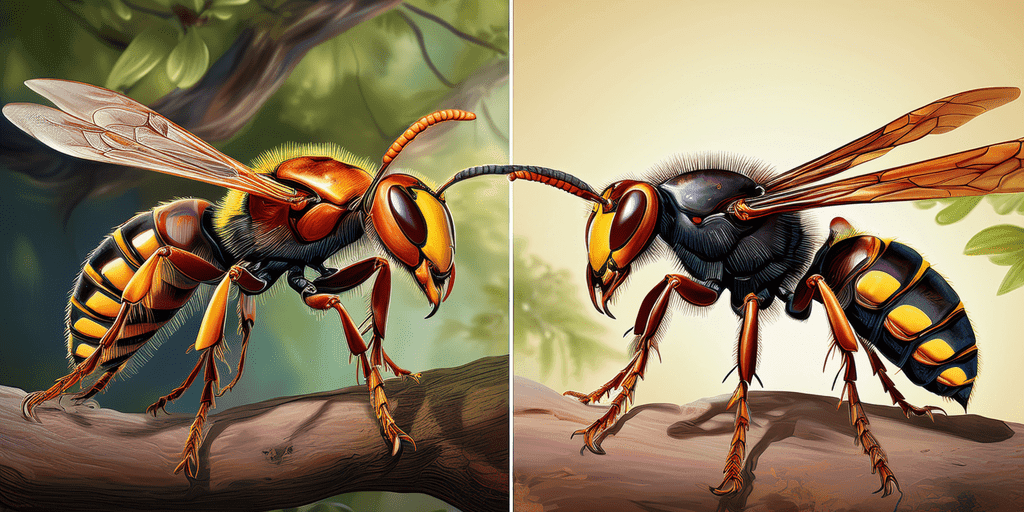
Asian hornet vs European hornet: do not confuse them
It is important to tell the species apart before taking any action:
| Characteristic | European hornet | Asian hornet |
|---|---|---|
| Size | 2,5 to 3,5 cm | 2 to 3 cm |
| Colour | Yellow and light brown | Dark body, orange-tipped ends |
| Behaviour | Not very aggressive | More invasive, threatens bees |
| Status | Local species | Invasive species |
Do not confuse: mistakenly killing a European hornet can have a strong ecological impact, even though it poses no major danger.
FAQ – Do you have questions?
How to react to a hornet's nest?
– Do not intervene yourself, especially if the nest is active.
– Contact an approved professional or your town hall.
– If in doubt, favour gentle methods to drive them away rather than killing them.
Natural products to keep hornets away without killing them
On produits-veto.com, you will find natural repellents and alternative solutions that respect biodiversity. Here are a few suggestions:
- Repellent essential oils (citronella, clove)
- Natural anti-insect candles
- Selective bait traps
(to be used sparingly to avoid catching non-target species)
Discover our range of products and the solutions from our partners.


