ADVANCE
(1)
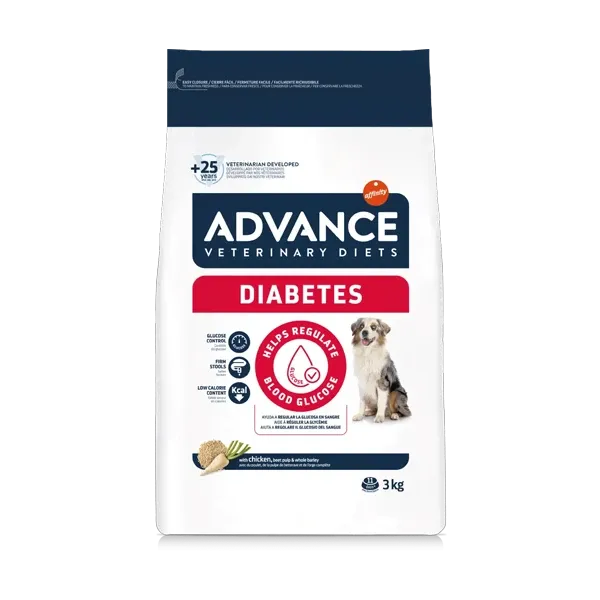
Advance Veterinary Diets Diabetes for Dogs - 3 kg - ADVANCE
In stock
22,42 €
Unavailable in your country
We do not currently ship to your country (États-Unis).
Free shipping from €99
In mainland France
Dispatched within 24h
From the Pharmacie de l'Envigne (86)
Delivery within 2 to 4 days
In mainland France
Secure payment
Encrypted transaction
ANSES-approved pharmacy
Advice from qualified pharmacists
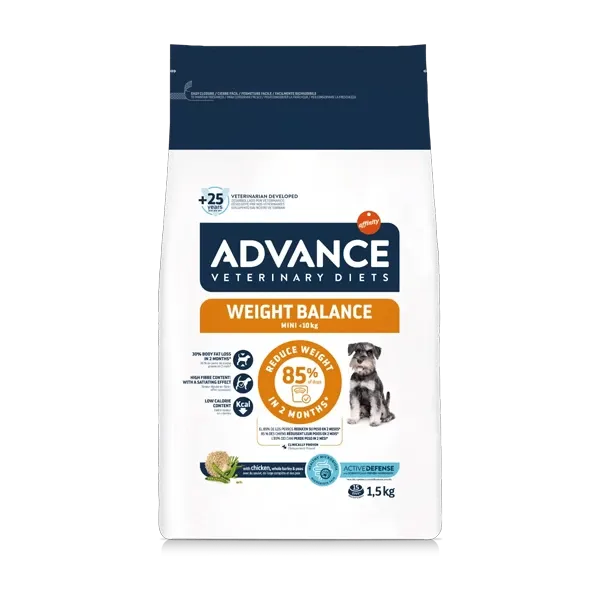
Advance Veterinary Diets Weight Balance Mini is a complete dietetic food intended for adult small breed dogs. This reference targets the reduction of excess weight. It is also suitable for regulating lipid metabolism in cases of hyperlipidemia. The formula is based on low energy content, low fat content and a high content of essential fatty acids. It is specifically designed for mini dogs under 10 kg.
For an overweight dog, the choice of food is central. Indeed, weight management is not limited to simply reducing rations. It is also necessary to preserve muscle mass, maintain good satiety and offer a suitable kibble size. This is precisely the positioning of this ADVANCE recipe. The brand highlights a high fibre content, a reduced calorie content, the addition of L-carnitine and a high protein content.
The recipe notably combines dehydrated poultry protein, corn protein, pea fibre, whole barley at 10 %, dehydrated peas at 7 %, cellulose powder, oat fibre, beet pulp at 2 %, fish oil, as well as fructo-oligosaccharides at 0.5 %. It also contains L-carnitine at a rate of 500 mg.
In terms of analytical constituents, this product shows 33 % crude protein, 10.5 % crude fat, 11.5 % crude fibre, 7.5 % crude ash, 0.4 % omega-3 and 2990 kcal/kg of metabolisable energy. This data confirms the dietetic positioning of the formula to support an overweight dog within a supervised nutritional programme.
This reference offers several advantages to support an overweight dog:
ADVANCE also states that the results of the Weight Balance Mini range are clinically proven, with 85 % of dogs losing weight in 2 months in an in-house home study. The brand also mentions a 30 % loss of fat mass in 2 months.
In small dogs, weight overload deserves prompt management. ADVANCE points out that a dog is overweight from 10 % above its ideal weight. Beyond 20 %, it may be considered obese. The same source specifies that overweight and obesity can increase the risk of diseases such as diabetes, joint problems or respiratory disorders by up to 4 times.
In this context, this formula can be a coherent nutritional solution. It helps reduce calories, while maintaining a good level of protein and fibre. In addition, ADVANCE states that its formula also aims to modify the intestinal microbiota to bring it closer to that of dogs at their ideal weight.
Finally, the brand recommends consulting a veterinarian before introducing a veterinary diet. This precision is important to adjust the weight target, monitor the animal's progress and verify that the ration remains suited to its overall condition.
To help an overweight dog, it is first necessary to put in place a suitable diet. This ADVANCE reference has been formulated with low energy content, low fat content and a high content of fibre and protein. This type of nutritional profile aims to reduce excess weight while promoting satiety and muscle maintenance. ADVANCE also recommends veterinary follow-up before introducing this diet.
Several levers must be used. First, it is advisable to use a dietetic food suited to its size. Here, the formula is intended for mini dogs under 10 kg. Next, it is necessary to follow a ration consistent with the weight loss target. As a guide, ADVANCE gives a starting ration of 31 to 34 g per day for an adult dog of 2 kg, 61 to 68 g for 5 kg and 103 to 115 g for 10 kg. Finally, daily activity and regular weight monitoring remain essential.
Excess weight affects the dog's wellbeing. According to ADVANCE, it can increase the risk of certain diseases by up to 4 times, notably diabetes, joint problems and respiratory problems. The brand also points out that a dog above 10 % of its ideal weight is already overweight. Early nutritional management therefore helps limit the worsening of the situation.
In practice, weighing is often done at a veterinarian's or in certain equipped pet stores. What matters most is the regularity of monitoring. To support an overweight dog, it is necessary to compare weight over time, then adjust the ration according to the observed progress and according to the veterinarian's recommendations. ADVANCE also emphasises the value of veterinary supervision before setting up the diet.
To complete this sheet, you can include the following internal links: