BIOCANINA
(2)
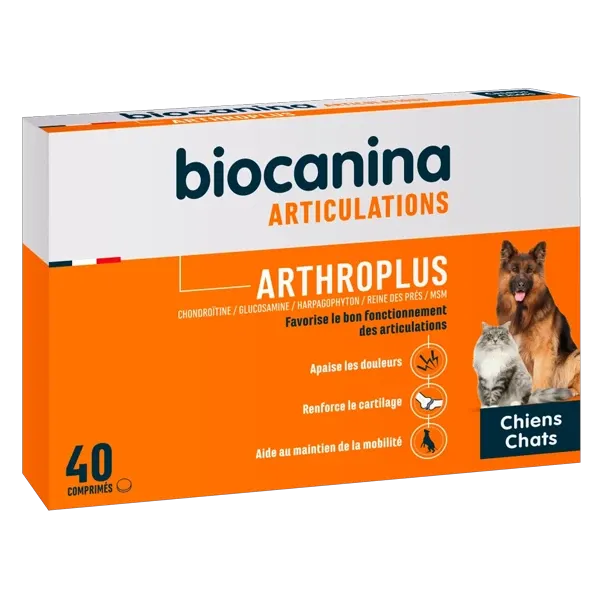
Arthroplus - Joints and mobility - Dogs and cats - 40 tablets - BIOCANINA
In stock
14,92 €
Unavailable in your country
We do not currently ship to your country (États-Unis).
Free shipping from €99
In mainland France
Dispatched within 24h
From the Pharmacie de l'Envigne (86)
Delivery within 2 to 4 days
In mainland France
Secure payment
Encrypted transaction
ANSES-approved pharmacy
Advice from qualified pharmacists
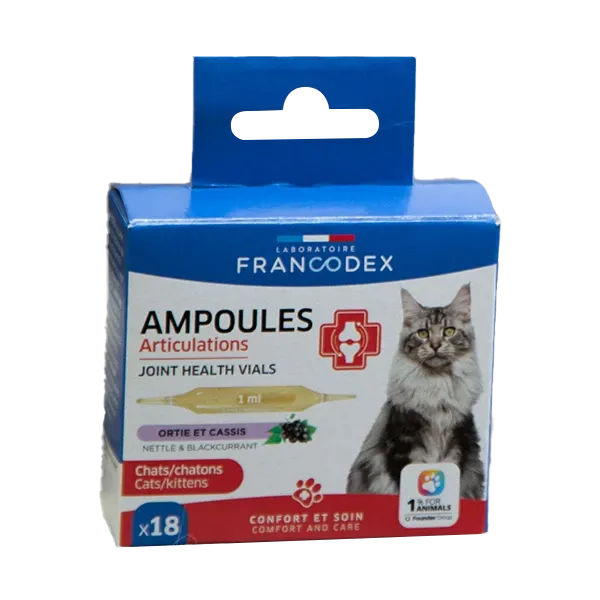
The Ampoules for cat joints - 18 ampoules - FRANCODEX are designed to support cats with joint sensitivity. They are suitable for adult cats as well as ageing cats. They also meet the needs of cats whose mobility changes with age or lifestyle.
Developed by Francodex, these ampoules are part of a veterinary approach to joint support. They complement the daily diet. They help maintain joint comfort. They fit easily into an overall care routine.
A cat's joints play a central role in its movements. Cats put a lot of strain on their joints when jumping, running and playing. Over time, this repeated strain can weaken mobility. Targeted nutritional support helps accompany these changes.
A cat's joints can become more sensitive with age. The first signs often go unnoticed. Cats sometimes change their habits. They jump less high. They move more cautiously. These gradual changes require particular attention.
Francodex joint ampoules provide adapted nutritional support. They fit into an overall approach to joint well-being. They accompany periods of fragility. They support the flexibility and comfort of cat joints.
The ampoule format makes administration easier. It allows for a precise dose. It suits fussy or selective cats. This packaging encourages regular compliance, essential for long-term support.
Joint pain in cats often remains discreet. Cats naturally mask discomfort. However, certain signs may raise an alert. A decrease in jumping is a common indicator. Hesitation to climb onto furniture may appear. The cat may also become less active. These gradual changes deserve particular attention. Support for cat joints may then be considered.
Pica syndrome is characterised by the ingestion of non-food items. It is not directly a joint condition. However, underlying disorders can influence behaviour. Chronic pain, including joint pain, can sometimes change a cat's habits. A veterinary assessment remains essential to identify the exact cause and adapt the care provided.
The most common joint disease in cats remains osteoarthritis. It mainly affects older cats. It can also affect younger cats depending on their build or activity level. Osteoarthritis causes progressive deterioration of the joints. Nutritional support for cat joints helps accompany this progression and improve daily comfort.
Les douleurs articulaires chez le chat restent souvent discrètes. Le chat masque naturellement l’inconfort. Certains signes peuvent toutefois alerter. Une diminution des sauts constitue un indice fréquent. Une hésitation à monter sur les meubles peut apparaître. Le chat peut aussi devenir moins actif. Ces changements progressifs méritent une attention particulière. Un soutien des articulations du chat peut alors être envisagé.
Le syndrome de pica se caractérise par l’ingestion d’objets non alimentaires. Il ne s’agit pas directement d’une pathologie articulaire. Toutefois, des troubles sous-jacents peuvent influencer le comportement. Une douleur chronique, y compris articulaire, peut parfois modifier les habitudes du chat. Une évaluation vétérinaire reste indispensable pour identifier la cause exacte et adapter la prise en charge.
La maladie articulaire la plus fréquente chez le chat reste l’arthrose. Elle touche principalement les chats âgés. Elle peut aussi concerner des chats plus jeunes selon leur morphologie ou leur activité. L’arthrose entraîne une dégradation progressive des articulations. Un soutien nutritionnel des articulations du chat permet d’accompagner cette évolution et d’améliorer le confort au quotidien.