ELANCO ›ADVANTAGE
(1)
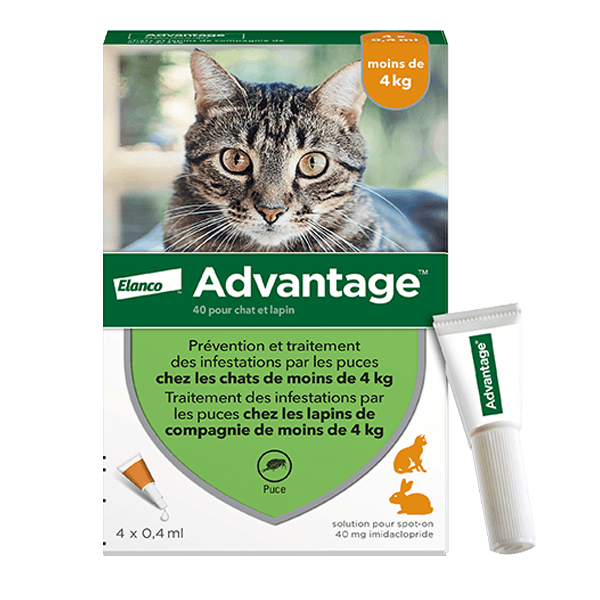
Advantage 40 - 4 x 0.4 ml - Antiparasitic pipettes for cats and rabbits - ELANCO
In stock
13,33 €
Unavailable in your country
We do not currently ship to your country (États-Unis).
Free shipping from €99
In mainland France
Dispatched within 24h
From the Pharmacie de l'Envigne (86)
Delivery within 2 to 4 days
In mainland France
Secure payment
Encrypted transaction
ANSES-approved pharmacy
Advice from qualified pharmacists
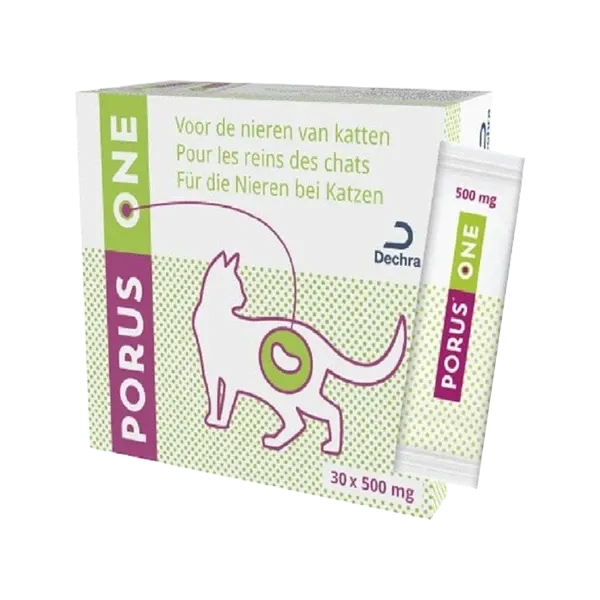
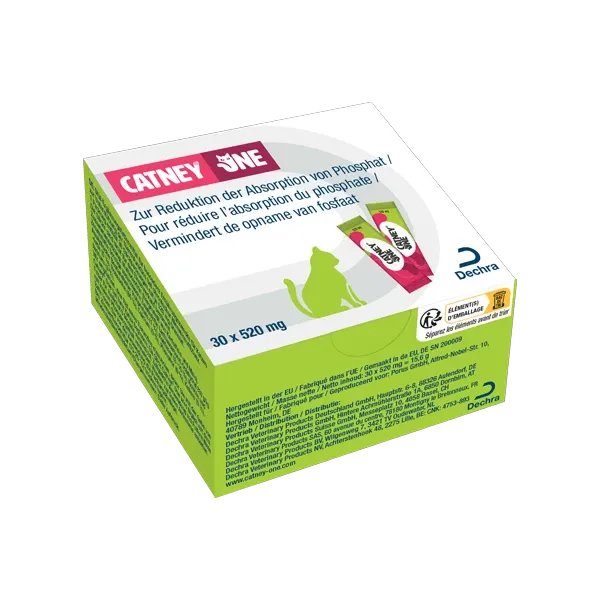
Catney One is a nutritional supplement specifically developed to support the cat's kidney function. It is intended for cats with chronic kidney disease, a common condition in older felines. This product acts as a complement to diet and veterinary follow-up. It does not replace medical treatment, but supports overall management. Its main goal is to limit the impact of uremic toxins on the cat's body. Thus, Catney One helps preserve the animal's quality of life over the long term.
Catney One is based on a recognized principle of action in supporting feline kidney function. Its formula acts at the intestinal level. It helps capture certain precursors of uremic toxins before their absorption. This approach helps reduce the toxic load borne by the kidneys. By limiting the circulation of these substances in the body, the supplement indirectly supports kidney work. This nutritional strategy fits perfectly into the management of feline chronic kidney disease.
Catney One is developed by DECHRA, a laboratory recognized for its expertise in animal health. The formulation meets strict quality and safety requirements. It is suitable for daily administration. The sachet format facilitates compliance, even with difficult cats. The product is used over the long term, under veterinary supervision. It is part of a reasoned nutritional support approach for the cat's kidney function.
When a cat's kidney function is impaired, several signs may appear. The cat often drinks more and urinates more frequently. A loss of appetite gradually sets in. The animal may lose weight and show reduced activity. Vomiting or bad breath may also be observed. These symptoms warrant a prompt veterinary consultation in order to establish a precise diagnosis and adapt management.
Kidney disease in cats often progresses gradually. The first signs sometimes go unnoticed. Increased thirst, weight loss and a duller coat may be observed. The cat may seem tired or less playful. At a more advanced stage, digestive disorders appear. Nutritional support targeting the cat's kidney function then becomes essential, in addition to veterinary follow-up.
Chronic kidney disease in cats is classified into several stages according to biological criteria. These stages help assess the severity of kidney damage. They range from an early stage, often asymptomatic, to an advanced stage with marked clinical signs. This classification helps the veterinarian adapt diet and supplements. Targeted support for the cat's kidney function may be considered at different stages, depending on the clinical situation.
Lorsque la fonction rénale du chat est altérée, plusieurs signes peuvent apparaître. Le chat boit souvent davantage et urine plus fréquemment. Une perte d’appétit s’installe progressivement. L’animal peut maigrir et présenter une baisse d’activité. Des vomissements ou une haleine chargée peuvent également être observés. Ces symptômes justifient une consultation vétérinaire rapide afin de poser un diagnostic précis et d’adapter la prise en charge.
L’insuffisance rénale chez le chat évolue souvent de manière progressive. Les premiers signes passent parfois inaperçus. On observe une augmentation de la soif, une perte de poids et un poil plus terne. Le chat peut sembler fatigué ou moins joueur. À un stade plus avancé, des troubles digestifs apparaissent. Un accompagnement nutritionnel visant la fonction rénale du chat devient alors essentiel, en complément du suivi vétérinaire.
L’insuffisance rénale chronique du chat est classée en plusieurs stades selon des critères biologiques. Ces stades permettent d’évaluer la sévérité de l’atteinte rénale. Ils vont d’un stade précoce, souvent asymptomatique, à un stade avancé avec signes cliniques marqués. Cette classification aide le vétérinaire à adapter l’alimentation et les compléments. Un soutien ciblé de la fonction rénale du chat peut être envisagé à différents stades, selon la situation clinique.