ZOETIS
(26)
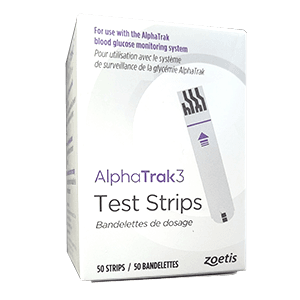
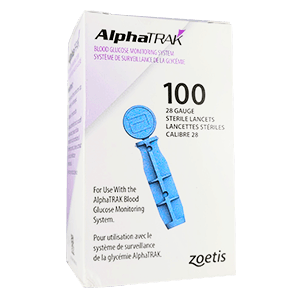
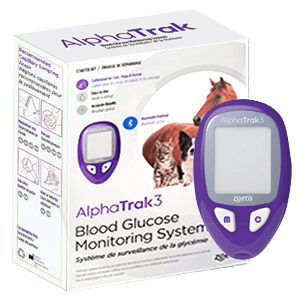
Alphatrak 3 - Blood Glucose Monitoring System for Dogs and Cats - Starter Kit - ZOETIS
In stock
108,42 €
Unavailable in your country
We do not currently ship to your country (États-Unis).
Free shipping from €99
In mainland France
Dispatched within 24h
From the Pharmacie de l'Envigne (86)
Delivery within 2 to 4 days
In mainland France
Secure payment
Encrypted transaction
ANSES-approved pharmacy
Advice from qualified pharmacists
Diabetes mellitus is a common endocrine condition in our domestic cats. This disease is very often associated with a problem of overweight or obesity. Indeed, excess body fat disrupts the functioning of insulin. The cat then becomes unable to properly regulate its blood sugar level. Consequently, diet plays an absolutely central therapeutic role. Cats are strict carnivores by nature. Their body is not designed to digest large amounts of carbohydrates. Yet many standard kibbles contain too much cereal and starch. These fast-acting sugars cause dangerous glycaemic spikes after meals. To stabilise a diabetic cat, it is essential to revise its diet. A suitable food must drastically limit carbohydrate intake. It must favour high-quality animal proteins. This is exactly the goal of the dry food for diabetic cats from the Virbac range. It helps manage the disease while treating excess weight.
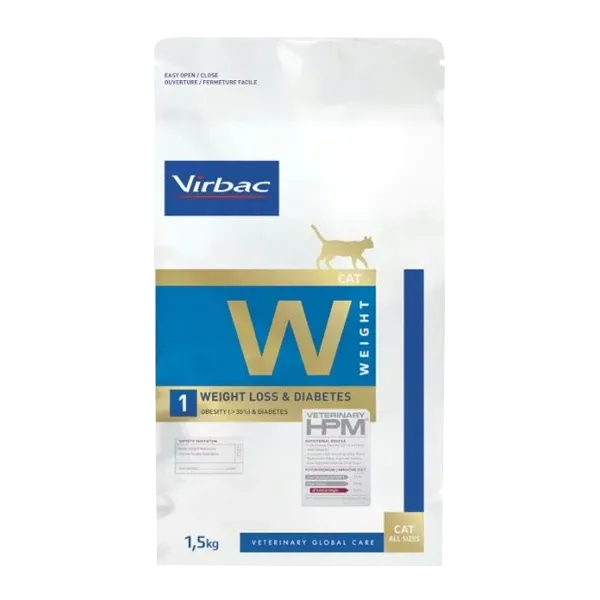
The French veterinary laboratory Virbac has developed the Veterinary HPM concept. This nutritional approach is based on the "High Protein - Low Carbohydrate" principle. Concretely, this means a high protein content and low carbohydrate content. The HPM W1 Weight loss & diabetes kibble perfectly respects your animal's physiology. It contains a large amount of pork and poultry protein. These proteins are essential for maintaining the cat's muscle mass during its diet. Indeed, a cat on a diet must not lose muscle, only fat. Moreover, proteins have a very powerful natural appetite-suppressing effect. Your animal will feel full faster and for longer. It will ask for food less often between meals. At the same time, the formula contains very little starch. This helps maintain a stable and low blood glucose curve. This balance helps reduce the need for exogenous insulin over the long term.
This veterinary diet offers multiple benefits for your companion's health:
The best kibble for this condition must have a strict nutritional profile. It must contain a very high protein level, often above 40%. Conversely, the carbohydrate level (or nitrogen-free extract) must be as low as possible. The Virbac HPM W1 dry food for diabetic cats meets these precise criteria. It shows a very low carbohydrate level thanks to the absence of cereals such as maize or wheat. Moreover, it includes fibres to slow down sugar digestion. This nutritional profile helps smooth the glycaemic curve after the meal. This is essential to avoid postprandial hyperglycaemia. Always ask your veterinarian's advice before changing the diet of a sick animal.
The best diet combines hydration and sugar control. Ideally, mixed feeding (wet food and kibble) is recommended. Wet food provides water, which is beneficial for the kidneys. However, specific veterinary kibble such as Virbac W1 is excellent. It is formulated to be a complete and balanced food. The important thing is consistency in feeding. The same food must be given, at the same times, every day. This regularity helps stabilise insulin needs. Absolutely avoid sugary treats or table scraps. Virbac W1 kibble can be given alone or alongside a "Low Carb" wet food.
Lowering diabetes relies on three pillars: insulin, diet and weight. Initial treatment often requires insulin injections prescribed by the veterinarian. At the same time, you must switch to a low-carbohydrate dietetic food. If your cat is overweight, weight loss is crucial. Indeed, obesity creates insulin resistance. By losing fat, the cat's cells become more receptive to insulin. In some cases, early and rigorous management allows remission. The cat may then no longer need injections, while keeping its specific diet for life. Moderate physical exercise, through play, also helps consume blood glucose.
For a diabetic cat, it is essential to avoid standard supermarket brands. These products are often very rich in cereals to reduce manufacturing costs. They contain a lot of starch (rice, maize, wheat) and sometimes added sugars for taste. These carbohydrates are true poisons for a diabetic cat. They cause immediate glycaemic spikes. Likewise, avoid so-called "light" kibble that replaces fat with cereals. Always favour veterinary or premium "Grain Free" ranges with verified analysis. Dry food for diabetic cats must have a transparent formulation focused on animal proteins.
Les meilleures croquettes pour cette pathologie doivent avoir un profil nutritionnel strict. Elles doivent contenir un taux de protéines très élevé, souvent supérieur à 40%. À l'inverse, le taux de glucides (ou extractif non azoté) doit être le plus bas possible. Les croquettes pour chat diabétique Virbac HPM W1 répondent à ces critères précis. Elles affichent un taux de glucides très faible grâce à l'absence de céréales comme le maïs ou le blé. De plus, elles intègrent des fibres pour ralentir la digestion des sucres. Ce profil nutritionnel permet de lisser la courbe glycémique après le repas. C'est essentiel pour éviter les hyperglycémies postprandiales. Demandez toujours l'avis de votre vétérinaire avant de changer l'alimentation d'un animal malade.
La meilleure alimentation combine hydratation et contrôle des sucres. Idéalement, la bi-nutrition (pâtée et croquettes) est recommandée. Les aliments humides apportent de l'eau, ce qui est bénéfique pour les reins. Cependant, les croquettes vétérinaires spécifiques comme les Virbac W1 sont excellentes. Elles sont formulées pour être un aliment complet et équilibré. L'important est la constance dans la distribution. Il faut donner la même nourriture, aux mêmes heures, chaque jour. Cette régularité aide à stabiliser les besoins en insuline. Évitez absolument les friandises sucrées ou les restes de table. Les croquettes Virbac W1 peuvent être données seules ou en complément d'une pâtée "Low Carb".
Faire baisser le diabète repose sur trois piliers : l'insuline, l'alimentation et le poids. Le traitement initial nécessite souvent des injections d'insuline prescrites par le vétérinaire. Simultanément, vous devez passer à une alimentation diététique pauvre en glucides. Si votre chat est en surpoids, la perte de poids est cruciale. En effet, l'obésité crée une résistance à l'insuline. En perdant du gras, les cellules du chat deviennent plus réceptives à l'insuline. Dans certains cas, une prise en charge précoce et rigoureuse permet une rémission. Le chat peut alors ne plus avoir besoin d'injections, tout en gardant son régime spécifique à vie. L'exercice physique modéré, par le jeu, aide aussi à consommer le glucose sanguin.
Pour un chat diabétique, il faut impérativement éviter les marques de grande surface standard. Ces produits sont souvent très riches en céréales pour réduire les coûts de fabrication. Ils contiennent beaucoup d'amidon (riz, maïs, blé) et parfois des sucres ajoutés pour le goût. Ces glucides sont de véritables poisons pour un chat diabétique. Ils provoquent des pics de glycémie immédiats. De même, évitez les croquettes dites "light" qui remplacent le gras par des céréales. Privilégiez toujours des gammes vétérinaires ou premium "Sans Céréales" (Grain Free) avec analyse vérifiée. Les croquettes pour chat diabétique doivent avoir une formulation transparente axée sur les protéines animales.