ZOETIS
(26)
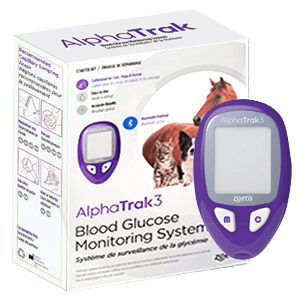
Alphatrak 3 - Blood Glucose Monitoring System for Dogs and Cats - Starter Kit - ZOETIS
In stock
108,42 €
Unavailable in your country
We do not currently ship to your country (États-Unis).
Free shipping from €99
In mainland France
Dispatched within 24h
From the Pharmacie de l'Envigne (86)
Delivery within 2 to 4 days
In mainland France
Secure payment
Encrypted transaction
ANSES-approved pharmacy
Advice from qualified pharmacists
Diabetes mellitus in cats is a chronic condition that requires rigorous daily management. The link between obesity and type 2 diabetes is clearly established in felines. Excess adipose tissue releases hormones that prevent insulin from functioning properly. This is known as insulin resistance. To break this vicious cycle, diet is the first therapeutic lever. It is essential to reduce the workload on the pancreas by limiting the intake of fast sugars. Standard kibble, often too rich in cereals, is not suited to this fragile metabolism. It causes sharp increases in blood sugar levels after each meal. Diabetic cat food is specifically formulated to smooth out these intakes. It helps control the disease over the long term while promoting a return to an ideal body weight. The 3 kg format is particularly suited for following this dietary treatment over time.
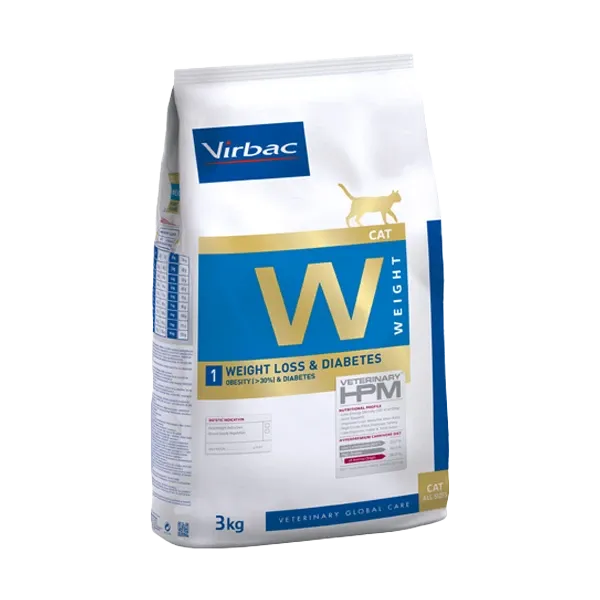
Virbac's Veterinary HPM range stands out for its formulation, which is close to the cat's instinctive needs. As a strict carnivore, your companion draws its energy from proteins rather than carbohydrates. This W1 (Weight Loss & Diabetes) dietary formula reverses the usual proportions. It provides a very high content of high-quality animal proteins (pork and poultry). This protein richness is crucial for two reasons. On one hand, it ensures rapid satiety, preventing the animal from constantly begging for food. On the other hand, it forces the body to draw on its fat reserves for energy, while preserving muscle mass.
At the same time, the starch content is reduced to a strict minimum. This "Low Carb" strategy reduces the extent of postprandial blood sugar fluctuations. This is a major asset in stabilizing insulin needs in treated cats. In addition, the presence of chondroitin sulfate protects the joints, which are often put under strain in overweight cats.
Choosing the 3 kg pack size offers several advantages for your pet's treatment:
The lifespan of a 3 kg bag depends on your pet's target weight and rationing protocol. For a cat on a weight loss program aiming for 5 kg, the daily ration is around 55 to 60 grams. In this case, the bag will last about 50 days. If the cat is stabilized and does not need to lose more weight, the ration will be slightly higher. This is an ideal format to avoid having to reorder food too frequently. It guarantees peace of mind for the owner. Be sure to reseal the bag after use to preserve vitamins and protein freshness.
Changing the diet of a diabetic cat must be done with caution. An abrupt change can cause digestive issues or food refusal. Moreover, the change in nutritional composition will impact blood sugar levels. Therefore, the old food should be mixed with Virbac W1 diabetic cat food over a period of 7 to 10 days. Start with 25% new food for the first two days, then move to 50%, and finally 75%. Carefully monitor your cat's water intake and appetite during this phase. If your cat is receiving insulin, your veterinarian may need to adjust the dose based on this new low-sugar diet.
This is a common question in households with multiple cats. HPM W1 food is a complete and balanced diet. It is rich in protein and low in carbohydrates, which physiologically matches the needs of all cats, even healthy ones. It poses no danger to a healthy cat, quite the opposite. However, it is less caloric than maintenance food. For a very active or thin cat, it may not provide enough energy. If your other cats are of normal weight or prone to being overweight, they can eat this food. This simplifies meal management. Simply monitor their weight on the scale.
Polydipsia (excessive thirst) is a classic symptom of unstabilized diabetes. When blood sugar levels exceed a certain threshold, glucose passes into the urine. This sugar "draws" water from the body through osmosis, which increases urine volume. The cat becomes dehydrated and therefore drinks heavily to compensate. With the implementation of the Virbac W1 diet and insulin therapy, blood sugar levels will decrease. You should notice a gradual reduction in water intake. This is an excellent indicator of the effectiveness of the treatment and diet. If your cat starts drinking a lot again, consult your veterinarian.
La durée de vie d'un sac de 3 kg dépend du poids cible de votre animal et du protocole de rationnement. Pour un chat en programme de perte de poids visant 5 kg, la ration quotidienne tourne autour de 55 à 60 grammes. Dans ce cas de figure, le sac durera environ 50 jours. Si le chat est stabilisé et ne doit plus perdre de poids, la ration sera légèrement supérieure. C'est un format idéal pour ne pas avoir à recommander des croquettes trop fréquemment. Il garantit une tranquillité d'esprit pour le propriétaire. Pensez à bien refermer le sac après usage pour préserver les vitamines et la fraîcheur des protéines.
Le changement d'alimentation chez un chat diabétique doit se faire avec précaution. Une transition brutale peut causer des troubles digestifs ou un refus de manger. De plus, le changement de composition nutritionnelle va impacter la glycémie. Il faut donc mélanger l'ancien aliment avec les croquettes pour chat diabétique Virbac W1 sur une période de 7 à 10 jours. Commencez par 25% de nouvelles croquettes les deux premiers jours, puis passez à 50%, et enfin 75%. Surveillez attentivement la consommation d'eau et l'appétit de votre chat durant cette phase. Si votre chat reçoit de l'insuline, votre vétérinaire devra peut-être ajuster la dose en fonction de ce nouveau régime pauvre en sucres.
C'est une question fréquente dans les foyers possédant plusieurs chats. Les croquettes HPM W1 sont un aliment complet et équilibré. Elles sont riches en protéines et pauvres en glucides, ce qui correspond physiologiquement aux besoins de tous les chats, même sains. Elles ne présentent pas de danger pour un chat en bonne santé, au contraire. Cependant, elles sont moins caloriques que des croquettes de maintenance. Pour un chat très actif ou maigre, elles risquent de ne pas fournir assez d'énergie. Si vos autres chats ont un poids normal ou une tendance à l'embonpoint, ils peuvent consommer cet aliment. Cela simplifie la gestion des repas. Surveillez simplement leur poids sur la balance.
La polydipsie (soif excessive) est un symptôme classique du diabète non stabilisé. Lorsque le taux de sucre dans le sang dépasse un certain seuil, le glucose passe dans les urines. Ce sucre "aspire" l'eau du corps par osmose, ce qui augmente le volume des urines. Le chat se déshydrate et boit donc énormément pour compenser. Avec la mise en place du régime Virbac W1 et de l'insulinothérapie, la glycémie va baisser. Vous devriez constater une diminution progressive de la prise de boisson. C'est un excellent indicateur de l'efficacité du traitement et de l'alimentation. Si votre chat recommence à boire beaucoup, consultez votre vétérinaire.