Veterinary medicine
BOIRON
(10)
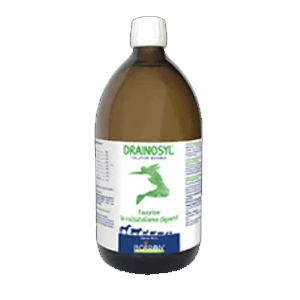
Drainosyl - Liver Drainage for Horses and Farm Animals - Homeopathy - 1 L - BOIRON
In stock
48,25 €
Unavailable in your country

We do not currently ship to your country (États-Unis).
Free shipping from €99
In mainland France
Dispatched within 24h
From the Pharmacie de l'Envigne (86)
Delivery within 2 to 4 days
In mainland France
Secure payment
Encrypted transaction
ANSES-approved pharmacy
Advice from qualified pharmacists
The overall health of the horse depends on good management of metabolic waste. The laboratory HORSE MASTER developed Equi diur to meet this vital need. This product is an oral solution specifically formulated for optimal drainage. It acts directly on the two key organs of purification. The hepato-renal function is thus effectively supported.
Its composition relies on the recognized properties of certain plant extracts. They stimulate the activity of the liver and kidneys. This combined action promotes the elimination of accumulated toxins. The horse stores waste linked to diet and intense work. Consequently, regular drainage is necessary to maintain internal balance. Equi diur is the ideal solution to optimize this natural process.
Intense work and veterinary medication treatments are major stress factors for the equine body. Indeed, physical exertion generates waste, such as lactic acid. This waste must be filtered quickly. The liver then works intensely to break down these by-products. Likewise, taking certain veterinary medications strongly stresses hepato-renal function.
Equi diur is recommended during convalescence. It is also indicated after a change in diet. This product helps the horse quickly regain full fitness. It prevents overload of the liver and kidneys. Thus, the animal recovers better and faster. Healthy hepato-renal function is the key to lasting performance.
Equi diur comes in liquid form, which greatly facilitates its administration. The oral solution is often better accepted by the horse than powders. This format ensures rapid absorption of active ingredients.
The main benefits of this HORSE MASTER product are numerous:
The liver is the central organ of detoxification in horses. It plays several vital roles. First, it filters the blood. Second, it metabolizes nutrients. Finally, it breaks down and inactivates toxic substances. These substances include veterinary medications and environmental toxins. The liver converts these elements into water-soluble compounds. This step is crucial before their elimination by the kidneys. The liver is the essential partner of the kidneys. It prepares waste for excretion. A well-performing liver ensures efficient hepato-renal function.
Hepato-renal function plays a major role in the recovery of athletic horses. Intense exertion causes an accumulation of lactic acid and free radicals. The liver must neutralize these acidic by-products. The kidneys then work to adjust blood pH and excrete nitrogenous metabolites. Good hepato-renal function therefore ensures rapid cleansing of the body. Muscle fatigue decreases more quickly. The horse regains its energy more rapidly. A drainage agent like Equi diur is then a relevant supportive treatment.
The liver and kidneys work in close collaboration in the detoxification process. This cooperation defines hepato-renal function. The liver is the transformation station for toxins. It makes them less dangerous and water-soluble. Then, the kidneys act as the main excretory organ. They filter these water-soluble compounds from the blood. They concentrate them in the urine. Without this synergy, toxins would remain in the blood. They would then cause significant damage to the horse's body. Equi diur supports both organs for maximum effectiveness.
The veterinarian can assess liver function with a simple blood test. Certain biological markers are measured. Notably, liver enzymes such as transaminases (AST, GGT, GLDH) are observed. High levels of these enzymes indicate damage or overload of the liver. Bilirubin and bile acids are also analyzed. Their accumulation may signal dysfunction. The veterinarian interprets these results based on the horse's history. He assesses whether a supportive treatment such as Equi diur is necessary.
Le foie est l'organe central de la détoxification chez le cheval. Il assure plusieurs rôles vitaux. Premièrement, il filtre le sang. Deuxièmement, il métabolise les nutriments. Enfin, il décompose et inactive les substances toxiques. Ces substances incluent les médicaments et les toxines environnementales. Le foie convertit ces éléments en composés hydrosolubles. Cette étape est cruciale avant leur élimination par les reins. Le foie est le partenaire essentiel des reins. Il prépare les déchets pour l'excrétion. Un foie performant garantit une fonction hépato-rénale efficace.
La fonction hépato-rénale joue un rôle majeur dans la récupération des chevaux athlètes. L'effort intense provoque une accumulation d'acide lactique et de radicaux libres. Le foie doit neutraliser ces sous-produits acides. Les reins travaillent ensuite pour ajuster le pH sanguin et excréter les métabolites azotés. Une bonne fonction hépato-rénale assure donc un nettoyage rapide de l'organisme. La fatigue musculaire diminue plus vite. Le cheval retrouve son énergie plus rapidement. Un draineur comme Equi diur est alors un traitement de soutien pertinent.
Le foie et les reins travaillent en étroite collaboration dans le processus de détoxification. Cette coopération définit la fonction hépato-rénale. Le foie est la station de transformation des toxines. Il les rend moins dangereuses et solubles dans l'eau. Ensuite, les reins agissent comme l'organe d'excrétion principal. Ils filtrent ces composés hydrosolubles du sang. Ils les concentrent dans l'urine. Sans cette synergie, les toxines resteraient dans le sang. Elles causeraient alors des dommages importants à l'organisme du cheval. Equi diur soutient les deux organes pour une efficacité maximale.
Le vétérinaire peut évaluer l'état de la fonction hépatique par une simple prise de sang. Certains marqueurs biologiques sont mesurés. On observe notamment les enzymes hépatiques comme les transaminases (AST, GGT, GLDH). Un taux élevé de ces enzymes indique un dommage ou une surcharge au niveau du foie. La bilirubine et les acides biliaires sont également analysés. Leur accumulation peut signaler un dysfonctionnement. Le vétérinaire interprète ces résultats en fonction de l'historique du cheval. Il évalue si un traitement de soutien comme Equi diur est nécessaire.