CLÉMENT THÉKAN
(7)
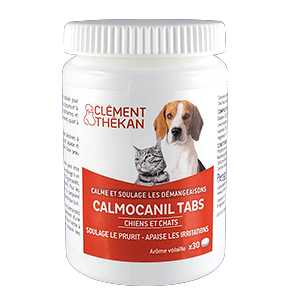
Calmocanil Tabs - Itching - Pruritus - 30 tablets - CLÉMENT THÉKAN
In stock
6,92 €
Unavailable in your country
We do not currently ship to your country (États-Unis).
Free shipping from €99
In mainland France
Dispatched within 24h
From the Pharmacie de l'Envigne (86)
Delivery within 2 to 4 days
In mainland France
Secure payment
Encrypted transaction
ANSES-approved pharmacy
Advice from qualified pharmacists
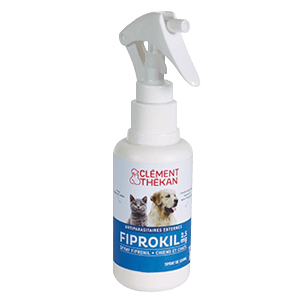
Flea and tick infestations require prompt management. Fiprokil Spray 100 ml is a practical solution for small dogs and cats. This antiparasitic spray allows precise application suited to the animal's weight. It acts directly on external parasites present on the coat.
This dog antiparasitic and cat antiparasitic fits into an overall antiparasitic treatment programme. It helps limit flea proliferation and reduce the risk associated with ticks.
The 100 ml format is perfectly suited to small animals or occasional use. The antiparasitic spray ensures an even distribution over the whole coat. It allows the amount applied to be adjusted according to the animal's size.
It is important to distinguish between antiparasitic and dewormer. A dewormer acts against internal parasites. The cat and dog antiparasitic targets external parasites. These two approaches remain complementary.
In case of severe or persistent infestation, veterinary advice is recommended.
The most effective antiparasitic is the one suited to the animal's profile and exposure. An indoor cat does not have the same needs as a dog living in the countryside. An antiparasitic spray like Fiprokil can be suitable as an antiparasitic treatment when a flexible application is desired. However, effectiveness also depends on following the protocol and treating the environment. In case of repeated infestations, ask your veterinarian for advice.
A dog antiparasitic or a cat antiparasitic acts against external parasites, such as fleas and ticks. A dewormer targets internal parasites, present in the digestive tract. Both actions are complementary, but they do not replace one another. An antiparasitic treatment protects the skin and coat, while a dewormer acts on the intestine. For overall protection, both are often combined, according to the recommended schedule.
An antiparasitic spray formulated for dogs and cats helps eliminate fleas present on the animal. It acts directly on the parasite when applied to the coat. However, in case of infestation, the environment must also be treated, as a large proportion of fleas are found in the home. Vacuuming, washing textiles and a suitable environmental product enhance effectiveness. If the infestation persists, veterinary advice helps choose the best strategy.
Mange requires a specific diagnosis and treatment, often prescribed by a veterinarian. A fabric spray can help sanitise the environment, but it is not sufficient on its own. The animal must be treated with a suitable solution, and then the textiles and bedding must be managed. In case of suspected mange, avoid self-medication and consult a veterinarian promptly. This limits contagion and improves care.
L’antiparasitaire le plus efficace est celui qui correspond au profil de l’animal et à son exposition. Un chat d’intérieur n’a pas les mêmes besoins qu’un chien de campagne. Un spray antiparasitaire comme Fiprokil peut convenir en traitement antiparasitaire lorsqu’on veut une application modulable. Toutefois, l’efficacité dépend aussi du respect du protocole et du traitement de l’environnement. En cas d’infestations répétées, demandez conseil à votre vétérinaire.
Un antiparasitaire chien ou un antiparasitaire chat agit contre les parasites externes, comme les puces et les tiques. Un vermifuge cible les parasites internes, présents dans le tube digestif. Les deux actions sont complémentaires, mais elles ne se remplacent pas. Un traitement antiparasitaire protège la peau et le pelage, alors qu’un vermifuge agit sur l’intestin. Pour une protection globale, on associe souvent les deux, selon le calendrier recommandé.
Un spray antiparasitaire formulé pour chiens et chats permet d’éliminer les puces présentes sur l’animal. Il agit directement sur le parasite lorsqu’il est appliqué sur le pelage. Cependant, en cas d’infestation, il faut aussi traiter l’environnement car une grande partie des puces se trouvent dans le logement. Aspirateur, lavage des textiles et produit environnemental adapté renforcent l’efficacité. Si l’infestation persiste, un avis vétérinaire aide à choisir la meilleure stratégie.
La gale nécessite un diagnostic et un traitement spécifiques, souvent prescrits par un vétérinaire. Un spray textile peut aider à assainir l’environnement, mais il ne suffit pas à lui seul. Il faut traiter l’animal avec une solution adaptée, puis gérer les textiles et les couchages. En cas de suspicion de gale, évitez l’automédication et consultez rapidement. Cela limite la contagion et améliore la prise en charge.