AUDEVARD
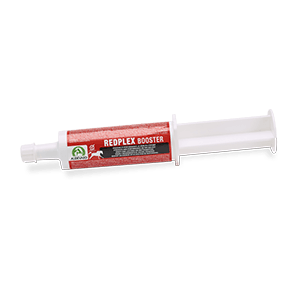
Redplex Booster - Vigour and Performance - Horse - 60 ml - AUDEVARD
In stock
11,28 €
Unavailable in your country
We do not currently ship to your country (États-Unis).
Free shipping from €99
In mainland France
Dispatched within 24h
From the Pharmacie de l'Envigne (86)
Delivery within 2 to 4 days
In mainland France
Secure payment
Encrypted transaction
ANSES-approved pharmacy
Advice from qualified pharmacists
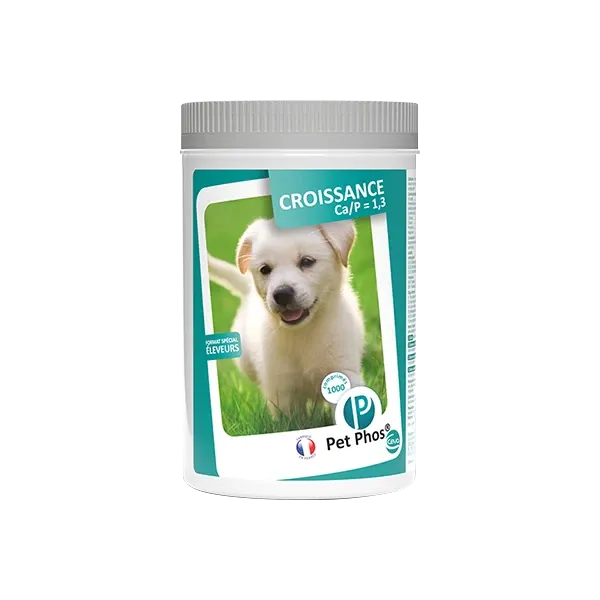
Pet Phos Croissance CA/P 1,3 from the laboratory CEVA Santé Animale is a complementary feed intended to support the growth of puppies. This period corresponds to a phase of rapid development of the skeleton, teeth and muscle mass.
The calcium/phosphorus ratio of 1,3 is formulated to respect the mineral balance necessary for bone formation. An imbalance in calcium or phosphorus can disrupt skeletal mineralization, particularly in large-breed puppies.
Puppy growth also requires an adequate supply of vitamins and trace elements. Pet Phos is incorporated into the ration to support the harmonious development of the young dog.
The 1000 tablets format is suitable for breeders, group housing, or multi-puppy households.
Pet Phos Croissance combines calcium, phosphorus, vitamins and essential trace elements. Calcium contributes to bone mineralization. Phosphorus is involved in energy metabolism and tissue structure.
Vitamins contribute to the proper functioning of metabolic processes and cell growth. Trace elements contribute to the overall development of the puppy.
This supplement is particularly indicated when a homemade ration requires mineral adjustment or when nutritional needs are increased during puppy growth.
Reasoned supplementation helps support bone and dental development during puppy growth.
The adult size of a puppy depends mainly on its breed and genetic background. Information about the parents gives a reliable indication of the future size. Monitoring weight and the growth curve also helps assess development.
In large breeds, puppy growth extends over a longer period and requires particular attention to nutritional balance in order to support harmonious skeletal development.
The 10-10-10 rule is often mentioned in relation to monitoring a puppy's behavioural development. It concerns key stages linked to socialization and learning.
It does not replace the nutritional recommendations related to puppy growth. Physical and behavioural development must be monitored together to ensure overall balance.
Puppy growth varies by breed. In small breeds, it can end around 8 to 10 months. In large and giant breeds, it can extend to 12 to 18 months, or even longer.
During this period, mineral and vitamin needs remain high. A balanced diet suited to puppy growth is essential to support bone and muscle development.
The 7-7-7 rule concerns stages of puppy socialization, notably exposure to different environments, people and situations before the age of 7 weeks.
This rule relates to behavioural development and does not directly concern puppy growth from a nutritional standpoint. However, harmonious growth and appropriate socialization together contribute to the overall development of the young dog.
La taille adulte d’un chiot dépend principalement de sa race et de son patrimoine génétique. Les informations relatives aux parents donnent une indication fiable du gabarit futur. Le suivi du poids et de la courbe de croissance permet également d’évaluer l’évolution.
Chez les grandes races, la croissance du chiot s’étale sur une période plus longue et nécessite une attention particulière à l’équilibre nutritionnel afin de soutenir un développement harmonieux du squelette.
La règle des 10-10-10 est souvent évoquée dans le cadre du suivi du développement comportemental du chiot. Elle concerne des étapes clés liées à la socialisation et à l’apprentissage.
Elle ne se substitue pas aux recommandations nutritionnelles liées à la croissance du chiot. Le développement physique et comportemental doivent être suivis conjointement afin d’assurer un équilibre global.
La croissance du chiot varie selon la race. Chez les petites races, elle peut se terminer vers 8 à 10 mois. Chez les grandes et très grandes races, elle peut se prolonger jusqu’à 12 à 18 mois, voire plus.
Durant cette période, les besoins en minéraux et en vitamines restent élevés. Une alimentation équilibrée et adaptée à la croissance du chiot est essentielle pour soutenir le développement osseux et musculaire.
La règle des 7-7-7 concerne des étapes de socialisation du chiot, notamment l’exposition à différents environnements, personnes et situations avant l’âge de 7 semaines.
Cette règle relève du développement comportemental et ne concerne pas directement la croissance du chiot sur le plan nutritionnel. Toutefois, une croissance harmonieuse et une socialisation adaptée participent ensemble au développement global du jeune chien.