Veterinary medicine
BOIRON
(64)
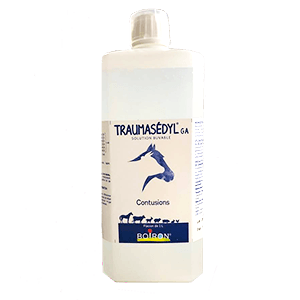
Traumasedyl GA - Homeopathic treatment for bruises and hematomas - 1 L - BOIRON
In stock
45,67 €
Unavailable in your country
We do not currently ship to your country (États-Unis).
Free shipping from €99
In mainland France
Dispatched within 24h
From the Pharmacie de l'Envigne (86)
Delivery within 2 to 4 days
In mainland France
Secure payment
Encrypted transaction
ANSES-approved pharmacy
Advice from qualified pharmacists
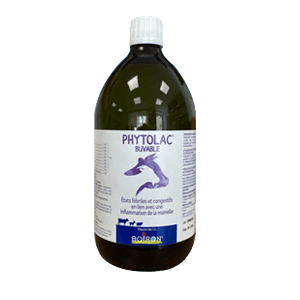
Phytolac is an oral homeopathic solution intended for cattle. It is used in cases of udder inflammation in cows, particularly during episodes of mastitis.
Udder inflammation can lead to:
Phytolac supports the management of functional udder disorders as part of the herd's health monitoring.
Its use fits into a comprehensive approach to prevention and monitoring of udder conditions in dairy farming.
Phytolac contains homeopathic strains traditionally used in the management of inflammatory udder disorders.
This solution helps support:
It helps maintain udder comfort in cows during sensitive periods.
This approach fits into farm management strategies that respect animal physiology.
The 1 L format is particularly suited to farm use. It allows for practical management of the herd's collective needs.
Phytolac can be used:
This packaging is suited to dairy farms looking for a practical homeopathic solution.
Phytolac fits into a responsible management approach to udder disorders in cattle production.
Udder inflammation corresponds to a local reaction of the udder tissue. It can appear at different stages of lactation.
It can be related to:
Mastitis is a frequent cause of udder inflammation in dairy farming.
Early management helps maintain milk quality and herd health.
Phytolac can support this management as part of a comprehensive approach combining milking hygiene and veterinary monitoring.
Udder swelling can be related to udder inflammation or mastitis. It is important to quickly identify the cause.
Regular monitoring of the udder helps detect early signs. A homeopathic solution such as Phytolac can support udder comfort.
Good milking hygiene remains essential to limit the occurrence of udder disorders in farming.
A veterinarian should be consulted in case of persistent symptoms.
Udder oedema often appears at the start of lactation. It corresponds to a build-up of fluid in the udder tissue.
Careful monitoring helps assess the evolution of the situation. Suitable solutions such as Phytolac can support udder comfort management.
Milking organisation and farming conditions also influence recovery.
Veterinary follow-up remains recommended in case of unfavourable evolution.
An udder abscess can appear after a local infection. It can be related to an injury, bacterial contamination or poorly controlled mastitis.
Early detection helps limit the consequences on milk production.
Compliance with hygiene protocols in the milking parlour helps reduce risks.
A veterinarian must intervene to establish a precise diagnosis.
Udder inflammation can have several origins. It can be infectious or non-infectious.
Common causes include:
Regular herd monitoring helps limit the occurrence of mastitis.