Veterinary medicine
KRKA
(16)
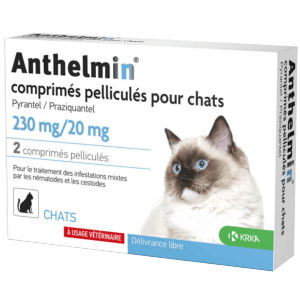
Anthelmin Chat - 230 mg/20 mg - Cat dewormer - 2 tablets - KRKA
In stock
4,58 €
Unavailable in your country
We do not currently ship to your country (États-Unis).
Free shipping from €99
In mainland France
Dispatched within 24h
From the Pharmacie de l'Envigne (86)
Delivery within 2 to 4 days
In mainland France
Secure payment
Encrypted transaction
ANSES-approved pharmacy
Advice from qualified pharmacists
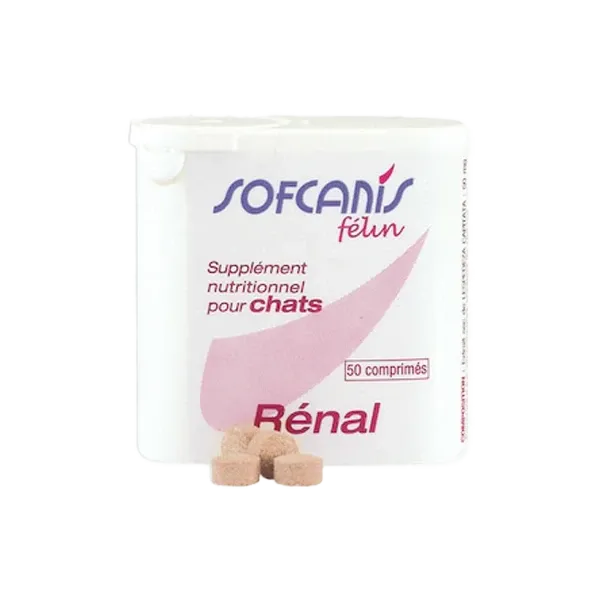
Sofcanis Félin Rénal is a nutraceutical solution. It is specifically developed by LABORATOIRES MOUREAU. This product is a valuable support for cats. It aims to help animals suffering from chronic kidney disease (CKD). CKD is a common disease in older cats. This supplement works by limiting imbalances. It provides essential nutrients. These nutrients are often deficient in cases of kidney disease.
The composition is rigorous. It includes phosphorus binders. Phosphorus is a critical mineral. Its accumulation is toxic for diseased kidneys. The binders fix this phosphorus. They prevent it from being absorbed by the intestine. The product also contains B vitamins. A diseased kidney causes a loss of these vitamins. They are water-soluble. An additional supply is therefore vital. It ensures better overall metabolism. You use Sofcanis Félin Rénal as a complement to the renal diet. It never replaces it. It optimises the action of the diet.
Kidney failure is a degenerative disease. It affects a large proportion of senior cats. The kidneys no longer filter properly. Toxins accumulate in the blood. Urea and creatinine are key markers. This accumulation causes poisoning. It is called uraemia. Supporting cat kidney function is therefore urgent. It must be put in place quickly.
Treatment is comprehensive. It includes a strict diet. It also includes specific veterinary medications. Sofcanis Félin Rénal acts as a support. It improves the cat's quality of life. The tablets are generally very palatable. Compliance with the treatment is simplified. You encourage regular intake. This is a key factor in the success of the treatment. This product works by protecting the remaining nephrons. It helps reduce the kidney's workload. You thereby help slow the progression of the disease.
Regular administration of Sofcanis Félin Rénal provides tangible benefits:
The clinical signs of kidney failure are often subtle at first. They become more pronounced over time. The first symptom is generally polyuria and polydipsia. The cat drinks more. It urinates much more frequently. It may urinate outside its litter box. Next, you observe progressive weight loss. The cat loses weight for no apparent reason. It is very important to weigh your cat regularly. Appetite decreases significantly. The mouth often shows lesions or unpleasant odours. These odours are due to the accumulation of urea. Lethargy, weakness, and vomiting may also occur. Contact your vet promptly at the first signs.
The life expectancy of a cat diagnosed with kidney failure varies enormously. It depends on the stage of the disease. It also depends on the response to the treatment implemented. Early diagnosis is a key factor for survival. With well-managed treatment, a cat can live for several years. This treatment includes a strict renal diet. It must be complemented by phosphorus binders such as Sofcanis Félin Rénal. Managing hydration is also vital. Cats in IRIS stage I or II have the best prognosis. Their life expectancy is often more than three years. Advanced stages have a more guarded prognosis. However, attentive care greatly improves their comfort.
Chronic Kidney Disease (CKD) is classified according to the IRIS scale. IRIS is the International Renal Interest Society. This classification has four stages. Stage I is the earliest. Clinical signs are not visible. Only blood tests are abnormal. Stage II is mild. Symptoms are minimal. Stage III is moderate. Clinical signs are evident. Complications such as anaemia appear. Stage IV is the most advanced. It is severe failure. Uraemia is very high. Each stage requires a specific therapeutic approach. Sofcanis Félin Rénal is a useful support from stage I onwards. It helps preserve remaining kidney capital. Regular veterinary follow-up is required to adjust the treatment.
Slowing the progression of CKD is the main goal of treatment. This involves multimodal management. The renal diet is the cornerstone of treatment. It is low in protein and low in phosphorus. It is vital for reducing the kidney's workload. The use of phosphorus binders is also essential. This is where Sofcanis Félin Rénal comes in. It helps control blood phosphorus levels. In addition, the cat's blood pressure must be monitored. Hypertension is a common complication. It damages the kidneys. Hydration must be constantly monitored and often increased. Regular blood test follow-up is essential. The vet adjusts the protocol over time.
Les signes cliniques d'insuffisance rénale sont souvent subtils au début. Ils deviennent plus marqués avec le temps. Le premier symptôme est généralement la polyurie et la polydipsie. Le chat boit plus. Il urine beaucoup plus fréquemment. Il peut faire pipi en dehors de sa litière. Ensuite, vous observez un amaigrissement progressif. Le chat perd du poids sans raison apparente. Il est très important de peser votre chat régulièrement. L'appétit diminue fortement. La gueule présente souvent des lésions ou des odeurs désagréables. Ces odeurs sont dues à l'accumulation d'urée. Une léthargie, de la faiblesse, et des vomissements peuvent aussi survenir. Contactez rapidement votre vétérinaire dès les premiers signes.
L'espérance de vie d'un chat diagnostiqué avec l'insuffisance rénale varie énormément. Elle dépend du stade de la maladie. Elle dépend aussi de la réponse au traitement mis en place. Un diagnostic précoce est un facteur clé de survie. Avec un traitement bien géré, un chat peut vivre plusieurs années. Ce traitement inclut une diète rénale stricte. Il doit être complété par des chélateurs de phosphore comme Sofcanis Félin Rénal. La gestion de l'hydratation est également vitale. Les chats en stade IRIS I ou II ont le meilleur pronostic. Leur espérance de vie est souvent supérieure à trois ans. Les stades avancés ont un pronostic plus réservé. Cependant, des soins attentifs améliorent grandement leur confort.
L'Insuffisance Rénale Chronique (IRC) est classifiée selon l'échelle IRIS. L'IRIS est l'International Renal Interest Society. Cette classification compte quatre stades. Le stade I est le plus précoce. Les signes cliniques ne sont pas visibles. Seules les analyses sanguines sont anormales. Le stade II est léger. Les symptômes sont minimes. Le stade III est modéré. Les signes cliniques sont évidents. Les complications comme l'anémie apparaissent. Le stade IV est le plus avancé. Il s'agit d'une insuffisance sévère. L'urémie est très élevée. Chaque stade nécessite une approche thérapeutique spécifique. Sofcanis Félin Rénal est un soutien utile dès le stade I. Il aide à préserver le capital rénal restant. Un suivi vétérinaire régulier est obligatoire pour adapter le traitement.
Ralentir la progression de l'IRC est l'objectif principal du traitement. Cela passe par une gestion multimodale. La diète rénale est le pilier du traitement. Elle est hypoprotéique et hypophosphorée. Elle est vitale pour réduire la charge de travail du rein. L'utilisation de chélateurs de phosphore est aussi essentielle. C'est là qu'intervient Sofcanis Félin Rénal. Il aide à maîtriser le taux de phosphore dans le sang. De plus, il faut contrôler la tension artérielle du chat. L'hypertension est une complication fréquente. Elle endommage les reins. L'hydratation doit être constamment surveillée et souvent augmentée. Un suivi régulier des analyses de sang est indispensable. Le vétérinaire ajuste le protocole au fil du temps.