Fleas and ticks in dogs: a danger not to be underestimated

Cécile de Produits-Veto
Pharmacy technician ·

Pour protéger votre chien des puces et des tiques, associez trois réflexes : observer son pelage, choisir une protection adaptée avec votre vétérinaire et agir sur l’habitat en cas de puces. Le produit et son renouvellement dépendent du parasite visé, de l’animal et de son exposition. Il n’existe pas de calendrier de traitement valable pour tous les chiens.
Pourquoi les puces et les tiques sont dangereuses pour le chien ?
Un impact sur la peau et parfois sur l’état général
Les puces peuvent provoquer des démangeaisons et une dermatite allergique aux piqûres de puces (DAPP). Les tiques peuvent transmettre des agents responsables de maladies, dont la piroplasmose ou la borréliose. La présence d’une tique ne signifie toutefois pas que le chien est malade. ESCCAP France explique les risques liés aux tiques.
Abattement, fièvre ou urines foncées après une exposition aux tiques nécessitent un avis vétérinaire rapide. Signalez les tiques observées et le traitement déjà utilisé. Un grattage persistant ou des lésions cutanées doivent aussi être examinés : ils ne sont pas spécifiques aux parasites.
Les puces concernent aussi l’environnement
Les œufs pondus dans le pelage tombent dans l’habitat, où se développent les stades immatures. Un logement chauffé peut entretenir ce cycle en hiver. Le risque dépend donc aussi du couchage et des lieux fréquentés, pas seulement de la saison. Voir les explications d’ESCCAP sur les puces en hiver.
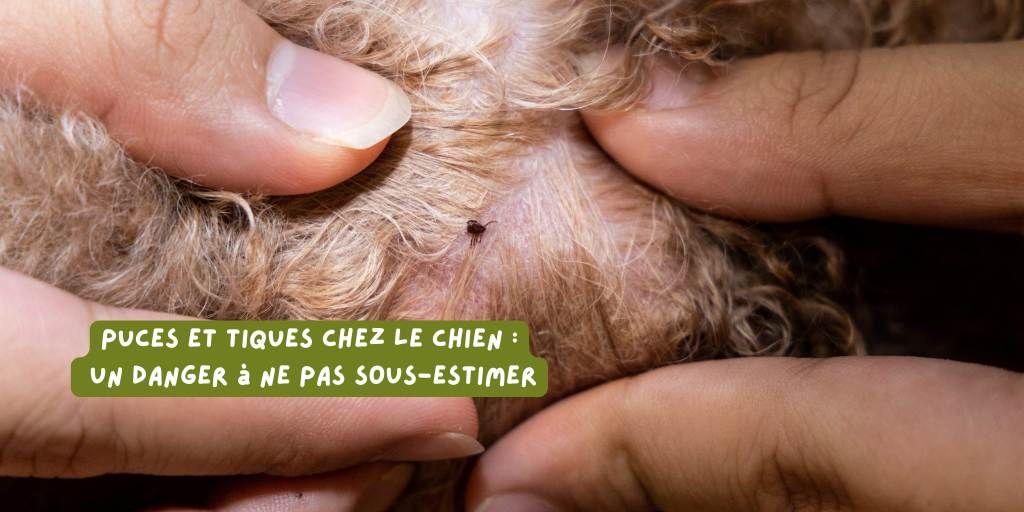
Comment reconnaître la présence de puces ou de tiques chez le chien ?
Observer le pelage et la peau
Plusieurs signes doivent attirer l’attention :
- grattage, mordillements ou agitation inhabituelle ;
- rougeurs, croûtes ou zones dépilées ;
- petits points noirs dans le pelage, à faire identifier en cas de doute ;
- parasite accroché à la peau.
Après une promenade, examinez tout le corps, notamment les oreilles, le cou et les espaces entre les coussinets. Certains chiens ne se grattent pas malgré la présence de parasites. Si vous trouvez une tique, retirez-la rapidement avec un crochet adapté ; demandez au vétérinaire de vous montrer le geste si nécessaire.
Quelles solutions contre les puces et les tiques du chien ?
Pipettes, colliers, comprimés et sprays ne sont pas interchangeables. Vérifiez l’espèce, le poids, l’âge minimal, les parasites ciblés et les précautions de la référence exacte dans l’index des médicaments vétérinaires de l’ANSES-ANMV (iRCP). La fiche indique les conditions de délivrance et donne accès au résumé des caractéristiques du produit (RCP). Lisez également la notice fournie avec le médicament.
La sélection ci-dessous présente différentes formes pour le chien. Elle ne constitue ni une prescription ni une association de traitements à utiliser ensemble. Certains médicaments ciblent uniquement les puces : un antipuces n’est pas automatiquement un antitiques.
Different antiparasitic forms for dogs


How to choose the right form for your dog?
Pipettes, collars, tablets and sprays: the points to check
- Pipette: respect the application site on the skin, precautions against licking and instructions regarding baths and contact after application.
- Collar: choose the model suited to the dog, check its fit and the duration of action indicated for each parasite. Water resistance depends on the product.
- Tablet: respect the weight range and conditions of administration. Coverage and duration of action vary; for example, Capstar Petit Chien targets fleas, with no residual activity: it does not replace protection against ticks.
- Spray intended for the animal: follow precisely the method of application and the quantity specified by the package insert. Do not confuse it with a product for the home.
A non-medicinal repellent product or a skin care product should not be presented as equivalent to an antiparasitic medicine. Commercial references should be examined according to their actual indications, not chosen solely based on brand or format. Visit the dog antiparasitics category to consult their product sheets.
Adapting frequency to exposure
The veterinarian takes into account the dog's living environment, outings, travel and state of health. Then respect the schedule planned for the chosen product, without multiplying applications or combining several antiparasitics on your own initiative. The ESCCAP recommendations favor prevention adapted to individual risk.
Does a cat also live in the household?
Never use on a cat a medicine intended only for dogs. The permethrin contained in certain canine products can cause serious, even fatal, poisoning in cats. Also avoid licking of the treated dog by the cat and respect the separation period specified in the package insert. In case of accidental exposure, contact a veterinarian promptly. Read the Anses alert.
Don't forget the home in case of fleas
Regularly vacuum resting areas and maintain bedding according to its washing instructions. Arrange suitable treatment for each of the dogs and cats in the household when an infestation is identified. If a product for the home is necessary, seek advice and follow its precautions for animals and occupants; its use is not systematic.
Fleas may still emerge from the environment after treatment begins. Don't conclude too quickly that it has failed, and don't overdose: check with the veterinarian the application, renewals and management of the home. ESCCAP details the frequent causes of persistent fleas.
Sources and useful references
- ANSES-ANMV — iRCP Index of veterinary medicines authorized in France.
- Anses — Do not treat your cat with an antiparasitic for dogs.
- ESCCAP France — Adapted prevention of external parasites.
- ESCCAP France — Risks of ticks in dogs.
- ESCCAP France — Fleas in winter.
- ESCCAP France — Persistence of fleas despite treatment.
Frequently asked questions about fleas and ticks in dogs
Can my dog catch fleas even if he doesn’t go out much?
Yes. Fleas can develop in a contaminated home, particularly in the areas where animals rest. A dog that rarely goes outside is therefore not safe from them. In case of fleas, have the treatment of each animal in the household assessed along with the management of the home, using a product suited to each.
Are ticks present all year round?
Exposure varies according to region, weather and walking areas. A single schedule is therefore not suitable for all dogs. Continue to inspect the coat after walks and ask your vet which protection period suits your pet, especially before a trip or a change of environment.
Should you treat your dog even without visible parasites?
Preventive protection can be useful depending on the risk of exposure, but it should not be decided solely on the absence of visible parasites. The veterinarian adapts the choice to the dog's lifestyle and health condition. Follow the instructions and the scheduled renewal for the chosen reference, without adding doses or combining products on your own initiative.


