Neurological disorders in dogs: how to identify them?

Christelle de Produits-Veto
Pharmacy technician ·

Identifying neurological disorders in dogs without missing a serious sign
Neurological disorders in dogs: quickly understanding what's happening
Neurological disorders in dogs are abnormalities affecting the brain, spinal cord, nerves or nerve junctions. They can cause an unsteady gait, convulsions, paralysis, a head tilt, tremors or a sudden change in behaviour. Are you wondering whether your dog is "simply getting older" or showing a real neurological sign? The answer depends mainly on the onset, intensity and progression of the symptoms.
A neurological disorder is not a single disease. It refers to a group of signs linked to the nervous system. Some causes remain mild and temporary. Others require an emergency consultation. So, the goal is not to make a diagnosis at home. It is rather to recognise the warning signs, keep your dog safe and prepare for a useful consultation.
In dogs, the signs can be dramatic. A convulsive seizure is always alarming. Yet, a progressive weakness in the hind legs, a subtle loss of balance or a change in the gaze can also reveal a canine neurological disease. This is why methodical observation helps the vet save time.
Neurological symptoms in dogs: the signs to watch for first
Neurological symptoms in dogs show up as an alteration in movement, consciousness, reflexes, senses or behaviour. They can appear suddenly or progress over several weeks.
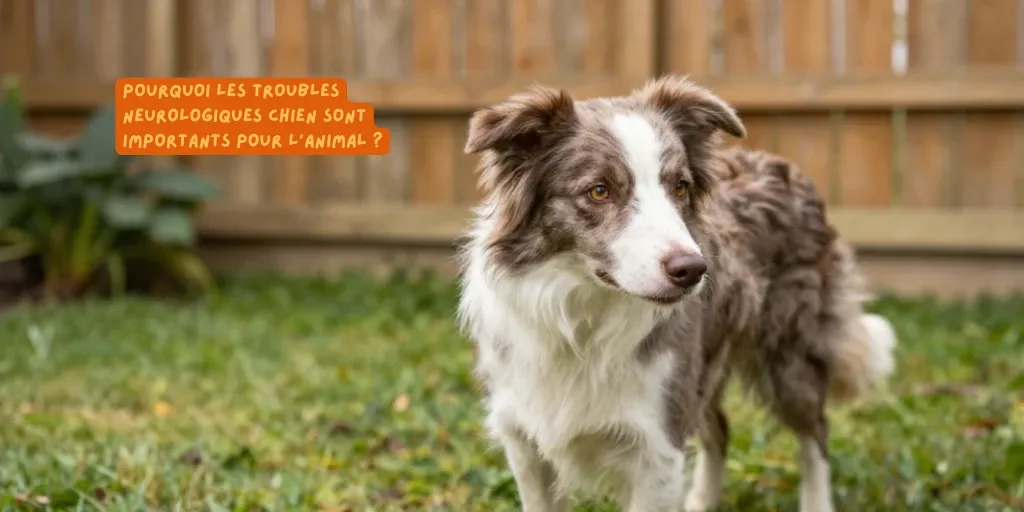
Why are neurological disorders in dogs important for the animal?
The nervous system controls movement, balance, pain, vision, alertness, continence and certain behaviours. As a result, a neurological problem can quickly reduce a dog's independence. It can also expose the animal to falls, injuries, dehydration or respiratory distress in severe cases.
A dog cannot explain that it feels weak, dizzy or has an abnormal sensation. It therefore expresses this through its body. It may walk as if drunk, fall to one side, drag a paw, turn in circles, bump into things, tremble or seem absent. Good news: early observation often improves the outcome.
Some signs should be considered urgent:
- a convulsion lasting more than 5 minutes;
- several seizures in the same day;
- loss of consciousness or very slow recovery;
- sudden paralysis of one or more limbs;
- intense pain in the back or neck;
- head tilt with vomiting, falling or inability to walk;
- a neurological disorder after a shock, a fall or possible poisoning;
- difficulty breathing, severe lethargy or pale gums.
In these situations, contact a veterinary clinic promptly. Do not wait for the symptom to disappear, especially if your dog does not recover normally.
Associated causes, symptoms or issues
A canine neurological disease can come from the brain, the spinal cord, the peripheral nerves or a general problem disrupting the nervous system. The vet therefore tries to locate the problem before choosing which tests to run.
Common causes include:

It is also important to distinguish neurology from orthopaedics. Painful lameness often comes from a joint, a ligament, a muscle or a bone. In contrast, a neurological disorder tends to produce a paw that turns over, claws that scrape the ground, a crossed gait, a loss of coordination or weakness without true lameness.
Here is a simple guide:
| Sign observed | Possible cause | Recommended action |
|---|---|---|
| Paw held up in the air with pain | Possible orthopaedic cause | Consultation if pain, swelling or persistence |
| Paw that drags or turns over | Possible neurological problem | Prompt consultation |
| Dog falling to one side | Possible vestibular or cerebellar problem | Prompt consultation, urgent if worsening |
| Convulsions with loss of consciousness | Possible epileptiform seizure | Emergency if more than 5 minutes or repeated seizures |
| Progressive disorientation in an older dog | Possible cognitive dysfunction | Veterinary assessment and monitoring of ageing |
This grid does not replace a clinical examination. However, it helps you describe the facts accurately.
Recommended veterinary solutions for neurological disorders in dogs
Managing neurological disorders in dogs starts with a complete veterinary examination. The practitioner assesses posture, gait, reflexes, pain, cranial nerves, vision and sensitivity. They then decide whether further tests are needed.
Depending on the case, they may recommend:
- a blood test to look for a metabolic or inflammatory cause;
- an X-ray, especially in case of trauma or suspected bone issues;
- an MRI or CT scan to examine the brain or spinal cord;
- a cerebrospinal fluid tap in certain cases;
- anti-epileptic, anti-inflammatory, pain-relief or antibiotic treatment depending on the diagnosis;
- surgery for certain disc herniations or compressive masses;
- physiotherapy to support motor recovery.
According to the consensus of the American College of Veterinary Internal Medicine on epileptic seizures, characterising the episodes and their frequency strongly guides diagnosis and follow-up. The Merck Veterinary Manual also notes that the neurological examination first serves to locate the lesion before determining its cause.
At home, never give a human medication without veterinary advice. Some human painkillers are toxic to dogs. Do not force a dog having a seizure to open its mouth either. Instead, move dangerous objects away, dim the lights, time the episode and call the vet if the seizure continues.
Supportive veterinary products can be useful in certain situations, particularly for older, stressed or convalescing dogs. They do not treat a neurological disease on their own. However, they can support comfort, recovery or emotional balance, if approved by the vet. You can browse the supplements and wellbeing solutions for dogs on Produits-Veto.com.
If in doubt, consult your veterinarian before any treatment.
Original expert insight: the 3-3-30 method to prepare for the consultation
The 3-3-30 method helps document symptoms without wasting time. It involves collecting 3 videos, 3 time markers and 30 useful seconds before the consultation. It never delays an emergency. It simply complements your call to the vet.
The 3 useful videos show the dog in three different situations:
- standing still, seen from the front and in profile;
- walking a few metres, if this does not put them in danger;
- during the abnormal episode, only if you can film without intervening dangerously.
The 3 time markers to note are simple:
- the time the symptom started;
- the exact duration of the episode;
- the time needed to return to normal behaviour.
The 30 useful seconds correspond to a short, steady video. Film the whole body, the eyes if possible, then the paws. Avoid close-ups that are too shaky. This short clip is often worth more than an imprecise description.
Here is a common voice search question: "What should I do if my dog suddenly walks strangely?" Practical answer: keep them safe, avoid stairs, briefly film their gait, then call your vet if the sign persists, worsens or is accompanied by pain.
Veterinary products related to neurological disorders in dogs: what benefits can be expected?
Related veterinary products do not cure neurological disorders in dogs, but they can support comfort, ageing, stress or recovery, according to the vet's advice.
Supplements to support older dogs
In a senior dog, some neurological signs can sometimes blend in with ageing, reduced sensory function and disorientation. A veterinary assessment remains essential. A suitable supplement can then support general functions and antioxidant balance.
Sitalan SE can be considered as an antioxidant nutritional supplement, particularly for older animals, according to the manufacturer's recommendations and veterinary advice.
- Nutritional support for the ageing animal.
- Provides antioxidants useful against oxidative stress.
- Practical format as part of senior monitoring.
Calming solutions for stress or recovery
Stress can worsen the discomfort of a sick or disoriented dog. It does not cause all seizures on its own. However, a calm environment often makes observation and recovery easier after an episode.
Zylkene chien is a calming supplement often used in stressful situations. It can be discussed with your vet if your dog shows anxiety, agitation or difficulty adapting during a period of medical follow-up.
- Helps with calming during unsettling situations.
- Can help support a more stable routine.
- Useful alongside environmental adjustments.
Joint protection and mobility as general support
Neurological weakness can change the gait. Conversely, joint pain can mimic nerve discomfort. After diagnosis, mobility support can help certain dogs, especially seniors or those recovering.
Flexadin Advanced chien can be considered for joint support, when the vet identifies an associated locomotor component.
- Supports joint mobility.
- Of interest for senior or stiff dogs.
- Can complement overall management of locomotion.
Before any purchase, check the dog's weight, current treatments, age and known conditions. A poorly chosen supplement can be useless. It can also complicate follow-up if symptoms change.
Frequently asked questions about neurological disorders in dogs: how to identify them?
How can you tell if your dog has a neurological problem?
A dog may have a neurological problem if it shows a loss of balance, a "drunk-like" gait, weakness, paralysis, convulsions, a head tilt, tremors or a sudden change in behaviour. What matters most is how the sign develops. If it appears suddenly, worsens or recurs several times, contact your vet.
What are the first signs of a neurological disease?
The first signs of a neurological disease can be subtle. A dragging paw, claws scraping the ground, difficulty climbing stairs, loss of balance, a slightly tilted head or absence seizures are often observed. In older dogs, new disorientation should also draw attention.
What are the symptoms of a neurological attack in dogs?
A neurological attack in dogs can cause a sudden fall, loss of consciousness, convulsions, sudden paralysis, marked disorientation, abnormal eye movements or an inability to walk. If the episode lasts, repeats or leaves the dog very lethargic, this is a veterinary emergency.
What are the 3 main neurological disorders?
The three neurological disorders commonly seen in dogs are epilepsy, disc herniations with spinal cord compression and vestibular syndromes. However, other diseases exist, such as inflammation of the nervous system, tumours, poisoning or degenerative disorders in older dogs.
To find out more about neurological disorders
To support a dog being monitored for neurological signs, always favour a structured approach. Start with the diagnosis, then adjust the environment, diet, supplements and comfort care.
- Dog category Produits-Veto.com
- Joint support and mobility products
- Blog article to come: How to relieve joint pain in animals?
In conclusion, neurological disorders in dogs should always be taken seriously, even when the signs seem intermittent. Observe, keep your dog safe, film if possible, then ask for veterinary advice. The more precise your description, the faster and more suitable the care can be.


