5 common myths about bees: what every beekeeper must know

Cécile de Produits-Veto
Pharmacy technician ·

Common misconceptions about bees: understanding frequent mistakes
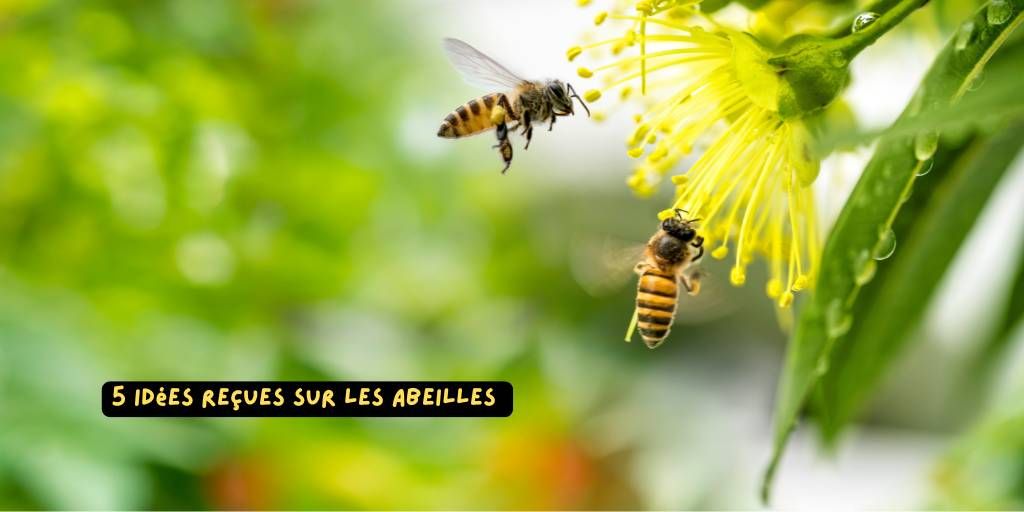
There are many common misconceptions about bees. Yet they can harm the health of colonies. Many private individuals, and even some beginner beekeepers, rely on mistaken beliefs.
However, bees play a key role in pollination and biodiversity. A poor understanding of their needs directly weakens hives. In this article, we debunk 5 common myths.
The 5 most widespread misconceptions in beekeeping
Misconception #1: Bees are aggressive
This is false. Bees are not naturally aggressive. They sting only to defend themselves.
In fact, a bee that stings dies. It therefore only attacks when threatened. A well-kept colony generally stays calm.
However, certain factors increase aggressiveness:
- Hive stress
- Poor weather
- Rough handling
- Presence of parasites
Misconception #2: All bees produce honey
This is a common mistake. Only domestic bees produce honey.
Indeed, there are more than 20,000 bee species worldwide. Most are solitary. They do not live in hives and do not produce honey.
Wild bees nevertheless remain essential to pollination.
Misconception #3: Honey is enough to feed bees all year round
This idea can put colonies at risk.
In winter or during periods of scarcity, bees often lack resources. Stored honey can become insufficient.
It is therefore recommended to provide a suitable nutritional supplement to avoid:
- Weakening of the colony
- Winter mortality
- Energy deficiencies
Misconception #4: Bees are disappearing solely because of pesticides
Pesticides play a role, but they are not the only ones responsible.
Other factors strongly impact colonies:
- The varroa destructor parasite
- The Asian hornet
- Bacterial and viral diseases
- Lack of biodiversity
A comprehensive approach is therefore essential to protect bees.
Misconception #5: Bees don't need care
This is one of the most dangerous mistakes.
Today, beekeeping requires rigorous monitoring. Colonies are exposed to numerous threats.
Without intervention, a hive can quickly decline. It is therefore essential to regularly monitor:
- The presence of parasites
- The condition of the brood
- Food reserves
Benefits of veterinary products for bees

Benefits of the Vespacatch selective trap
- Targeted capture of the Asian hornet
- Preserves beneficial insects
- Easy to install around hives
- Reduces stress on colonies
Anti-varroa treatments available on Produits-Veto
Benefits of anti-varroa treatments
- Effective reduction of parasitic pressure
- Improved colony vitality
- Prevention of winter losses
- Suited to amateur and professional beekeepers
Nutritional supplements for bees
Benefits:
- Nutritional support during periods of scarcity
- Strengthening of natural defences
- Supports brood development
- Optimises honey production
Frequently asked questions about bees
Do bees attack without reason?
No, bees do not attack without reason. They adopt defensive behaviour only when in danger. A well-managed colony stays calm. Stings often occur during unsuitable handling or in the immediate vicinity of the hive. A gentle and respectful approach greatly limits the risks.
Why are bees dying today?
Bees face several combined threats. Varroa destructor remains the leading cause of mortality. Added to this are pesticides, the Asian hornet and the loss of biodiversity. Without regular health monitoring, colonies weaken rapidly. Proactive management is therefore essential.
Should bees be fed?
Yes, in certain situations. In winter or during floral shortages, natural resources become insufficient. A supplementary feed helps keep the colony healthy. It also prevents significant losses during critical periods.
Is the Asian hornet dangerous for hives?
Yes, it represents a major threat. The Asian hornet attacks bees at the entrance to hives. This constant pressure prevents foragers from going out. The colony gradually weakens. Selective trapping remains an effective solution to limit its impact.
What to remember about misconceptions
The common misconceptions about bees can have serious consequences for colony health. By better understanding how bees work, you can adopt more suitable practices.
In this way, you protect your hives for the long term while supporting biodiversity. Modern beekeeping is based on observation, prevention and the use of reliable veterinary solutions.
To find out more about bees
- Find all our veterinary products for bees
- Browse all our food supplements and vitamins for bees
- Watch 5 myths about bees – Canadian Museum of Nature
- Read our latest article on Varromed for bees on our blog


