Prevent and treat respiratory disorders in horses.

Cécile de Produits-Veto
Pharmacy technician ·

Respiratory problems in horses concern many owners, whether their horses are used for leisure, sport, or breeding. Difficult breathing, a persistent cough, or a drop in performance are warning signs that should never be ignored. Effectively preventing and treating these respiratory problems not only helps preserve the animal’s health, but also ensures its everyday comfort.
Why is respiratory health essential for horses?
The horse’s respiratory system is put under particular strain, especially during exercise. Good breathing allows for optimal oxygen intake and supports athletic performance. Conversely, respiratory discomfort quickly leads to reduced stamina, coughing, or breathing difficulties. Protecting the lungs and airways therefore means preserving the horse’s overall health.
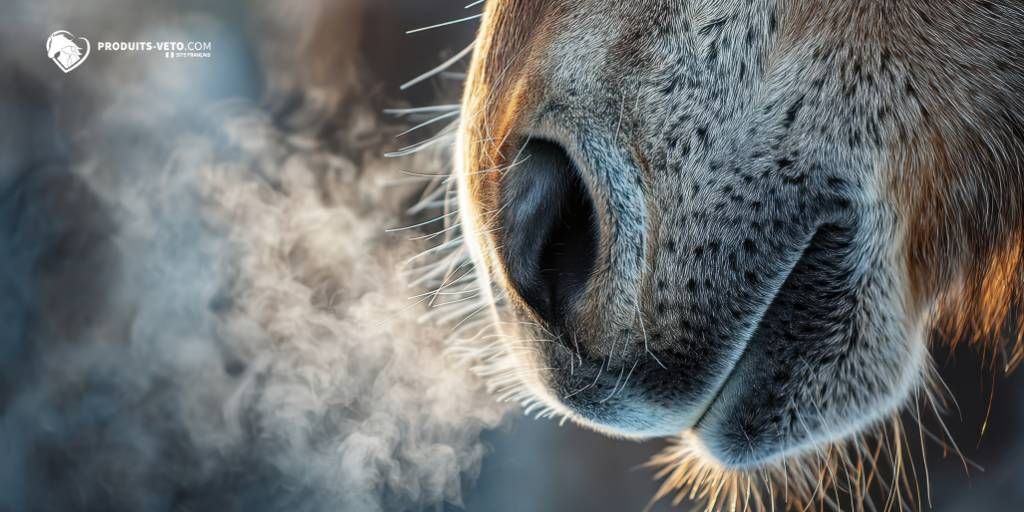
Causes and symptoms of respiratory problems
Equine respiratory conditions are multifactorial. They can be linked to the environment, infectious agents, or predispositions.
Common causes of respiratory problems in horses
- Dust and mould in bedding or hay: poorly stored hay or dusty bedding release irritating particles that inflame the airways.
- Allergens present in the ambient air: pollen, fungal spores, or cleaning products used in stables can trigger allergic reactions.
- Viral or bacterial infections: pathogens such as equine herpesvirus or equine influenza are responsible for coughing, discharge, and fever.
- Intense exertion in confined environments: training or transport in poorly ventilated places encourages the build-up of dust and irritating gases.
- Sudden changes in temperature or humidity: frequent transitions between a heated stall and the cold outdoors weaken the respiratory mucosa.
- Stress and fatigue: a weakened horse or one subjected to a sustained pace of exertion sees its immune defences decline, making it more vulnerable.
- Presence of ammonia in stables: produced by urine, it strongly irritates the airways when poorly ventilated.
- Poor transport management: long journeys, often in a closed trailer, expose horses to dust, lack of air, and stress, which promotes respiratory infections.
Symptoms to watch for
- Persistent cough
- Clear or thick nasal discharge
- Difficult or noisy breathing
- Drop in performance
- Unusual fatigue
A horse showing these signs should be closely monitored. If in doubt, it is recommended to consult a veterinarian to rule out serious conditions such as emphysema or chronic respiratory infections.
Recommended solutions
To prevent and treat respiratory problems in horses, several complementary approaches exist:
- Improve the environment: favour dust-free bedding and good-quality hay. Ventilate the stable regularly to limit humidity and the concentration of particles.
- Use respiratory supplements: certain products support the airways and promote better oxygenation.
- Use nebulisation: an effective method for delivering soothing or therapeutic solutions directly to the lungs.
- Appropriate veterinary care: in case of infection, medical treatment prescribed by the veterinarian is essential.
FAQ – Do you have any questions?
How can respiratory problems in horses be prevented?
To limit the risks, it is essential to reduce exposure to dust and mould. Choose dust-free bedding, such as wood shavings or hemp, and favour good-quality hay, ideally dust-free or wilted. Ensure regular ventilation of stables to prevent the build-up of moisture and irritating gases such as ammonia. Providing daily access to a paddock or pasture also promotes healthy breathing. Finally, properly maintaining equipment (hay nets, water troughs, stalls) helps prevent respiratory problems.
What are the first signs of a respiratory problem?
A persistent cough is often the first sign that should raise concern. It may be accompanied by clear or thick nasal discharge, sometimes with an odour, and abnormal, wheezy, or rapid breathing. The horse may also show a drop in performance during exercise, a lack of stamina, or unusual fatigue. In some cases, loss of appetite or a listless attitude may round out this clinical picture. Watching closely for these signs makes it possible to act quickly.
When should you consult a veterinarian?
It is recommended to consult a veterinarian as soon as symptoms persist for more than a few days or worsen. The presence of fever, marked listlessness, or weight loss should also raise concern. Prompt intervention makes it possible to rule out serious conditions such as emphysema or viral or bacterial infections, and to put in place appropriate treatment. Early diagnosis considerably increases the chances of a full recovery and prevents chronic complications.
To find out more:
– Equine respiratory health – Audevard – Horse health area
– Horse respiratory system category – produits-veto.com


