LABORATOIRES MOUREAU
Floramue - Supports pigeon moulting - 30 ml - MOUREAU
In stock
9,08 €
Unavailable in your country
We do not currently ship to your country (États-Unis).
Free shipping from €99
In mainland France
Dispatched within 24h
From the Pharmacie de l'Envigne (86)
Delivery within 2 to 4 days
In mainland France
Secure payment
Encrypted transaction
ANSES-approved pharmacy
Advice from qualified pharmacists
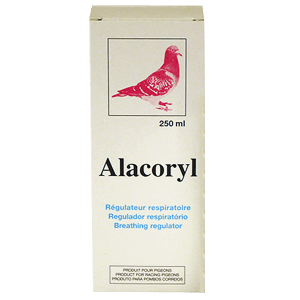
Pigeons remain sensitive to changes in their environment. Dust, humidity and confined air quickly irritate the respiratory tract. Moreover, transport and training increase the stress load. Alacoryl MOUREAU is part of a respiratory regulation approach. It aims to provide functional support for the airways, without adding to the care routine. The 250 ml format meets the needs of pigeon fanciers and breeders. This way, you can better manage sensitive periods, while keeping a practical and economical solution.
Alacoryl is a respiratory regulator intended for pigeons. The laboratory MOUREAU positions it as support for respiratory comfort. It is used when the environment weakens breathing. It also accompanies demanding periods, such as competitions or seasonal changes. Thanks to the 250 ml packaging, you can more easily cover a large number of birds. As a result, you maintain continuity of respiratory support, without multiplying small bottles.
A pigeon that breathes less well often shows a decline in condition. It may also reduce its water and feed intake. Then, recovery after effort becomes slower. That said, prevention remains a key strategy. Clean bedding, adapted ventilation and controlled density already provide much protection. However, a respiratory regulator can complement these good practices. Alacoryl fits into this logic. It supports respiratory function when irritating factors increase. This way, you act earlier, before discomfort sets in.
The best choice always depends on the cause. An infection, irritation or allergy are not managed the same way. For this reason, a veterinarian must intervene if the signs persist. At the same time, a respiratory regulator can support respiratory function. Alacoryl is part of this support approach. It accompanies respiratory comfort, especially when the environment becomes irritating. Moreover, it complements hygiene and ventilation actions. This way, you combine prevention and support, while maintaining clinical vigilance.
You should first isolate the bird if possible. Then, check the loft environment. Dusty bedding or high humidity quickly worsen the situation. Ventilate, reduce dust and clean resting areas. Then, monitor appetite and water intake. A respiratory regulator like Alacoryl can accompany this sensitive phase. However, if breathing remains difficult, you should consult a veterinarian. A quick diagnosis avoids complications and guides the appropriate care.
Management depends on the diagnosis. The veterinarian may recommend a targeted treatment if an infection is the cause. Then, it is necessary to correct the contributing factors. Ventilation, density and hygiene make a real difference. In addition, a respiratory regulator can support the bird's comfort. Alacoryl can then accompany the animal during the period of vulnerability. It fits into an overall strategy. This way, you combine environment, monitoring and functional support.
The duration varies greatly depending on the severity and how early it is managed. A mild episode, treated quickly, can resolve without after-effects. However, a chronic condition reduces quality of life. Moreover, it weakens the bird against repeated stress. This is why rapid monitoring remains essential. Respiratory support can improve comfort, but it does not replace treatment. Alacoryl can accompany breathing as a complement. However, veterinary consultation remains the best option if the signs persist.
Le meilleur choix dépend toujours de la cause. Une infection, une irritation ou une allergie ne se gèrent pas pareil. Pour cette raison, un vétérinaire doit intervenir si les signes persistent. En parallèle, un régulateur respiratoire peut soutenir la fonction respiratoire. Alacoryl s’inscrit dans cette approche de soutien. Il accompagne le confort respiratoire, notamment quand l’environnement devient irritant. De plus, il complète les actions d’hygiène et d’aération. Ainsi, vous combinez prévention et soutien, tout en gardant une vigilance clinique.
Vous devez d’abord isoler le sujet si possible. Ensuite, vérifiez l’ambiance du colombier. Une litière poussiéreuse ou une humidité élevée aggravent vite la situation. Aérez, réduisez la poussière et nettoyez les zones de repos. Puis, surveillez l’appétit et la consommation d’eau. Un régulateur respiratoire comme Alacoryl peut accompagner cette phase sensible. Toutefois, si la respiration reste difficile, vous devez consulter. Un diagnostic rapide évite les complications et guide le soin adapté.
La prise en charge dépend du diagnostic. Le vétérinaire peut recommander un traitement ciblé si une infection est en cause. Ensuite, il faut corriger les facteurs favorisants. La ventilation, la densité et l’hygiène font une vraie différence. En complément, un régulateur respiratoire peut soutenir le confort de l’oiseau. Alacoryl peut alors accompagner l’animal pendant la période de fragilité. Il s’intègre dans une stratégie globale. Ainsi, vous combinez environnement, suivi et soutien fonctionnel.
La durée varie fortement selon la gravité et la précocité de la prise en charge. Un épisode léger, traité vite, peut se résoudre sans séquelles. En revanche, une atteinte chronique réduit la qualité de vie. De plus, elle fragilise l’oiseau face aux stress répétés. C’est pourquoi la surveillance rapide reste essentielle. Un soutien respiratoire peut améliorer le confort, mais il ne remplace pas un traitement. Alacoryl peut accompagner la respiration en complément. Cependant, la consultation vétérinaire reste la meilleure option si les signes durent.