Veterinary medicine
CENTRAL PHARMA LOGISTICS
(45)
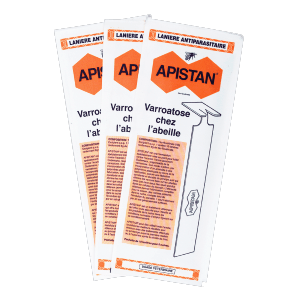
Apistan - Varroa destructor in bees - 5 x 2 strips - VITA BEE HEALTH
In stock
28,83 €
Unavailable in your country
We do not currently ship to your country (États-Unis).
Free shipping from €99
In mainland France
Dispatched within 24h
From the Pharmacie de l'Envigne (86)
Delivery within 2 to 4 days
In mainland France
Secure payment
Encrypted transaction
ANSES-approved pharmacy
Advice from qualified pharmacists
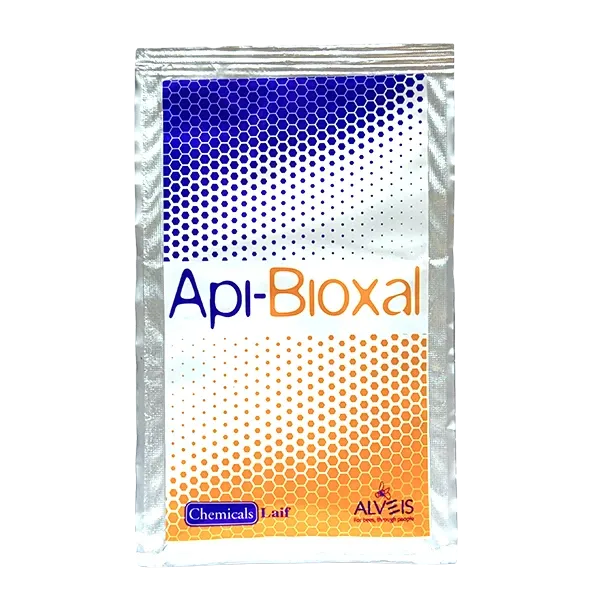
Apibioxal 31g is a soluble veterinary acaricide based on oxalic acid. It effectively treats varroosis in bees during the winter period.
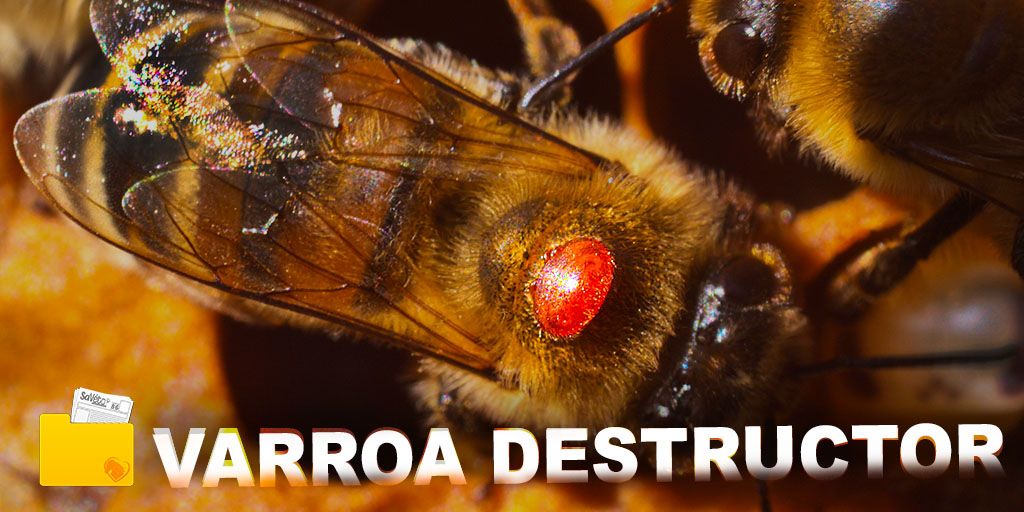
Modern beekeeping faces constant health challenges. Among them, the mite Varroa destructor represents the main threat to colony survival. Indeed, this parasite weakens bees and transmits deadly viruses. To fight this scourge, laboratoire DESTAING offers Apibioxal 31g. It is a veterinary medicine recognised for its high efficacy.
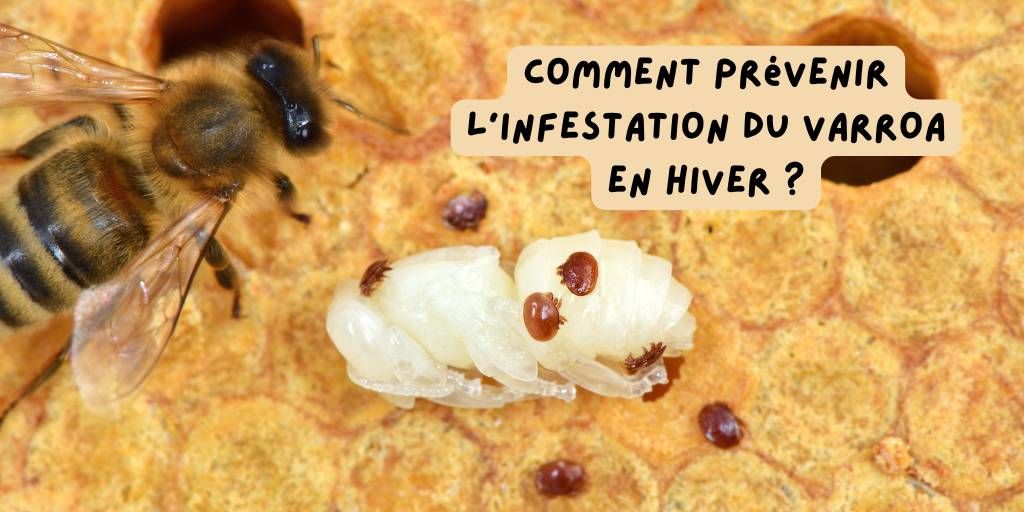
This product contains oxalic acid dihydrate. This organic molecule is a natural component of honey. However, at high concentration, it becomes a formidable acaricide. This treatment is used mainly in winter. At that time, the hive contains little or no brood. Thus, the product directly reaches the varroa mites present on adult bees (phoretic varroa).
Choosing this 31g format allows precise management of small apiaries. Moreover, it guarantees optimal freshness of the product at each opening. Both professional and amateur beekeepers favour this solution. It fits perfectly into a considered strategy for controlling varroosis.
The soluble powder Apibioxal acts by direct contact with the parasites. Oxalic acid penetrates the mite's cuticle. It then causes fatal acidosis in the parasite. The bee, for its part, tolerates this substance well when correctly dosed. The product comes in the form of a fine white powder.
This specific formulation allows two distinct application methods. On one hand, the beekeeper can use the trickle method. This method requires preparing a syrup. On the other hand, sublimation (or vaporisation) is also possible. This technique requires a suitable heating device. In both cases, the treatment aims to clean the colony before the resumption of spring egg-laying.
The efficacy of oxalic acid strongly depends on the absence of capped brood. Indeed, the molecule does not pass through wax cappings. Consequently, varroa mites hidden in the cells escape treatment. This is why the timing of the intervention remains crucial. Application outside the brood period ensures an efficacy rate above 95%.
Using Apibioxal offers multiple benefits for the health of your livestock:
To guarantee optimal efficacy of the veterinary medicine, it must imperatively be administered in the absence of brood, or when brood is present at a minimal level in the colony. Indeed, oxalic acid does not diffuse through wax: it therefore does not reach varroa mites located in capped brood. The presence of brood thus greatly reduces the efficacy of the treatment. Consequently, it is recommended to apply the medicine during the winter period, or after an intervention aimed at interrupting egg-laying during the summer season (for example caging the queen), in order to obtain a colony free of brood.
Regarding summer treatments carried out after caging the queen, the best results are observed when this period lasts at least 25 days, the time needed for the colony to become totally free of brood.
Finally, even when correctly applied, the treatment does not always allow already very weakened colonies to be saved: a significant varroa infestation may have caused irreversible damage compromising their survival.
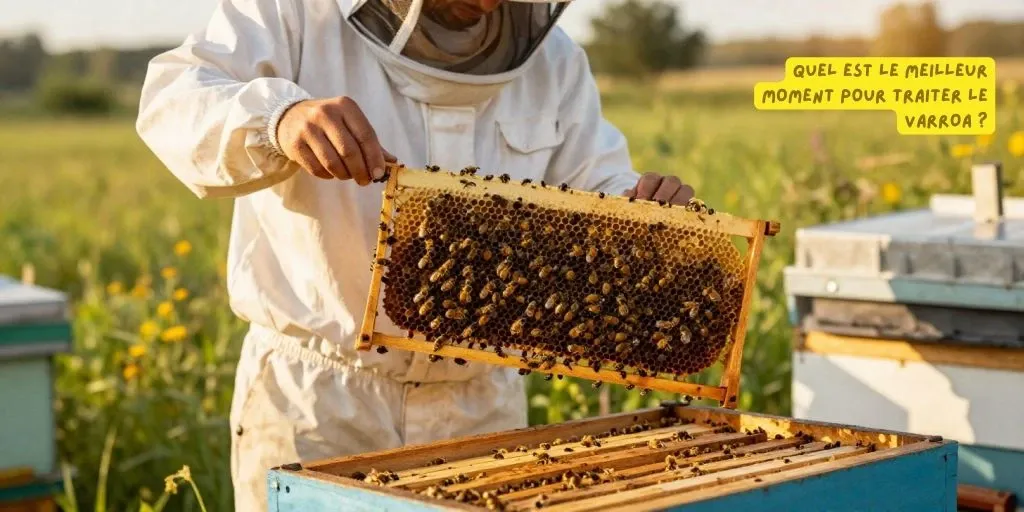
The most effective treatment based on oxalic acid is the one carried out in the total absence of brood. Apibioxal 31g is specifically formulated for this use. Indeed, oxalic acid only kills varroa mites attached to adult bees. If brood is present, most of the mites are protected under the cappings. Efficacy then drops drastically. To maximise the effect, beekeepers often treat in winter, between November and January. An outdoor temperature between 5°C and 10°C is ideal for trickling. This allows the bees to form a loose cluster, favouring the circulation of the product.
The question often concerns the frequency or follow-up after a treatment. As a general rule, a single application of oxalic acid per winter is enough if done properly. Sublimation (vaporisation) has the advantage of being repeatable if necessary, unlike trickling. However, overdosing must be avoided. If you are referring to mite-drop monitoring, you should count the varroa mites on the greased tray. The maximum drop occurs in the days following treatment. There is no immediate "treatment after sublimation". One waits until spring to resume monitoring or to apply strips if infestation rises again. Oxalic acid is a winter "knockout" treatment.
The optimal time to use Apibioxal is during the "broodless" period. In most regions, this corresponds to December or January. At this time, the queen stops laying due to the cold. The entire varroa population is then found on the bees. This is the ideal window. Furthermore, it is possible to artificially trigger an interruption in egg-laying during the season by caging the queen. In this specific case, oxalic acid can be used in summer or autumn. However, winter use remains the norm for this type of packaging.
Oxalic acid, the active substance in Apibioxal, is generally compatible with organic beekeeping specifications. It is an organic substance naturally present in the environment. However, regulations may evolve or vary depending on the certifying bodies. It is therefore essential to check with your organic certification body. Moreover, use must be part of an established veterinary control plan. The absence of persistent chemical residues in wax and honey makes it a preferred ally for beekeepers concerned about the environment.
Le traitement le plus efficace à base d'acide oxalique est celui réalisé en l'absence totale de couvain. Apibioxal 31g est spécifiquement formulé pour cet usage. En effet, l'acide oxalique ne tue que les varroas fixés sur les abeilles adultes. Si du couvain est présent, la majorité des acariens se trouve protégée sous les opercules. L'efficacité chute alors drastiquement. Pour maximiser l'effet, les apiculteurs traitent souvent en hiver, entre novembre et janvier. Une température extérieure comprise entre 5°C et 10°C est idéale pour le dégouttement. Cela permet aux abeilles de former une grappe lâche, favorisant la circulation du produit.
La question concerne souvent la fréquence ou le suivi après un traitement. En règle générale, une seule application d'acide oxalique par hiver suffit si elle est bien réalisée. La sublimation (vaporisation) offre l'avantage de pouvoir être répétée si nécessaire, contrairement au dégouttement. Cependant, il ne faut pas surdoser. Si vous parlez du contrôle de chute, vous devez compter les varroas sur le plateau graissé. La chute maximale intervient dans les jours suivant le traitement. Il n'y a pas de "traitement après sublimation" immédiat. On attend le printemps pour reprendre une surveillance ou poser des lanières si l'infestation remonte. L'acide oxalique est un traitement "coup de poing" hivernal.
Le moment optimal pour utiliser Apibioxal se situe durant la période "hors couvain". Dans la plupart des régions, cela correspond aux mois de décembre ou janvier. À cette période, la reine cesse de pondre en raison du froid. Toute la population de varroas se trouve alors sur les abeilles. C'est la fenêtre de tir idéale. Par ailleurs, il est possible de provoquer artificiellement un arrêt de ponte en saison par encagement de la reine. Dans ce cas spécifique, on peut utiliser l'acide oxalique en été ou à l'automne. Toutefois, l'usage hivernal reste la norme pour ce type de conditionnement.
L'acide oxalique, substance active de l'Apibioxal, est généralement compatible avec les cahiers des charges de l'apiculture biologique. C'est une substance organique présente naturellement dans l'environnement. Cependant, la réglementation peut évoluer ou varier selon les organismes certificateurs. Il est donc impératif de vérifier auprès de votre organisme de certification bio. De plus, l'utilisation doit se faire dans le cadre d'un plan de lutte vétérinaire établi. L'absence de résidus chimiques persistants dans la cire et le miel en fait un allié privilégié des apiculteurs soucieux de l'environnement.