Veterinary medicine
CENTRAL PHARMA LOGISTICS
(45)
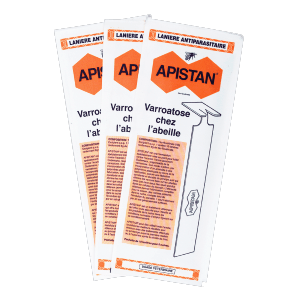
Apistan - Varroa destructor in bees - 5 x 2 strips - VITA BEE HEALTH
In stock
28,83 €
Unavailable in your country
We do not currently ship to your country (États-Unis).
Free shipping from €99
In mainland France
Dispatched within 24h
From the Pharmacie de l'Envigne (86)
Delivery within 2 to 4 days
In mainland France
Secure payment
Encrypted transaction
ANSES-approved pharmacy
Advice from qualified pharmacists
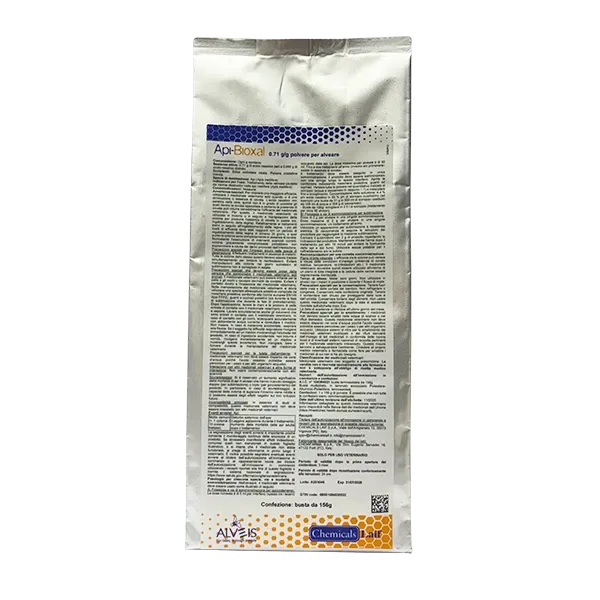
Protect your entire apiary this winter. The Apibioxal 156 g format offers the ideal amount of oxalic acid to treat several dozen colonies simultaneously.
When managing an apiary of a certain size, treatment logistics become crucial. The Apibioxal 156 g packaging was designed for multi-active or semi-professional beekeepers. This volume allows you to prepare enough solution to treat a series of hives in a single intervention. This avoids the multiplication of small sachets and the dosing errors associated with them.
The active molecule, oxalic acid, remains the absolute reference for winter cleaning. Its action is decisive in reducing parasitic pressure before the season restarts. By eliminating the last phoretic mites, you give your bees a healthy start in spring. This is an essential step to limit the transmission of viruses that decimate weakened colonies.
This veterinary medicine guarantees a stable and purified composition. Unlike sometimes hazardous homemade preparations, Apibioxal ensures a constant concentration of active ingredient. This is a guarantee of safety for your bees and effectiveness against the parasite Varroa destructor.
Apibioxal 156 g powder stands out for its high solubility. For trickling application, it mixes easily with sugar syrup (water and sucrose). This method is particularly appreciated for its simplicity of use. It does not require heavy equipment, just a syringe or a dosing gun. The liquid is distributed between the frames, directly onto the bees.
For equipped beekeepers, sublimation is a very effective alternative. The powder is heated by a specific device introduced through the hive entrance. The oxalic acid crystals turn into gas and then recrystallize into fine needles on the entire body of the hive and the bees. This method is very non-invasive for the colony because it does not require opening the frame cover.
Whatever method is chosen, outdoor temperature plays a role. It is recommended to intervene on clustered colonies that are not too tightly contracted. A slightly positive temperature allows better circulation of the vapors or liquid within the cluster without dangerously cooling the emerging brood.
Choosing this intermediate packaging offers technical and economic advantages:
To ensure optimal effectiveness of the veterinary medicine, it must imperatively be administered in the absence of brood, or when brood is present at a minimal level in the colony. Indeed, oxalic acid does not diffuse through wax: it therefore does not reach the varroa mites located in capped brood. The presence of brood thus greatly reduces the effectiveness of the treatment. Consequently, it is recommended to apply the medicine during the winter period, or after an intervention aimed at interrupting egg-laying during the summer season (for example, caging the queen), in order to obtain a colony free of brood.
Regarding summer treatments carried out after caging the queen, the best results are observed when this period lasts at least 25 days, the time needed for the colony to become completely free of brood.
Finally, even when correctly applied, the treatment does not always save colonies that are already very weakened: heavy infestation by varroa can have caused irreversible damage compromising their survival.
The number of hives treated depends on the application method chosen. For trickling, the standard recommended dosage is often to dissolve the sachet in a precise amount of lukewarm syrup. Generally, a 156g sachet can treat approximately 40 to 50 standard-sized colonies (well-populated 10-frame Dadant type). For sublimation, the dose per hive is often 2 to 3 grams of pure powder. With 156 g, you can therefore theoretically sublimate between 50 and 80 hives. It is crucial to always refer to the exact instructions for the batch to respect the current powder/sugar/water ratios.
Once the Apibioxal powder is mixed with sugar syrup, the solution's stability is limited. It is strongly discouraged to store the prepared mixture for later use. Indeed, oxalic acid in a sugary aqueous solution can degrade and form HMF (Hydroxymethylfurfural), which is toxic to bees. It is best to prepare just the amount needed for the day's round. If you have a surplus, it must be disposed of according to current regulations and not reused several weeks later.
Oxalic acid is a corrosive and irritating product for the user, especially in its sublimated (gaseous) form. When handling the 175g powder, wearing nitrile gloves, protective goggles, and long-sleeved clothing is essential to avoid skin or eye burns. For sublimation, the respiratory risk is major. The beekeeper must wear a full-face mask with an A2P3 type cartridge or an assisted ventilation mask. The acid cloud is invisible once dispersed but remains dangerous for the lungs. The safety of the applicator is just as important as the health of the bees.
Absolutely. To avoid the phenomenon of reinfestation (also called "robbing" or "drift" of varroa mites), it is essential to treat all colonies in the same apiary simultaneously. If you only treat a few hives with your 156g sachet and leave others untreated, healthy bees will quickly become reinfested through contact with parasitized neighbors. The overall effectiveness of the fight against Varroa relies on uniform health pressure across the entire herd. This is why this format is ideal for covering an entire apiary in a single work session.