
ELANCO ›ADVANTIX
(9)
Advantix Medium Dog, flea and tick control 10 to 25 kg, 6 Pipettes - ELANCO
In stock
€27.75
Unavailable in your country

We do not currently ship to your country (United States).
Free shipping from €99
In mainland France
Dispatched within 24h
From the Pharmacie de l'Envigne (86)
Delivery within 2 to 4 days
In mainland France
Secure payment
Encrypted transaction
ANSES-approved pharmacy
Advice from qualified pharmacists
Drontal Chien is a veterinary medicine developed by Vetoquinol.
This dog dewormer acts against the main internal parasites of the adult dog. Roundworms (nematodes) and tapeworms (cestodes) represent a frequent threat, even in dogs living indoors.
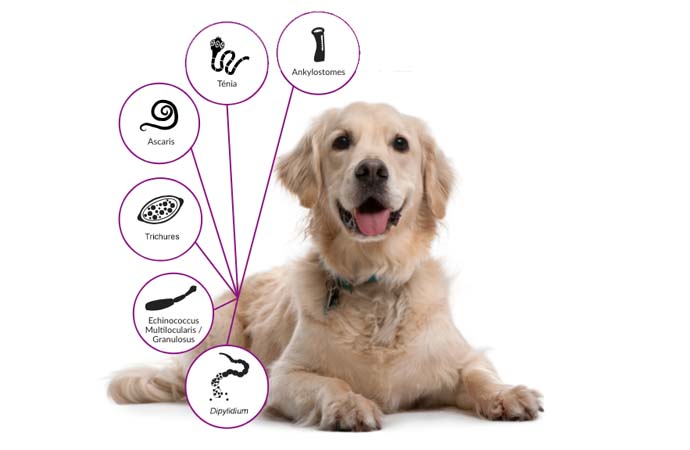
Infestation can occur through ingestion of eggs present in the environment, contact with other animals, or consumption of contaminated prey. Parasites impact digestion, vitality, and the dog's general condition.
Drontal Chien fits into a regular deworming strategy to preserve digestive health and limit contamination of the household.
The Drontal Chien 4 comprimés format allows for several administrations depending on the dog's weight and the protocol established by the veterinarian.
The tablets are palatable, which makes them easier to give. Respecting the animal's weight is essential to guarantee optimal efficacy and limit the risk of adverse effects.
Like any veterinary medicine, Drontal has a Marketing Authorisation and is used in accordance with official recommendations.
Drontal Chien can be compared to Milbemax Chien, another dog dewormer widely used in veterinary practice.
Both products cover roundworms and tapeworms. Their objective is identical: to cleanse the digestive tract and prevent internal infestations.
The difference lies mainly in the combination of active molecules and the manufacturing laboratory. Milbemax Chien is marketed by Elanco, while Drontal is offered by Vetoquinol.
The choice between Drontal Chien and Milbemax Chien depends on the dog's weight, availability, individual tolerance, and veterinary recommendations. In all cases, the essential point remains to use a dog dewormer suited to the animal's parasitic profile.
The frequency of deworming depends on the dog's lifestyle. A dog living in an urban environment may be dewormed several times a year. A hunting dog or one living in a group setting requires closer monitoring.
Puppies are dewormed more frequently during their first months. In adults, the protocol is adapted according to exposure to parasitic risk. The veterinarian sets the schedule based on the individual profile.
Certain signs may suggest an infestation: digestive disorders, weight loss, dull coat, or the presence of worm segments in the stool. However, many infestations remain asymptomatic. This is why preventive deworming is recommended even in the absence of visible symptoms.
Regular veterinary follow-up helps adapt protection to the actual level of risk.
The interval between two dewormings varies according to the dog's age and lifestyle. In adults, quarterly administration is frequently recommended. In case of significant exposure, the veterinarian may adjust this interval. It is important to maintain a consistent interval in order to avoid persistent infestations.
A personalised protocol remains the best approach to ensure continuous digestive protection.
La fréquence de vermifugation dépend du mode de vie du chien. Un chien vivant en milieu urbain peut être vermifugé plusieurs fois par an. Un chien de chasse ou vivant en collectivité nécessite un suivi plus rapproché.
Les chiots sont vermifugés plus fréquemment durant leurs premiers mois. Chez l’adulte, le protocole s’adapte selon l’exposition au risque parasitaire. Le vétérinaire définit le calendrier en fonction du profil individuel.
Certains signes peuvent évoquer une infestation : troubles digestifs, perte de poids, poil terne ou présence de segments de vers dans les selles. Cependant, de nombreuses infestations restent asymptomatiques. C’est pourquoi la vermifugation préventive est recommandée même en l’absence de symptômes visibles.
Un suivi vétérinaire régulier permet d’adapter la protection au niveau de risque réel.
Le délai entre deux vermifugations varie selon l’âge et le mode de vie du chien. Chez l’adulte, une administration trimestrielle est fréquemment recommandée. En cas d’exposition importante, le vétérinaire peut adapter ce délai. Il est important de respecter un intervalle cohérent afin d’éviter les infestations persistantes.
Un protocole personnalisé reste la meilleure approche pour assurer une protection digestive continue.


