The 7 signs of dehydration in horses that should never be ignored

Christelle de Produits-Veto
Pharmacy technician ·

How to quickly recognize dehydration in horses?
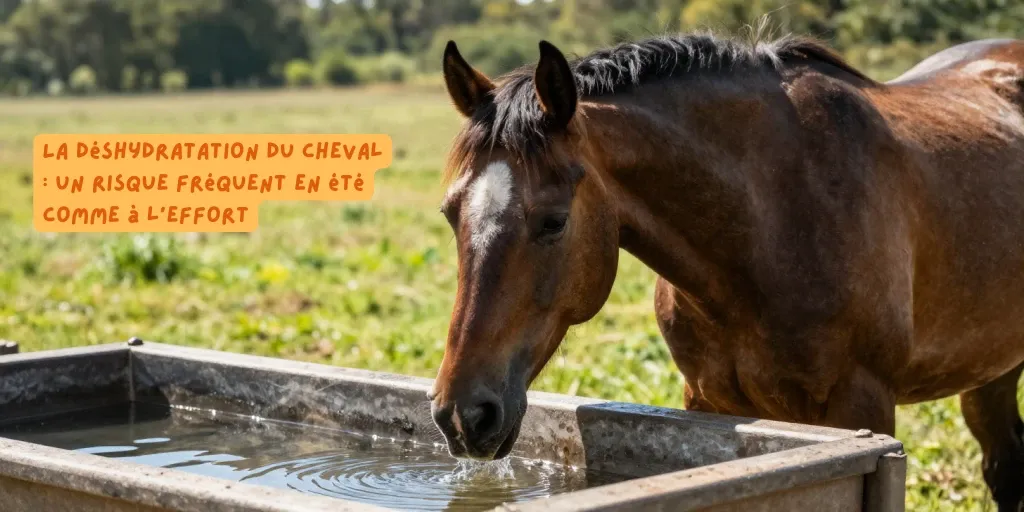
Dehydration in horses: a frequent risk in summer as well as during exercise
Dehydration in horses occurs when water and electrolyte losses exceed intake. This phenomenon frequently appears during hot weather, transport, competitions or periods of intensive training.
An adult horse can lose several litres of water per hour when sweating heavily. This loss does not only concern water. It is also accompanied by a significant elimination of electrolytes such as sodium, potassium, chloride or even magnesium.
Even moderate dehydration can impact performance, digestive comfort and muscle recovery in horses.
The 7 signs of dehydration in horses
1. A skin fold that persists
The skin fold test is one of the simplest ways to assess hydration.
Gently pinch the skin of the neck or shoulder then release it.
In a properly hydrated horse, the skin returns immediately to its position. If the fold persists for several seconds, dehydration may be present.
2. Dry or sticky mucous membranes
The gums should normally be moist and shiny.
Dry, sticky or pasty mucous membranes may reveal a fluid deficit.
3. A decrease in water consumption
Some horses paradoxically reduce their water consumption during a change of environment, transport or competition.
This drop should quickly draw attention.
4. Unusual fatigue
A dehydrated horse often shows:
- A drop in energy
- Slower recovery
- A decrease in endurance
- A lack of enthusiasm for work
5. Abnormal sweating
Excessive sweating promotes fluid loss.
Conversely, the absence of sweating despite significant exertion can also constitute a warning sign.
6. Darker urine
Concentrated, dark urine or urine passed in small quantities may indicate insufficient hydration.
7. An increase in heart rate
During significant dehydration, the heart must work harder to maintain efficient blood circulation.
An elevated heart rate after exercise can constitute an additional warning sign.
Why are electrolytes essential for horses?
The role of electrolytes in hydration
Electrolytes play a fundamental role in the body's fluid balance.
They are involved in particular in:
- Cellular hydration
- Muscle contraction
- Nerve transmission
- Recovery after exercise
- Maintaining performance
When a horse sweats, it simultaneously loses water and electrolytes.
Simply drinking water is therefore not always enough to fully compensate for these losses.
Situations at risk of dehydration
Certain situations require increased vigilance:
- Intense summer heat
- Competitions
- Endurance
- Eventing
- Show jumping
- Long-distance transport
- Fever
- Diarrhoea
- Convalescence
In these contexts, electrolyte intake can help support rehydration.
The consequences of untreated dehydration
Prolonged dehydration can lead to:
- Decreased sporting performance
- Muscle fatigue
- Cramps
- Digestive disorders
- Increased risk of colic
- Recovery difficulties
Careful monitoring therefore remains essential.
Recommended veterinary solutions to support hydration in horses
Electrolytes for sport horses
Electrolyte supplements are particularly suited:
- After intense exercise
- During hot weather
- During transport
- During competition periods
Their benefits:
- Compensation for losses linked to sweating
- Support for fluid balance
- Contribution to muscle recovery
- Maintaining performance
Recovery supplements
Some supplements combine electrolytes, vitamins and minerals.
Benefits:
- Overall support for recovery
- Helps limit fatigue
- Support for horses under heavy demand
Which electrolytes should you choose to prevent dehydration in horses?
During periods of intense heat, after transport or following intense exercise, electrolyte intake helps compensate for mineral losses linked to sweating. These supplements contribute to maintaining fluid balance and promote faster recovery.
On Produits-Veto.com, several solutions are available depending on your horse's needs:


The choice of supplement depends on the horse's activity level, weather conditions, and the intensity of sweating observed. Proper electrolyte supplementation helps maintain performance, supports muscle recovery, and reduces the risks linked to dehydration.
Daily water management
To promote good hydration:
- Always leave clean water available.
- Check consumption daily.
- Split water intake during transport.
- Encourage drinking after exercise.
- Supplement with electrolytes when necessary.
Frequently asked questions about dehydration in horses
Dehydrated horse: what to do?
If you suspect dehydration, place your horse in the shade, provide clean water, and monitor its general condition. If signs are marked or persistent, contact your veterinarian promptly. Early management often helps prevent complications.
How to quickly rehydrate a horse?
Rehydration relies on access to clean, fresh water as well as compensating for electrolyte losses when these are significant. After intense exercise or transport, electrolyte supplements can help restore fluid balance more effectively.
How to rehydrate a horse after heavy sweating?
After a work session or competition, it is recommended to let the horse drink gradually and provide it with suitable electrolytes. This approach helps compensate for mineral losses linked to sweating and supports recovery.
What are the risks of dehydration in horses?
Dehydration can lead to decreased performance, slower recovery, digestive disorders, and an increased risk of colic. Sport horses and transported horses are particularly at risk.
To learn more about dehydration
Also discover:
- Our category rehydration for horses
- Our equine recovery supplements
- Products to support horse performance
- Our article: How to choose an energy solution for sport horses?
Dehydration in horses can quickly affect their well-being, performance, and recovery. Knowing how to recognize the first signs makes it possible to act quickly before complications appear. Regular hydration monitoring, combined with proper electrolyte management, is one of the best strategies for preserving the health and physical abilities of the horse throughout the year.


