Feeding disorders in birds: understanding, preventing and acting

Cécile de Produits-Veto
Pharmacy technician ·

Feeding disorders in birds are common, whether it's a parrot, a budgie or a canary. They can have direct consequences on the animal's health, behaviour and longevity. Understanding their causes, knowing how to recognise them and adopting the right steps helps preserve the well-being of your feathered companion.
Why is nutrition essential for birds?
Diet influences vitality, plumage and resistance to disease. An unbalanced diet quickly leads to deficiencies or excesses. Since a bird's digestive system is fragile, a small error in feeding can cause diarrhoea, constipation or weight loss. Careful monitoring of nutrition is therefore crucial.
Causes and symptoms of feeding disorders in birds
The main causes
- Nutritional deficiencies: lack of vitamins (A, D, E), minerals or essential amino acids.
- Dietary excesses: overconsumption of fatty seeds (sunflower, peanuts) leading to obesity.
- Poor feeding hygiene: stagnant water, spoiled or contaminated food.
- Behavioural disorders: stress, food neophobia (refusal of novelty), boredom or isolation.
- Underlying diseases: digestive infections, liver or kidney conditions.
Symptoms to watch for
- Loss of appetite or refusal to eat.
- Diarrhoea or abnormal droppings.
- Rapid weight loss or, conversely, obesity.
- Dull plumage, feather loss, decreased energy.
- Abnormal behaviour: agitation, feather-picking, apathy.
Recommended veterinary solutions
An accurate diagnosis is essential. Only a vet specialised in exotic pets can identify the exact cause. However, several solutions exist:
- Adapt the diet: vary the sources (seeds, fruit, vegetables, complete pellets).
- Introduce dietary supplements: vitamins, minerals and probiotics.
- Maintain good hygiene: refresh the water and clean feeders daily.
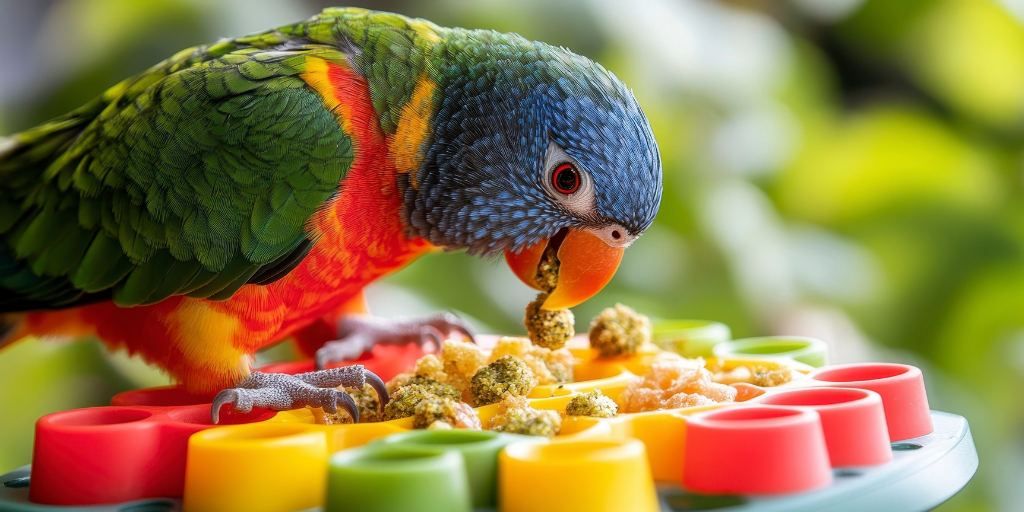
- Enrich the environment: food-based toys, varied perches to reduce stress.
- Veterinary follow-up: regular check-ups to prevent deficiencies and adjust the diet.
FAQ – Do you have questions?
What foods should be avoided for birds?
Chocolate, avocado, coffee, alcohol and salty or sugary foods must be banned. These products are toxic and can be fatal.
How can you recognise a nutritional deficiency?
Signs include dull plumage, loss of energy, reduced singing and increased susceptibility to infections.
My bird refuses new foods, what should I do?
Introduce them gradually, in small quantities, and pair them with familiar foods. Patience is key.
Feeding disorders in birds should never be taken lightly. An unbalanced or unsuitable diet can quickly lead to deficiencies, digestive disorders or more serious illnesses. By carefully monitoring the diet, varying intake and using suitable veterinary products, every owner can actively contribute to the health and well-being of their feathered companion.
For any suspected problem, consulting a vet remains essential. Finally, choosing quality, suitable food, available on Produits-Veto.com, is a key step in ensuring a balanced and harmonious life for your bird.
To find out more
- Bird feeding– Virbac – Practical advice
- Bird products category – Produits-veto.com


