DOSSIER | Varroa destructor: how to fight the bee parasite

Christelle de Produits-Veto
Pharmacy technician ·

Varroa destructor and varroosis: what is it?
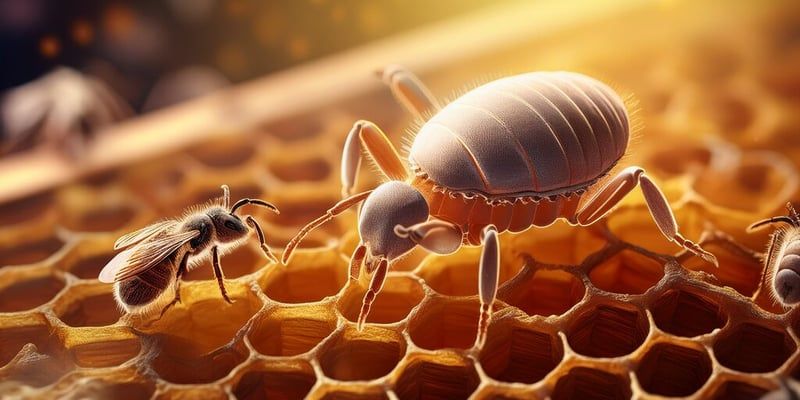
The varroa (Varroa destructor) is a parasitic mite that represents one of the greatest scourges for domestic bees. It is responsible for varroosis, a parasitic disease that weakens colonies by attacking larvae and adult bees. Invisible to the naked eye at the start of an infestation, this parasite multiplies rapidly and can cause the total collapse of a hive if no action is taken in time.
Since its introduction to Europe in the 20th century, varroa has caused significant damage to apiaries and continues to pose a major threat to beekeeping. Unlike other parasites, it does not simply draw resources from its host: it also transmits viruses, which weakens bees even further.
Beekeepers must therefore be extremely vigilant and put in place appropriate monitoring and treatment strategies to prevent varroa from decimating their colonies.
Why are varroa and varroosis dangerous for bees? The essential guide
The varroa is an ectoparasite, meaning it lives outside its host. It attaches itself to adult bees and larvae, feeding on their haemolymph (the insect equivalent of blood). This mode of parasitism causes:
- A general weakening of adult bees
- A decrease in the weight and longevity of infested bees
- An impairment of larval development
- An increased transmission of viruses and secondary diseases
- A general weakening of adult bees
Varroa is particularly formidable, as it reproduces directly in the bee brood, making it difficult to eradicate. Once established, it becomes almost impossible to eliminate completely.
Our partner laboratories against varroa




Life cycle of the external parasite: how does it spread?
The varroa life cycle is perfectly adapted to parasitize domestic bees (Apis mellifera).
1. Attachment to the adult bee
Adult varroa mites attach themselves to bees and move around with them, both inside and outside the hive. They often hide between the abdominal segments, which makes them difficult to detect with the naked eye.
2. Penetration into the brood
When a bee lays an egg in a brood cell, female varroa mites slip inside it just before the larva is capped (sealed). Once enclosed, they begin to lay eggs.
3. Multiplication within the brood
Varroa larvae develop by feeding directly on the bee larva. Within a few days, several new varroa mites emerge along with the adult bee, and the cycle starts again.
4. Rapid spread
- Swarming and bee drift
- Robbing of weak hives by healthy bees
- Transport of infested colonies during migratory beekeeping
- Introduction of new swarms that are already infested
Varroa is a major threat to modern beekeeping. Early detection and the application of suitable treatments are essential to preserving bee colonies. A healthy hive is a hive protected against this formidable parasite.
Still have questions about varroa destructor (FAQ)?
Welcome to our FAQ dedicated to Varroa destructor, a major parasite threatening the health of bees. Here you will find the beginnings of answers to the most frequently asked questions.
There are several strategies for protecting hives against varroa:
-
- Regular monitoring: Inspecting bees and brood frames to detect signs of infestation.
-
- Mechanical methods: Using screened bottom boards, varroa traps, or brood interruption to limit proliferation.
-
- Biological and natural treatments: Application of organic acids (oxalic acid, formic acid) and essential oils such as thymol.
-
- Chemical treatments: Controlled use of acaricides such as amitraz or tau-fluvalinate, alternated to prevent the development of resistance.
- Genetic selection: Development of bee strains that are more resistant to varroa.
A good balance between prevention and treatment is essential to keep colonies healthy.
Varroa spreads mainly via:
-
- Drifting bees and swarming: An infected bee can enter a healthy hive and introduce the parasite there.
-
- Robbing of weak hives: Bees from a healthy hive rob a weakened hive, unintentionally bringing back varroa mites.
-
- Movement of colonies: During the transport of hives, infested bees can contaminate others.
-
- Introduction of new swarms: Purchased queens and colonies may already be infested.
Rigorous management and quarantine of new colonies help limit these risks.
There is no single perfect treatment against varroa. The choice depends on the time of year and the level of infestation:
Natural treatments:
- Oxalic acid (Varromed, Oxybee): used outside brood periods, very effective but must be applied with caution.
- Formic acid (Varromed): acts on both the brood and adult bees.
- Essential oils (Thymovar, ): can be a preventive solution.
Chemical treatments:
- Amitraz (Apivar): very effective, but may induce resistance.
- Flumethrin (Bayvarol): comes in the form of strips to be inserted into the hive.
It is recommended to alternate treatments/molecules to avoid the risk of resistance building up.
Visible signs on bees:
- Bees with deformed wings (DWV virus)
- Weak, trembling worker bees
- Decline in hive population
Detection tests:
- Powdered sugar test: Bees are dusted with powdered sugar to dislodge the varroa mites and count them.
- CO₂ test: Temporarily anaesthetises the bees so the fallen mites can be observed.
- Counting tray: Allows the number of varroa mites falling naturally to be monitored.
If a test reveals an infestation, it is crucial to act quickly to avoid losing the colony.
Specifically, what are the solutions against varroa destructor?
Below you will find all the products useful in the fight against varroa destructor:
-
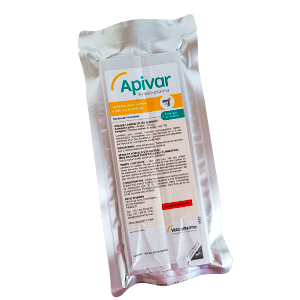
Apivar anti-varroa treatment strips – 10 strips – VETO-PHARMA
25,50€ -
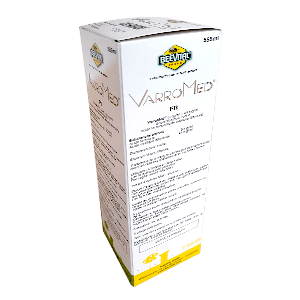
Varromed – Varroa destructor – Bees – 555 ml bottle – BEEVITAL (expiry 12/26)
28,40€ -
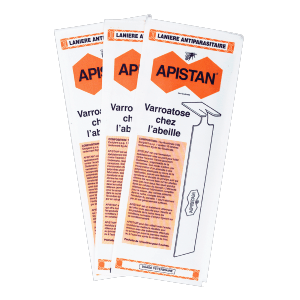
Apistan – Bee varroa destructor – 5 x 2 strips – VITA BEEHEALTH
34,45€ -
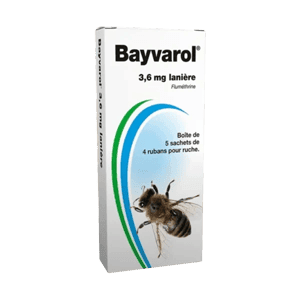
Bayvarol Veto-Pharma, Varroa Destructor treatment, 5 packs of 4 strips – VETO-PHARMA
31,90€ -
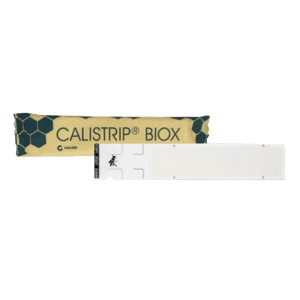
Calistrip Biox – Organic varroa treatment – Bees – CALIER
39,90€ -
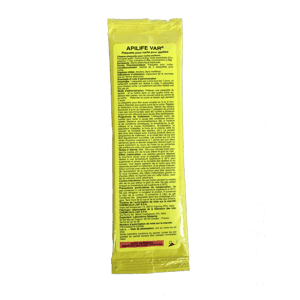
Apilife Var – Bee varroa parasite – 2 tablets – DESTAING
6,90€


