What is the best time to treat varroa?

Christelle de Produits-Veto
Pharmacy technician ·

When should you treat varroa to effectively protect your bees?
Why is timing essential against Varroa destructor?
Varroa destructor is now considered one of the main enemies of the domestic honey bee. This parasitic mite feeds on the bees' haemolymph and transmits several viruses that can significantly weaken colonies.
The main challenge lies in its mode of reproduction. A large part of the varroa population develops inside capped brood, where some treatments have limited effectiveness.
This is why the timing of treatment plays a decisive role. Treatment carried out at the right time significantly reduces parasite pressure and protects the bees that will see the colony through winter.
The two key periods for treating varroa
Late summer and early autumn: the priority period
The period between August and September is generally the most important time to fight varroa.
After the honey harvest, the parasite population often reaches its maximum level. At the same time, winter bees are starting to be reared. These bees will need to live for several months and ensure the colony's survival until the following spring.
Effective treatment at this time therefore helps protect the future winter bees.
Among the solutions available on Produits-veto.com:


These treatments are frequently used after the harvest to quickly reduce infestation. The choice depends on the level of parasitism, the type of apiary and local health recommendations.
Winter: the complementary broodless treatment
Between November and December, the colony gradually enters a period of low activity. In many regions, brood becomes very limited or even completely absent.
This situation offers an excellent opportunity to target the varroa mites present on adult bees.
Treatments based on oxalic acid are then particularly effective when brood is absent or very limited.
On Produits-veto.com, several solutions are available:


These products fit into the winter protocols recommended by many beekeepers and health organisations.
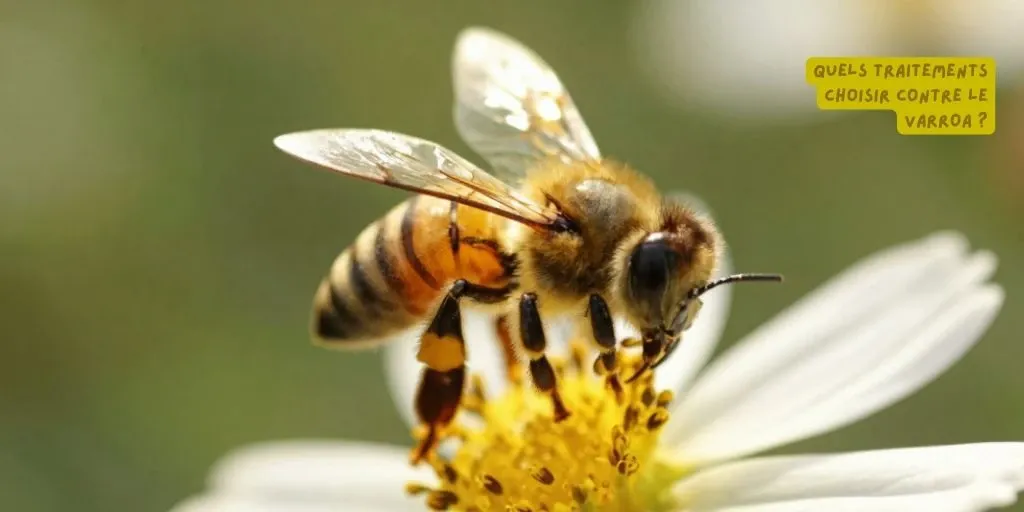
Which treatments should you choose against varroa?
Treatments based on organic acids
Organic acids play an important role in the fight against Varroa destructor.
They are valued for their effectiveness and their compatibility with organic beekeeping practices.
Among the available solutions:
Varromed – BEEVITAL
Varromed combines formic acid and oxalic acid. This combination allows use at different times of the year depending on the colony's condition.
Its benefits:
- Ready-to-use solution.
- Compatible with treatment rotation strategies.
- Usable in different beekeeping contexts.
- Reduces parasite pressure.
Api-Bioxal – VETO-PHARMA
Api-Bioxal is a veterinary medicine based on oxalic acid.
It is particularly recommended when the colony has little or no brood. Its effectiveness is optimal under these conditions.
Its benefits:
- Reference treatment during the winter period.
- Compatible with organic beekeeping.
- Can be used by trickling or sublimation according to the instructions.
- High effectiveness outside brood periods.
Strip-based treatments
Strips remain widely used in varroa control programmes.
Apivar – VETO-PHARMA
Apivar gradually releases its active ingredient over several weeks.
Its benefits:
- Simple to use.
- Continuous release in the hive.
- Suitable for end-of-season treatment programmes.
- Solution recognised by many beekeepers.
Bayvarol and Apistan
These solutions are also based on the use of acaricidal strips placed directly in the colony.
They can be included in a rotation strategy to limit the development of resistance.
Why regularly monitor the infestation level?
Essential monitoring
Treatment alone is not enough.
To effectively protect colonies, it is recommended to:
- Regularly check the infestation level.
- Carry out varroa counts several times a year.
- Check the effectiveness of the treatments applied.
- Adjust the strategy based on the results obtained.
A heavily infested colony can appear healthy for several weeks before collapsing suddenly in autumn or during winter.
Alternating between available solutions
Rotating treatment families is a recognised good practice.
It allows you to:
- Limit the development of resistance.
- Maintain high effectiveness.
- Improve the long-term viability of available treatments.
Alternating between organic acids, thymol and strips contributes to more sustainable management of the parasite.
Frequently asked questions about varroa treatment
When should you start monitoring varroa in a hive?
Monitoring generally starts in spring. Regular checks between April and September make it possible to anticipate infestations and schedule treatments at the most suitable time.
What is the best treatment against varroa?
There is no universal treatment. The choice depends on the infestation level, the presence of brood, the season and the beekeeper's objectives. The most commonly used solutions are Apivar, Varromed, Api-Bioxal, Apistan, Bayvarol and Apilife Var.
Can varroa be treated during the honey flow?
Each medicine has its own conditions of use. It is essential to follow the marketing authorisation indications as well as the recommendations given in the product's package leaflet.
Why treat in winter?
In winter, brood is often absent or very limited. Varroa mites are then directly exposed to oxalic acid-based treatments, which considerably improves their effectiveness.
Learn more about varroa
Discover our selection on varroa:
- Category Treatments against varroa destructor
- All blog articles about bees
- 5 misconceptions about bees: what every beekeeper should know
- Protecting bees before winter
- What is the best treatment against varroa?
You can also read our other articles dedicated to beekeeping, colony monitoring and the fight against Varroa destructor to build an effective health strategy for your apiary.
The best time to treat varroa is generally during two strategic periods: after the honey harvest, between August and September, and then in winter when brood is absent or very limited.
This dual approach helps effectively reduce parasite pressure throughout the year. Combined with regular monitoring and a well-considered rotation of treatments, it helps preserve the health, productivity and longevity of bee colonies.


